
From morning breakfasts to evening dinners, Tasteza Recipes offers quick and easy recipe ideas, featuring everything from wholesome meals to delicious desserts for every moment and every occasion.


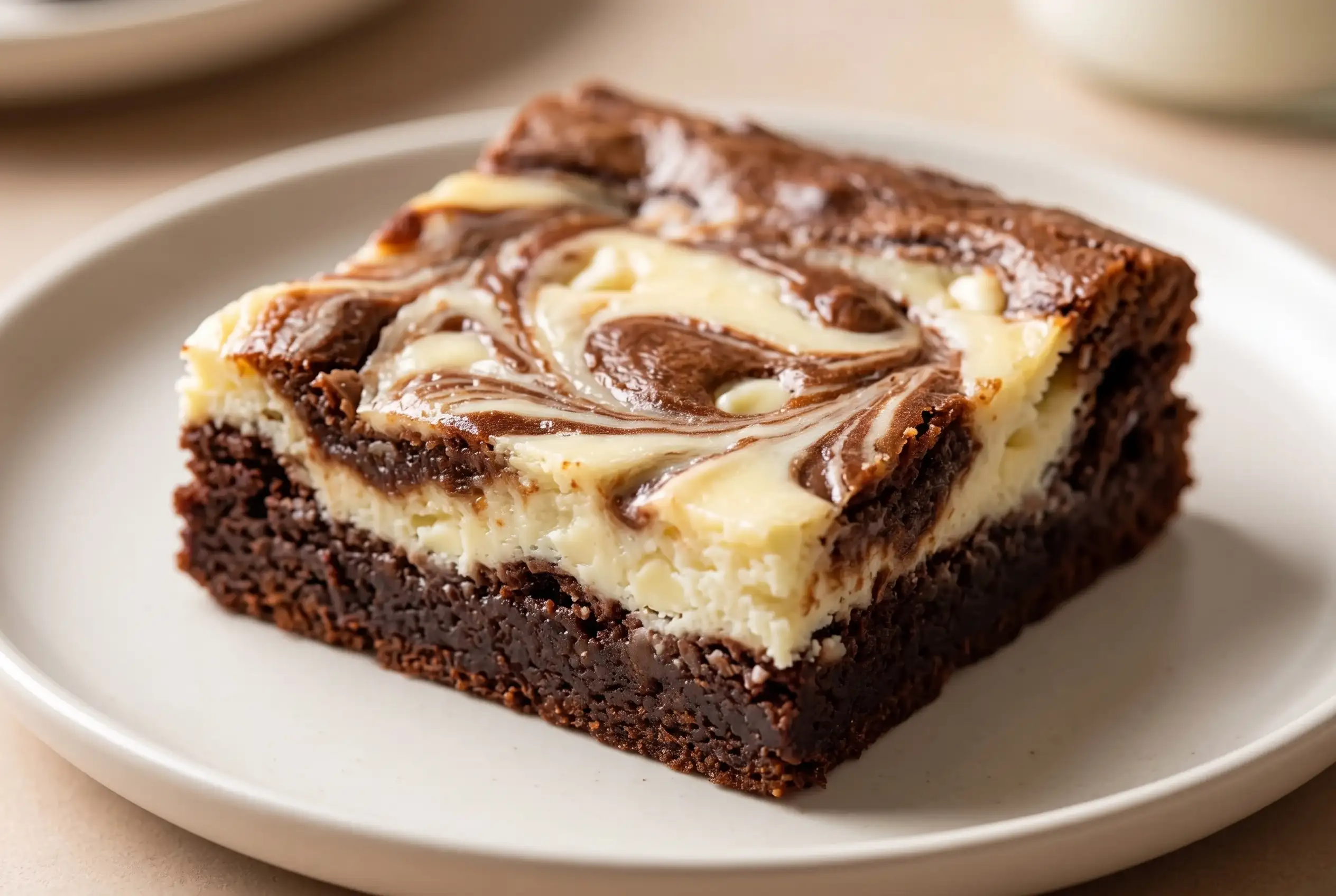
White chocolate brownies combine a dense chocolate base with a creamy cheesecake swirl and pockets of sweet white chocolate. The contrast makes each square feel more polished than a plain brownie while keeping the preparation practical enough for a boxed mix or a favorite homemade batter.
Fudgy Brownies Meet a Tangy White Chocolate Swirl
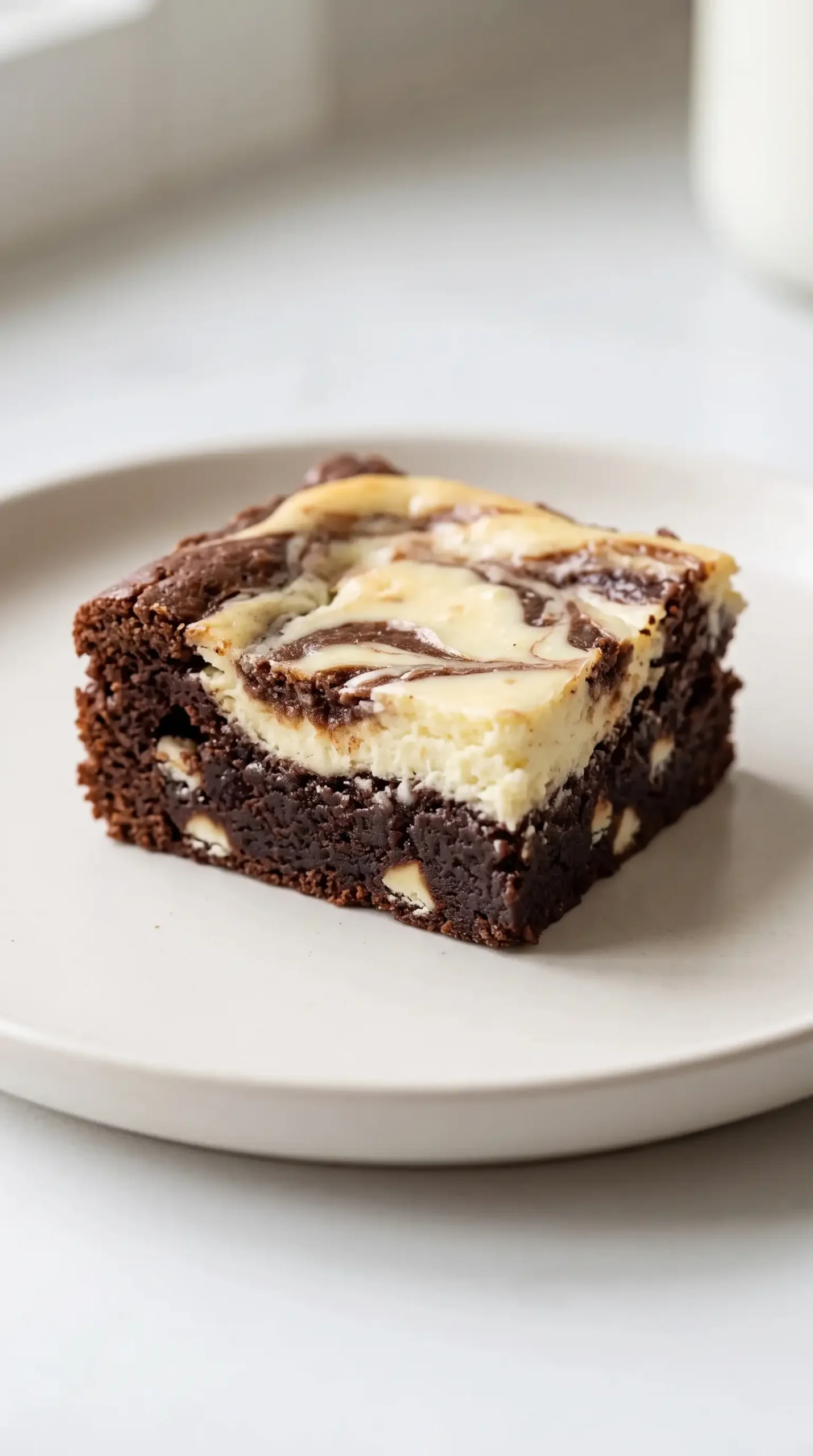
A brownie layer gives the bars their deep cocoa flavor and sturdy texture, while the cream cheese topping softens each bite with a lighter, tangier finish. White chocolate chips sit inside the swirl, creating small sweet spots instead of turning the whole pan uniformly sugary.
Because the two mixtures bake together, the finished bars develop a marbled top with a clear visual contrast. That surface makes white chocolate cheesecake brownies useful for parties, potlucks, and holiday trays where neat presentation matters. The bars can be prepared ahead, chilled for clean slicing, and carried in their container without requiring last-minute assembly.
Serving temperature changes the experience without changing the dessert. Chilled squares feel firmer and more cheesecake-like, while room-temperature pieces become softer and emphasize the fudgy brownie base.
The Brownie Batter Sets the Texture
Choose a dense, fudgy brownie batter because it supports the cream cheese layer and gives the swirl a noticeable textural contrast. A boxed mix works well, and a homemade batch is equally suitable as long as it is intended for a square baking pan of comparable size. Prepare either batter according to its own directions before judging the thickness; the cream cheese mixture is an added layer, not a substitute for any part of the brownie batter.
Cream Cheese Temperature Controls Smoothness
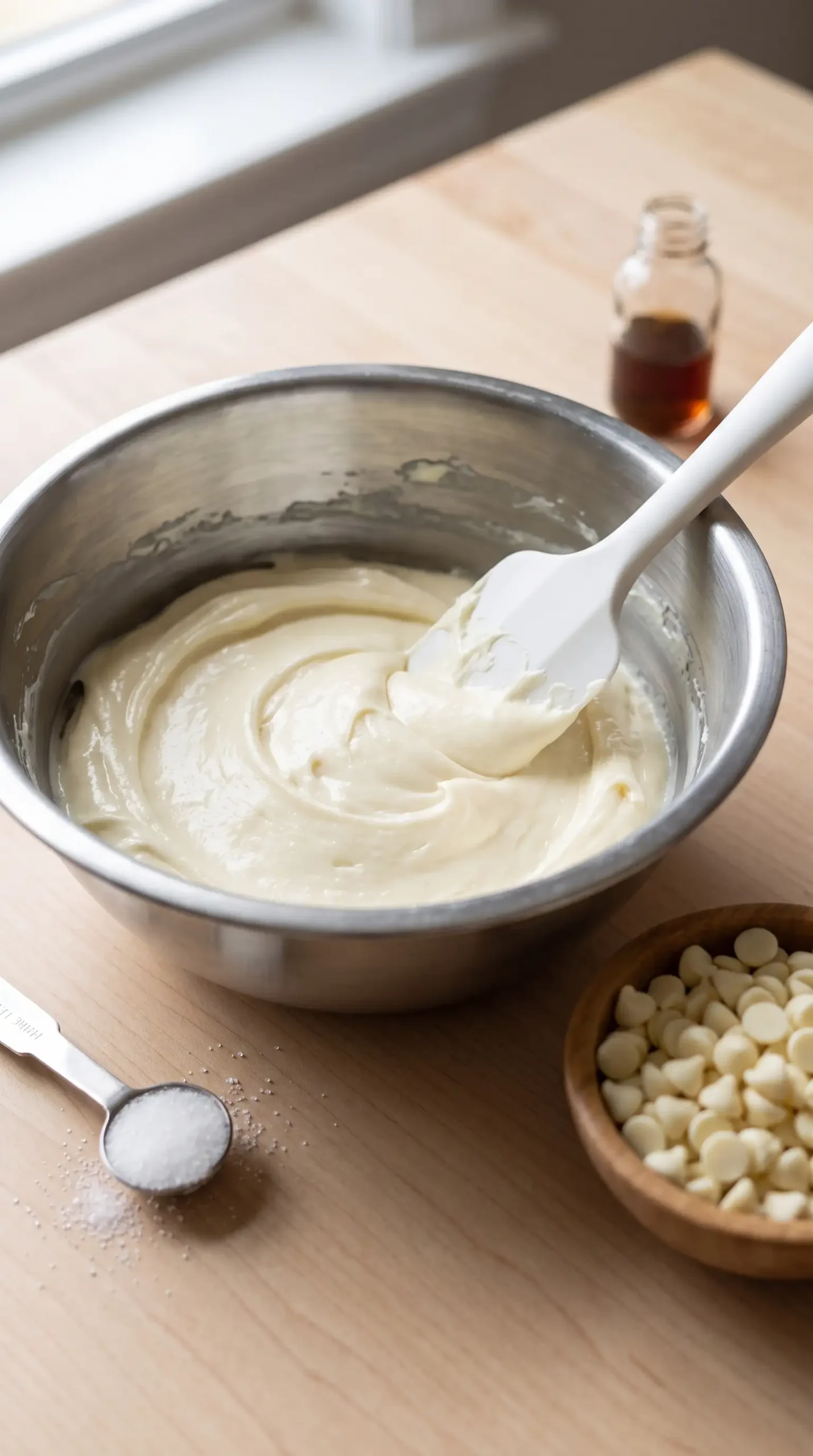
Softened cream cheese is the most important ingredient-handling detail in the swirl. Cold cream cheese resists blending and can leave small lumps that remain visible after baking.
Beat the cream cheese with the sugar until smooth before incorporating the egg, vanilla, and salt. Once the mixture is creamy, stop mixing so it stays light enough to spread across the brownie batter without becoming overly loose.
Fold the white chocolate chips in after the filling is smooth. Starting with at least half a cup creates distinct pockets of sweetness, while a larger amount makes those pockets more frequent.
A Square Pan Keeps the Layers Balanced
A 9-by-9-inch baking dish, or a comparable square pan, provides enough surface area for a defined brownie layer and an even cream cheese topping. A noticeably different pan size may require an adjustment in baking time because thinner or thicker layers set at different rates.
Swirling Without Blending the Layers
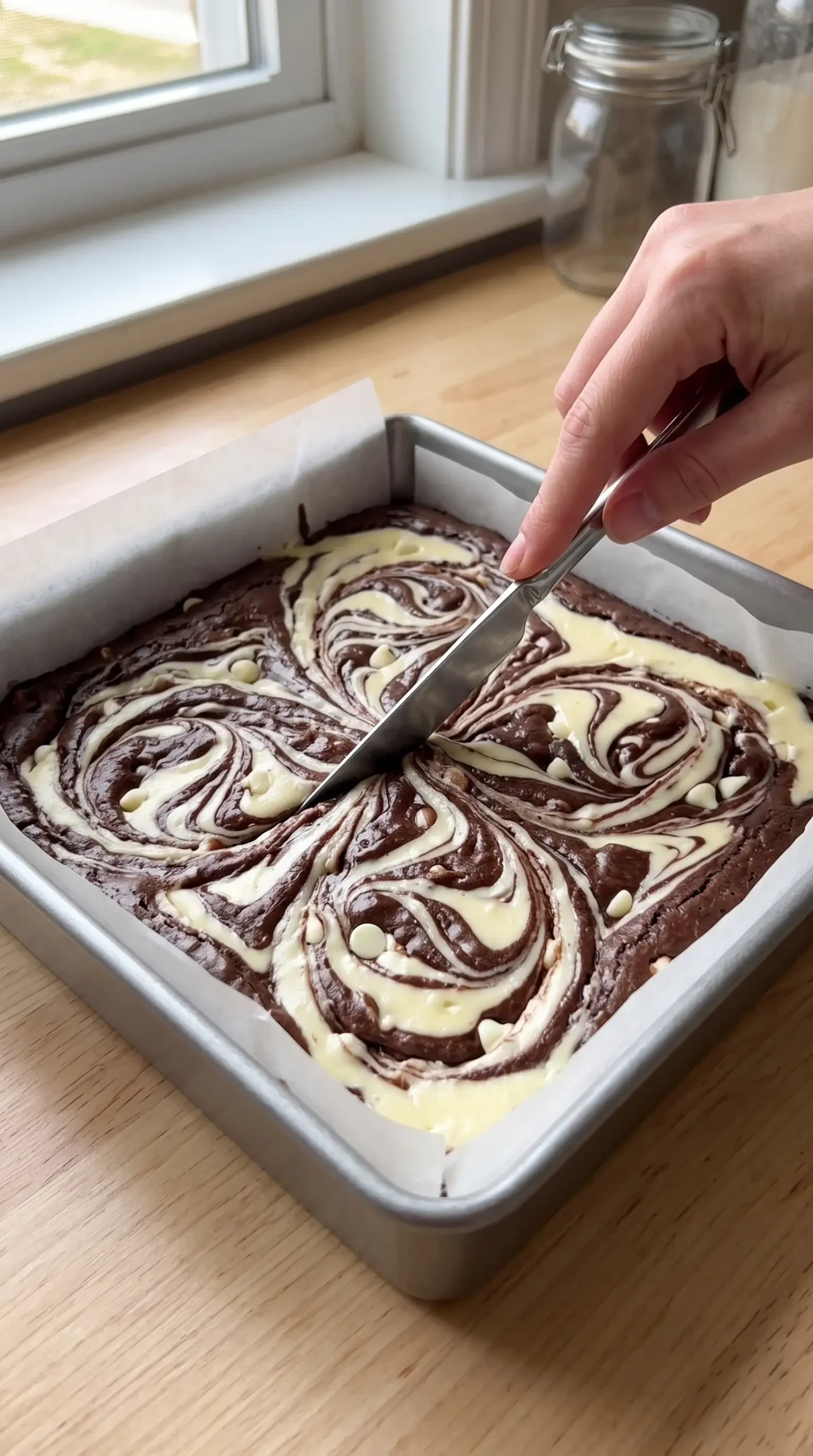
Pour the cream cheese mixture over the brownie batter in a fairly even layer, then use a butter knife to swirl with knife in gentle figure-eight motions through both mixtures. The knife should pull small ribbons of brownie upward without stirring the two layers into one color.
Wipe the knife between passes when batter begins to cling, since a clean blade produces narrower, more defined ribbons. A controlled peanut butter cheesecake brownie swirl depends on gentle strokes that lift the darker batter without dragging the creamy filling across the entire surface.
Large, forceful circles can erase the marbled effect and make the filling sink unevenly. A few deliberate passes are enough to distribute the topping while preserving clear sections of brownie and cheesecake. Pay particular attention to the corners, which are easy to miss when the knife keeps returning to the middle of the pan.
- Start shallow: Move the knife through the upper portion first so the cream cheese stays visible.
- Cross the pan: Space the figure-eight motions across the full surface instead of concentrating them in the center.
- Stop early: Leave distinct light and dark areas before the pattern begins to look muddy.
Rack Position Helps Prevent Excess Browning
Begin baking on the lower rack so the brownie base receives steady heat while the cheesecake surface remains protected. After the first portion of baking, move the pan to the upper rack for the remaining time so the center can finish setting without leaving the top exposed in one position for the entire bake.
The supplied guidance places the total baking window between 30 and 40 minutes. Oven behavior and pan dimensions can shift the exact finish point, so visual and knife tests matter more than relying on the clock alone. Check near the early end of the window, then continue only as needed; opening the oven repeatedly before that point can interrupt steady baking.
A knife inserted near the center should emerge mostly clean, with a few moist crumbs still acceptable. Brownies continue to set as they cool, and waiting for a completely dry knife can push the base toward dryness and encourage cracks in the cheesecake layer.
Doneness Signs Worth Checking
| What you see | What it means | Best response |
|---|---|---|
| Center looks wet and loose | The layers have not set | Continue baking and check again shortly |
| Knife shows a few moist crumbs | The brownies are near the ideal finish | Remove the pan and let carryover heat finish the set |
| Knife is completely dry and edges look firm | The bars may be moving toward overbaked | Remove immediately and cool without further heat |
| Cheesecake surface is deeply browned | The top has received too much direct heat | Use the rack-position approach on the next batch |
Cooling Creates Clean Cheesecake Swirl Brownies
Let the pan cool completely before cutting. Warm cheesecake swirl brownies are softer and more likely to drag under the knife, while cooled bars hold their layers and produce cleaner squares.
Serving Choices Change the Bite
At room temperature, white chocolate brownies show off the soft, fudgy center and creamy swirl most clearly. Taking chilled bars out of the refrigerator before serving allows the brownie layer to relax while the topping still keeps its shape.
For a colder, firmer dessert, serve the squares directly from the refrigerator. That option works especially well when the bars need to remain tidy on a tray or travel to a gathering.
Simple accompaniments should provide contrast without competing with the white chocolate cream cheese brownies. Plain vanilla ice cream, a small amount of whipped cream, coffee, or milky hot cocoa all fit the dessert’s rich profile.
- Dust lightly with powdered sugar for a clean finish.
- Add a few white chocolate chips just before serving for visible texture.
- Garnish with raspberries or strawberries for a bright, fresh contrast.
Cold Storage Protects the Cream Cheese Layer
Refrigerate cooled bars in an airtight container for up to four days. The cold environment keeps the cream cheese filling in good condition and helps the squares retain their shape.
When a softer texture is preferred, remove the needed portions 30 to 60 minutes before serving. Keeping the remaining bars chilled avoids repeatedly warming the whole batch.
For longer storage, wrap individual squares tightly and freeze them in an airtight container for up to two months. Thaw the wrapped pieces in the refrigerator so moisture forms on the wrapping instead of collecting directly on the cheesecake surface. Leave them wrapped during thawing, then uncover after they are cold and fully defrosted.
Make-Ahead Timing for Parties and Trays
Baking the bars a day before serving gives them enough time to cool fully and firm in the refrigerator. Cut them after they are cold for the neatest edges, then arrange them on the serving tray close to the event.
White Chocolate Brownie Mistakes to Avoid
Using cold cream cheese is the clearest path to a lumpy swirl. Softening it first and beating it smooth with sugar prevents uneven pockets in the topping.
Overworking the filling can make it looser than needed, while excessive swirling blends away the contrast between the layers. Mix only until creamy, then use a limited number of gentle knife passes.
Overbaking causes two connected problems: a dry brownie base and a cheesecake surface that may crack. Remove the pan when the center is set and the knife carries only a few moist crumbs.
| Mistake | Likely result | Prevention |
|---|---|---|
| Starting with cold cream cheese | Lumpy filling | Bring it to room temperature before beating |
| Swirling too aggressively | Muddy, indistinct layers | Use gentle figure-eight motions |
| Baking until the knife is bone-dry | Dry brownies and possible cracks | Accept a few moist crumbs |
| Cutting while warm | Ragged edges and dragged filling | Cool completely before slicing |
Mascarpone and White Chocolate Adjustments
Mascarpone can replace cream cheese when a milder, creamier filling is preferred, though the tang and texture will differ. Keep the remaining filling components consistent so the adjustment stays focused on the dairy base.
The amount of white chocolate can also move from half a cup toward three-quarters of a cup for more frequent sweet pockets. Increasing it changes the distribution of chips, not the fundamental swirl technique or baking approach.
Either adjustment should preserve the even topping layer and restrained knife work that define white chocolate brownies with a visible cheesecake pattern.
The Best Swirl Comes From Controlled Mixing
A smooth cream cheese filling, a fudgy brownie base, and a few deliberate knife passes create the strongest balance in white chocolate brownies. Careful mixing preserves the contrast, while the doneness test protects both the moist center and the marbled top.
Cooling completes the structure that baking begins. Once fully set, the bars cut cleanly, travel well, and can be served chilled or allowed to soften for a more brownie-forward texture.
White Chocolate Chip and Doneness Questions
Can boxed brownie mix be used?
Boxed brownie mix is suitable and keeps preparation simple. Select a fudgy style and prepare it according to its package directions before adding the cream cheese mixture.
How much white chocolate is enough?
Half a cup provides noticeable chips throughout the swirl. Increase the amount to three-quarters of a cup when more frequent white chocolate pockets are preferred.
What keeps the cheesecake layer from sinking?
Spread the brownie batter evenly, add the filling gently, and avoid overmixing while swirling. Controlled knife movement keeps the topping distributed instead of forcing it deep into the base.
Should the bars be chilled before cutting?
Complete cooling is essential, and chilling makes the squares even firmer. A cold pan is especially helpful when very neat edges are needed for a party tray.
Can individual squares be frozen?
Wrap each square tightly, place the pieces in an airtight container, and freeze for up to two months. Thaw them while still wrapped in the refrigerator before serving.
What if the pan is not 9 by 9 inches?
A comparable square pan can work, but layer thickness may change. Watch the center closely and use the knife test because a different pan can alter the baking time.
White Chocolate Brownies with Creamy Cheesecake Swirl
White Chocolate Brownies with Creamy Cheesecake Swirl are rich, fudgy brownies with a smooth cheesecake layer and sweet white chocolate flavor. They are an easy dessert choice for gatherings or whenever a decadent homemade treat is wanted.
Ingredients
Method
Preparation
- Preheat the oven to 325°F / 165°C.
- Prepare the brownie batter following the batter recipe instructions, then spread it evenly into a 9x9-inch baking pan or similar square pan.
- Beat the softened cream cheese with the sugar until the mixture is smooth.
- Mix the egg, vanilla extract, and salt into the cream cheese mixture until creamy.
- Fold the white chocolate chips into the cream cheese mixture.
- Spread the cream cheese mixture over the brownie batter and swirl the layers together with a knife using gentle figure-eight motions.
Baking
- Bake the brownies for 30-40 minutes, keeping the pan on the bottom oven rack for the first 20 minutes and transferring it to the top rack for the final 10-15 minutes, until a knife inserted in the center comes out mostly clean.
Serving
- Allow the pan to cool completely before slicing the brownies into squares.
- Serve the brownies at room temperature or chilled.
Notes
Store cooled brownies in an airtight container in the refrigerator for up to 4 days, or freeze tightly wrapped squares for up to 2 months.