
From morning breakfasts to evening dinners, Tasteza Recipes offers quick and easy recipe ideas, featuring everything from wholesome meals to delicious desserts for every moment and every occasion.



Roasted vegetable grilled cheese brings together caramelized root vegetables, creamy white cheeses, and crisp wheat bread for a comforting sandwich with more texture than a traditional grilled cheese. Thin roasted potato and carrot slices create a tender filling with lightly browned edges, while a blend of cheeses melts into a rich center.
Built around simple ingredients, the sandwich works when you want a satisfying lunch or an easy dinner that feels more complete. The combination of roasted vegetables and melted cheese turns familiar pantry staples into a warm meal with contrasting flavors and textures.
Why Three Cheese Roasted Vegetable Grilled Cheese Works
The appeal of a three cheese grilled cheese sandwich comes from balance. Soft, melted cheese provides richness, while roasted vegetables add structure and a slightly sweet, savory flavor from their browned surfaces. Thick wheat bread holds everything together and creates a crisp exterior after grilling.
Roasting the potato and carrots before assembly changes the character of the filling. The vegetables become tender enough to bite through easily but remain firm enough to prevent the sandwich from feeling flat or overly soft.
A roasted vegetable grilled cheese also gives a practical way to use seasonal produce without creating a complicated meal. The oven handles the vegetable preparation while the skillet creates the familiar golden crust associated with a classic grilled cheese.
Choosing Cheeses and Vegetables for the Sandwich

The cheese selection determines how the sandwich melts and how the vegetables are supported. Soft white cheeses with good melting qualities create the creamy center needed for this style of sandwich.
Different cheeses contribute more than flavor because their moisture, fat, and protein structure affect their cheese melting behavior when heated. Combining varieties with different characteristics helps create a smoother, more balanced filling.
| Cheese option | Texture when melted | Flavor character |
|---|---|---|
| Gruyere | Smooth and creamy | Nutty and mild |
| Raclette | Very soft and flowing | Rich and gentle |
| Fontina | Silky and stretchy | Buttery and mild |
| White Cheddar | Firm but melting | Sharper cheese flavor |
Using three types of white cheese allows each layer to contribute a slightly different quality without overwhelming the roasted vegetables. Gruyere, Raclette, Swiss, Gouda, Provolone, Fontina, or White Cheddar can all fit the sandwich depending on the preferred flavor balance.
Roasted Vegetable Texture Shapes the Filling
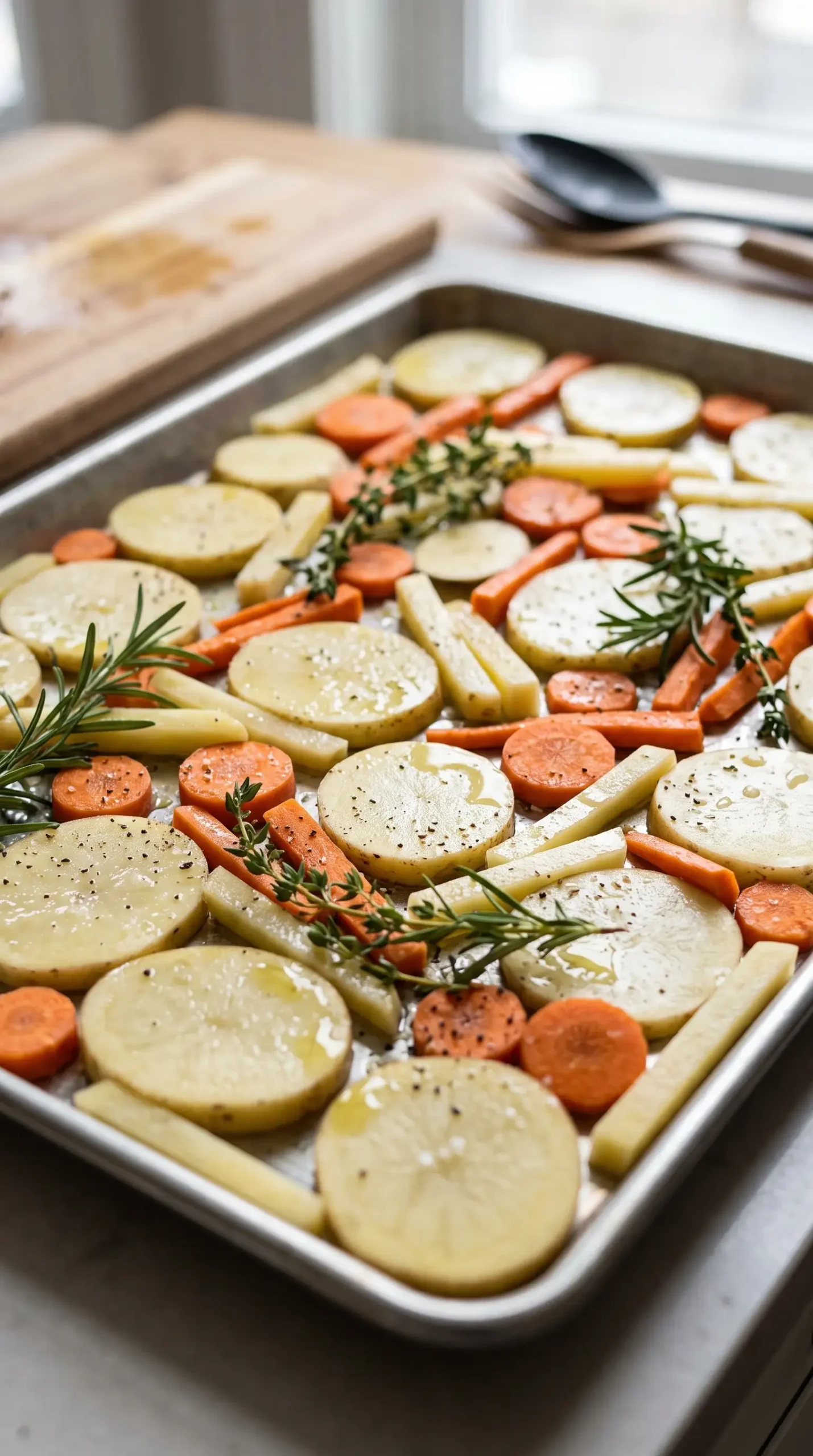
Potatoes and carrots need enough roasting time to develop a light crust while staying tender-crisp inside. Thin, even slices help the vegetables cook at the same pace and create pieces that fit neatly between bread slices.
Fresh rosemary and thyme add a savory herbal note during roasting. Their flavor settles into the vegetables as olive oil, salt, and pepper help the surfaces brown.
- Even slices: Keep potato and carrot pieces similar in thickness so they finish together.
- Single-layer roasting: Give vegetables space on the baking sheet so they brown instead of steaming.
- Light seasoning: Let herbs and natural vegetable sweetness remain noticeable alongside the cheese.
Bread and Cheese Layers Create Better Melting
Thick, sturdy wheat bread provides the foundation for the vegetable grilled cheese recipe because it can support the roasted filling without collapsing. Using a homemade whole wheat bread loaf can give the sandwich a firm structure and hearty texture that holds up to multiple cheese layers. A thinner bread may struggle with the weight of vegetables and the melted filling.
Cheese placement matters because it surrounds the vegetables with melted richness. Adding cheese below and above the roasted vegetables helps connect the filling to the bread as the sandwich heats.
The buttered exterior of the bread develops a crisp surface in the skillet. A thin coating is enough to encourage browning while allowing the cheese inside to melt before the outside becomes too dark.
Cooking Control for Golden Roasted Vegetable Grilled Cheese
Successful grilling depends on managing heat from both directions. The skillet needs to be hot enough to brown the bread, but excessive heat can darken the crust before the cheese softens.
Roasted vegetable grilled cheese benefits from steady cooking because the sandwich contains several layers that warm at different speeds. Moderate heat gives the cheese time to melt while the bread develops a crunchy exterior.
| Cooking choice | Desired result | Problem avoided |
|---|---|---|
| Hot but controlled skillet | Even bread browning | Burned crust |
| Thin butter layer | Crisp exterior | Greasy bread |
| Light pressing | Better contact | Uneven grilling |
Planning the Assembly Around Warm Fillings
Preparing the vegetables before building the sandwich creates a smoother assembly process. Warm roasted slices combine more easily with the cheese layers and reduce the time needed on the skillet.
The sandwich works best when the filling remains balanced from edge to edge. Distributing vegetables evenly prevents some bites from becoming mostly bread while others contain all the roasted ingredients.
Serving Ideas for a Roasted Vegetable Sandwich
Cutting the sandwich diagonally makes the layers easier to see and creates convenient portions for serving. A peppery arugula salad or mixed greens can add freshness beside the rich cheese filling.
Storing Components Without Losing Texture
Roasted vegetables keep well when stored separately in an airtight container. Keeping the vegetables apart from the bread helps preserve the texture needed for a crisp sandwich later.
Prepared sandwiches are best enjoyed on the same day, while a fully assembled leftover sandwich can be refrigerated briefly. Reheating in a skillet helps restore some crispness that is lost during storage.
Avoid microwaving the assembled sandwich because moisture can soften the bread. Separating roasted vegetables and bread before storing gives the best chance of maintaining the original contrast.
Helpful Tips for a Better Vegetable Grilled Cheese Recipe
Small preparation choices improve the finished sandwich without adding complexity. These details focus on texture, heat control, and keeping each ingredient working together.
- Slice carefully: Thin vegetables roast evenly and fit comfortably inside the sandwich.
- Choose mild melts: Two or three complementary white cheeses create a balanced flavor.
- Rest briefly: Waiting a minute after grilling allows the melted cheese to settle.
Common Mistakes in Three Cheese Roasted Vegetable Grilled Cheese
Overcrowding the baking sheet is one of the easiest ways to reduce roasted flavor. Vegetables placed too closely together release moisture and steam, which prevents the light crust needed for the sandwich.
Another issue happens when the bread browns faster than the cheese melts. Lowering the heat and watching the skillet closely helps create a crisp exterior with a warm, melted center.
Too much butter can also interfere with the texture. A thin coating gives the bread enough fat for browning without making the outside heavy or difficult to crisp.
Adapting the Sandwich With Suitable Variations
The same roasted vegetable grilled cheese approach can work with other vegetables that roast well. Thin zucchini, bell pepper, or small broccoli florets can replace or accompany the original vegetables when prepared until tender.
For a vegan adaptation, plant-based cheeses and olive oil spread can replace dairy ingredients. The structure remains similar because roasted vegetables still provide the hearty filling.
Pairing Three Cheese Grilled Cheese Sandwiches With Sides
A warm bowl of tomato soup is a classic companion because its smooth texture contrasts with the crisp bread. Roasted tomato bisque offers another option with a similar comforting profile.
Grainy mustard or a small amount of pesto inside the bread can add brightness. These additions complement the three cheese grilled cheese sandwich without covering the roasted vegetable flavors.
Roasted Vegetables and Melted Cheese Create the Signature Sandwich Texture

Roasted vegetables provide the defining texture in this sandwich by adding lightly crisp edges and tender centers between layers of melted cheese. Careful roasting and balanced assembly allow each bite to hold both the vegetable flavor and creamy cheese.
The combination works because the bread, cheese, and vegetables each serve a clear purpose. A well-made roasted vegetable grilled cheese keeps the filling sturdy, the crust crisp, and the center warm without losing the contrast that makes it satisfying.
Questions About Cheese Melting and Vegetable Texture
What cheeses melt best for roasted vegetable grilled cheese?
Gruyere, Fontina, Provolone, Raclette, Swiss, Gouda, and White Cheddar are suitable choices because they soften well and combine smoothly with roasted vegetables.
How can I prevent roasted vegetables from making the sandwich soggy?
Cook the vegetables until they are tender-crisp with a light crust, then assemble the sandwich promptly. Vegetables that remain wet can soften the bread before grilling.
Can other vegetables replace the potato and carrots?
Thinly sliced zucchini, bell pepper, or small broccoli florets can work when roasted until tender and prepared in pieces that fit comfortably inside the bread.
Should the potato and carrots be peeled before roasting?
Peeling is optional for thin slices. Leaving the peel on the potato can add texture, while peeling remains a choice based on personal preference.
How do I keep the bread crisp while the cheese melts?
Use moderate skillet heat, apply butter thinly, and allow enough time for the interior cheese to soften before the bread becomes overly dark.
Three Cheese Roasted Vegetable Grilled Cheese Recipe
This three cheese roasted vegetable grilled cheese recipe combines a crispy toasted bread exterior with a rich, melty cheese filling and tender roasted vegetables. It is a comforting, flavorful sandwich that is perfect for an easy meal or cozy gathering.
Ingredients
Method
Roasting
- Preheat the oven to 425°F / 220°C.
- Spread the sliced potato and carrots in a single layer on a baking sheet.
- Coat the vegetables with olive oil, strip the rosemary and thyme leaves from the stems, and distribute the herbs over the vegetables.
- Season the vegetables with sea salt and black pepper.
- Roast for 10 to 15 minutes, turning once as they start to brown, until the vegetables are tender-crisp with a lightly browned exterior.
Assembly and Grilling
- Warm a skillet or griddle to 400°F / 205°C.
- Cut the white cheeses into thin slices and spread butter on one side of each bread slice.
- Place cheese on the unbuttered side of one bread slice, add the roasted vegetables, then cover with another layer of cheese.
- Top with the second bread slice, keeping the buttered side facing outward.
- Grill the sandwich for 5 to 10 minutes, flipping once, until the bread is crisp and browned and the cheese has melted completely.
Serving
- Allow the sandwich to rest for 1 minute, then slice it in half and serve hot.
Notes
Roast the vegetables until they are tender-crisp, and avoid using wet vegetables when building the sandwich to help maintain a crisp bread texture.