
From morning breakfasts to evening dinners, Tasteza Recipes offers quick and easy recipe ideas, featuring everything from wholesome meals to delicious desserts for every moment and every occasion.


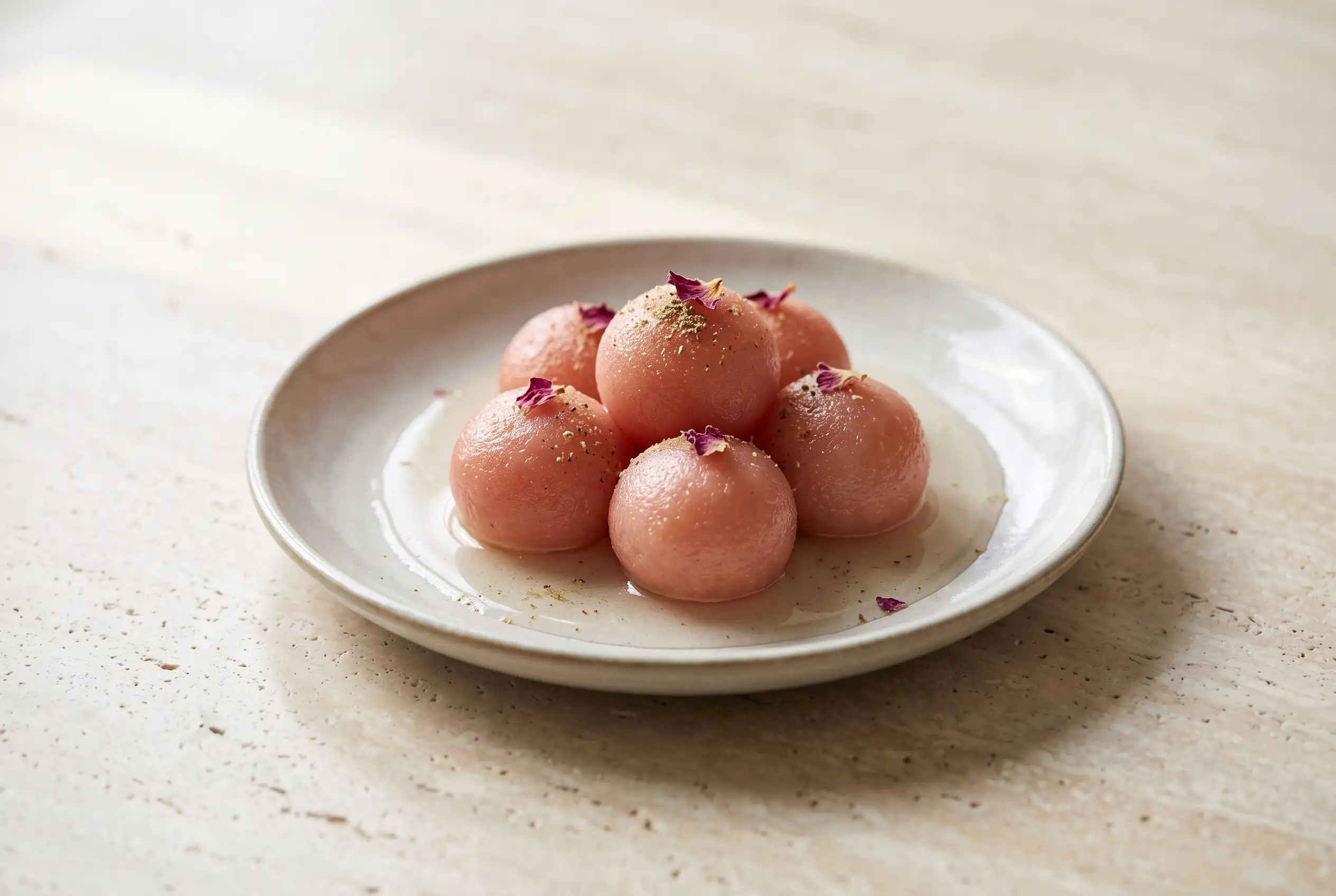
Rose ball milk powder jamun brings together the familiar softness of a syrup-soaked festive sweet with a delicate rose and cardamom aroma. The milk powder base creates tender jamuns without khoya, making this rose jamun recipe a practical choice for home cooks who want a floral dessert using accessible pantry ingredients.
Rose Ball Milk Powder Jamun At a Glance
The rose ball milk powder jamun experience comes from three connected elements: a soft milk powder dough, gentle frying that preserves tenderness, and a fragrant syrup that settles into every piece. The combination creates a melt-in-the-mouth sweet suited to festivals, gatherings, and smaller celebrations.
| Feature | Cooking choice | Result |
|---|---|---|
| Dough base | Milk powder with flour and ghee | Soft, pliable jamuns |
| Syrup flavor | Rose water and cardamom | Floral, aromatic finish |
| Finishing step | Warm syrup soaking | Tender texture with absorbed sweetness |
Floral Syrup Shapes the Rose Ball Milk Powder Jamun Finish
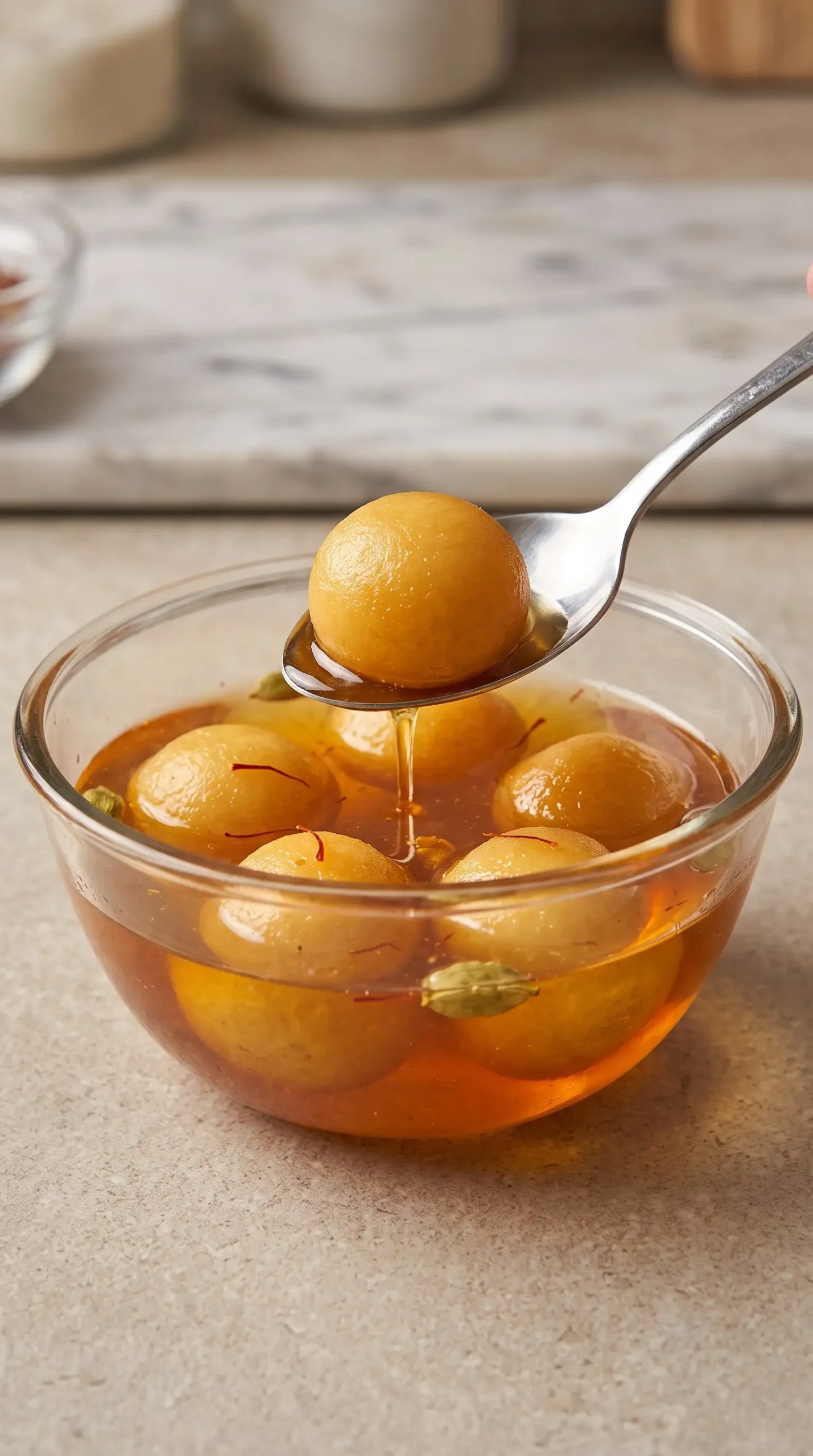
Rose water gives the dessert its recognizable floral character, while cardamom adds a warm aromatic note that keeps the sweetness balanced. The syrup is not only a sweet coating; it is the element that transforms fried dough into a soft, soaked sweet.
Warm syrup helps the jamuns absorb flavor evenly after frying. A slightly sticky consistency allows the syrup to cling and soak into the pieces, creating the tender texture expected from gulab jamun with milk powder.
Saffron strands can be included as an optional addition when a richer appearance and extra aroma are desired. The floral notes remain central, while the spice additions provide a more layered finish.
Milk Powder Choices for Rose Ball Milk Powder Jamun Texture
Milk powder is the key ingredient decision in a milk powder jamun recipe because it provides the quick base for the dough. full-fat milk powder gives a creamier texture, while nonfat powder can produce a drier result.
Adding milk gradually during dough preparation helps create a soft mixture that can be shaped easily. Too much liquid can make the dough sticky, so careful binding keeps the balls smooth and manageable.
Ghee also influences the dough by adding richness and helping create the tender character associated with this sweet. A light touch during mixing supports a softer texture after frying and soaking.
Dough Handling Decisions for Softer Jamuns
Gentle kneading and a short resting period allow the flour to hydrate before shaping. Smooth, crack-free balls are easier to fry evenly and absorb syrup without taking in excess oil.
Frying Control for Even Golden Rose Balls
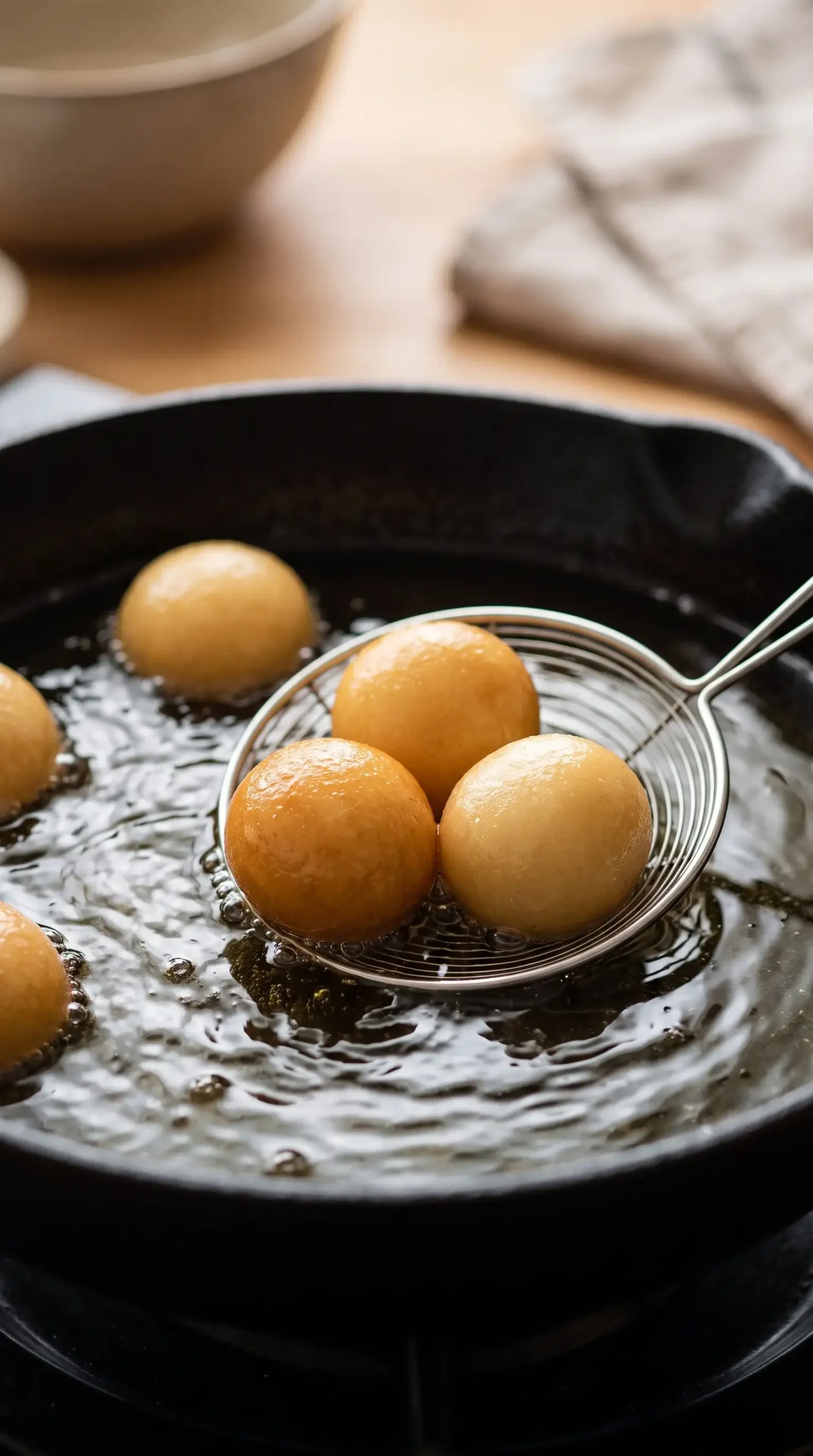
Frying temperature has a major effect on the inside texture of rose ball milk powder jamun. Moderate heat allows the exterior to become golden while giving the center enough time to cook through.
Testing one small ball before frying the entire batch can reveal whether the oil temperature supports even cooking and proper syrup absorption. A steady temperature prevents the outside from darkening too quickly.
Small, smooth shapes also improve frying results. Rough surfaces or cracks can allow more oil to enter, affecting the light texture that makes these jamuns enjoyable.
- Oil check: Fry at a steady medium-low heat for balanced cooking.
- Shape check: Roll balls until the surface is smooth and free of cracks.
- Syrup check: Use warm syrup so the fried jamuns absorb it evenly.
Rose Ball Mistakes That Cause Oily or Dense Jamuns
Cracked dough balls are one common issue with rose ball milk powder jamun because openings on the surface can encourage extra oil absorption during frying. Smoothing each ball before it reaches the pan helps maintain a cleaner texture.
High frying heat creates another problem by coloring the outside before the inside cooks properly. Watching the oil temperature keeps the cooking process gentle and supports a softer center.
Thin syrup can also reduce the quality of the finished sweet because the jamuns need a slightly sticky syrup to hold moisture. Adjusting the syrup consistency before soaking improves the final texture.
Serving Ideas for Rose Ball Milk Powder Jamun Occasions
Serve rose ball milk powder jamun warm or at room temperature after sufficient soaking. A shallow dish allows syrup to collect around the sweets, while chai or a mild milk-based drink provides a pleasant pairing.
Storage Practices for Syrup-Soaked Rose Balls
Proper storage helps preserve the softness of the soaked jamuns. Keeping them submerged in syrup inside an airtight container helps prevent drying during refrigerator storage.
When stored in a cool, dry place, the sweets are best enjoyed within a shorter period. Refrigeration extends their freshness, and soaked jamuns can also be frozen in a sealed container for longer keeping.
Strong-smelling foods should be avoided nearby because they can affect the delicate rose aroma. A gentle warming before serving can help bring back a softer texture.
Flavor Variations for a Rose Jamun Recipe Twist
A richer version can include some fresh crumbled khoya with the milk powder base. Mini jamuns create smaller portions, and a strip of lemon peel in the syrup can introduce a faint citrus note. Festive sweets can be served alongside homemade dessert recipes when preparing a varied dessert spread for gatherings.
Pantry-Friendly Reasons to Choose Milk Powder Jamun
Many home cooks choose a milk powder jamun recipe because it removes the need to prepare khoya while still delivering a traditional-style sweet texture. The ingredients are simple enough for regular kitchens and flexible enough for different serving sizes.
The milk powder approach also reduces the hands-on preparation needed for a festive dessert. The dough comes together with common ingredients, allowing cooks to focus on shaping, frying, and soaking.
Rose ball milk powder jamun works well when a homemade sweet is needed for celebrations without a long preparation process. Its floral finish gives a familiar dessert a distinct presentation.
Rose Water and Cardamom Balance in the Syrup
The syrup depends on a careful balance between sweetness and aroma. Rose water supplies the signature floral character, while cardamom powder adds depth without replacing the rose note.
Pairing and Garnishing Details for Rose Ball Milk Powder Jamun
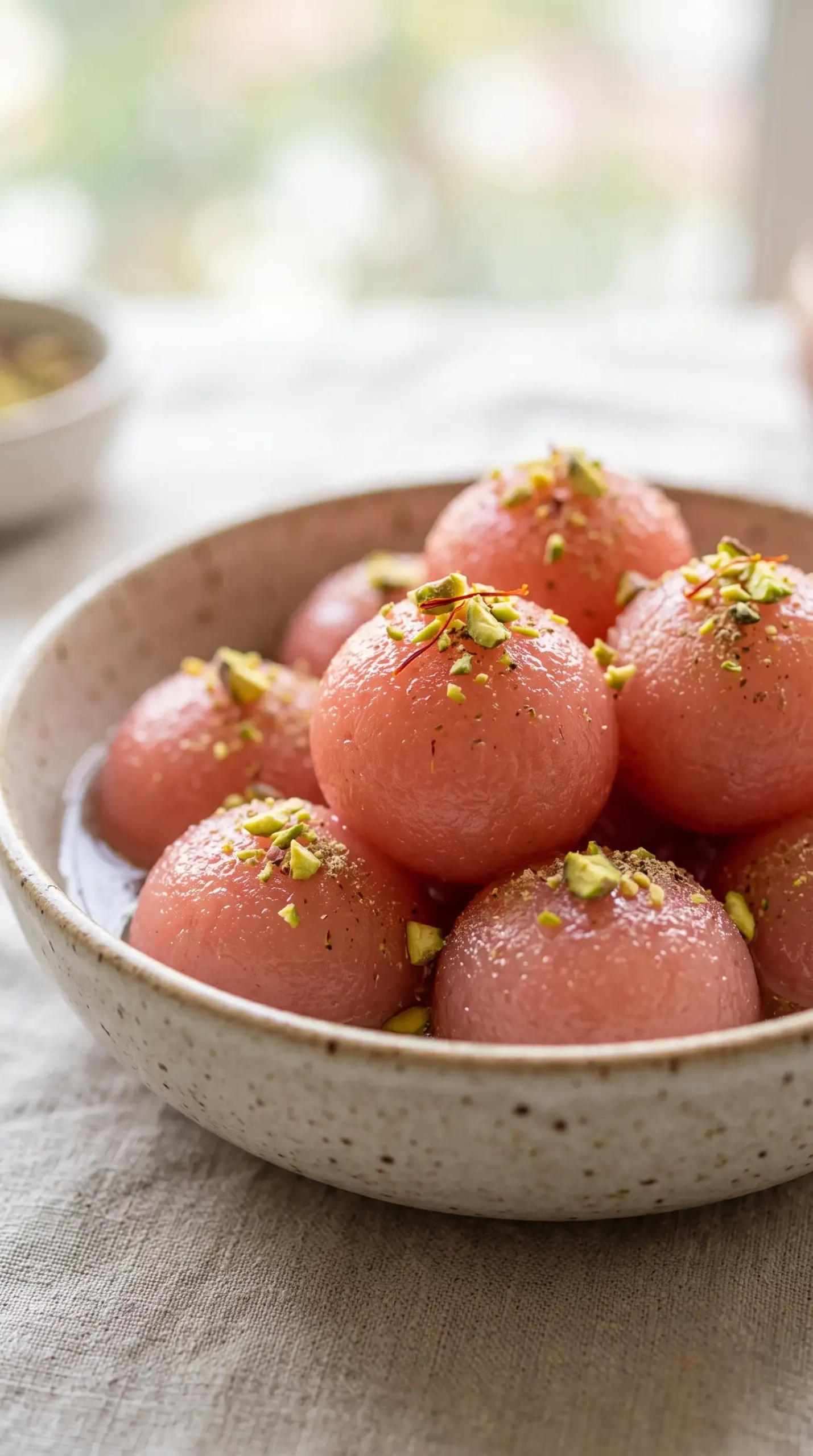
Saffron strands or lightly crushed pistachios can be used as finishing touches when serving. A small dusting of cardamom powder just before presentation can highlight the aroma.
Rose Ball Milk Powder Jamun Succeeds Through Gentle Handling
Soft dough, controlled frying, and flavorful syrup determine the quality of rose ball milk powder jamun from start to finish. Each stage affects how well the sweet develops its tender bite and floral character.
The finished jamuns show why careful shaping and soaking matter. A smooth surface, balanced syrup, and patient absorption create the texture that defines this milk powder-based dessert.
Rose Ball Milk Powder Jamun Questions About Texture and Storage
What milk works best for binding the dough?
Whole milk is a suitable choice because it supports richer texture and better binding. Adding it slowly helps create a soft dough without making it overly sticky.
Can nonfat milk powder be used for rose ball milk powder jamun?
Nonfat milk powder can be used, but the texture may be drier compared with full-fat milk powder. Choosing full-fat powder helps create a creamier result.
How long should jamuns remain in the syrup?
Allowing the jamuns to soak for at least an hour helps them absorb sweetness. A longer soak gives a softer and more saturated texture.
Why should these jamuns be fried instead of baked?
Frying supports the classic texture and helps the sweets absorb syrup properly. Baking does not provide the same result for this preparation.
Can rose water be replaced in the syrup?
Rose water provides the characteristic floral note, but it can be reduced or replaced with a few drops of kewra water when a different aroma is preferred.
Milk Powder Jamun with Rose Water and Cardamom
Milk Powder Jamun with Rose Water and Cardamom is a soft, syrup-soaked dessert with a tender texture and fragrant floral-spiced flavor. This easy homemade treat is perfect for festive gatherings or when you want a delicate traditional sweet.
Ingredients
Method
Preparation
- Mix the milk powder, all-purpose flour, and baking soda together in a bowl.
- Work the ghee into the dry mixture, then add milk gradually until a soft dough develops.
- Allow the dough to rest for 10-15 minutes before forming the jamuns.
Syrup
- Heat the sugar and water together over medium heat until dissolved, then add rose water and cardamom powder.
- Simmer the syrup for about 10 minutes until it reaches a slightly sticky consistency.
Cooking
- Warm the vegetable oil in a deep pan to 325°F / 163°C to 350°F / 177°C.
- Shape the dough into small smooth balls and fry them in batches until evenly browned.
- Place the fried jamuns into the warm sugar syrup and allow them to soak for 1-2 hours before serving warm or at room temperature.
Notes
Keep the syrup warm during soaking so the jamuns absorb it evenly and stay soft.