
From morning breakfasts to evening dinners, Tasteza Recipes offers quick and easy recipe ideas, featuring everything from wholesome meals to delicious desserts for every moment and every occasion.


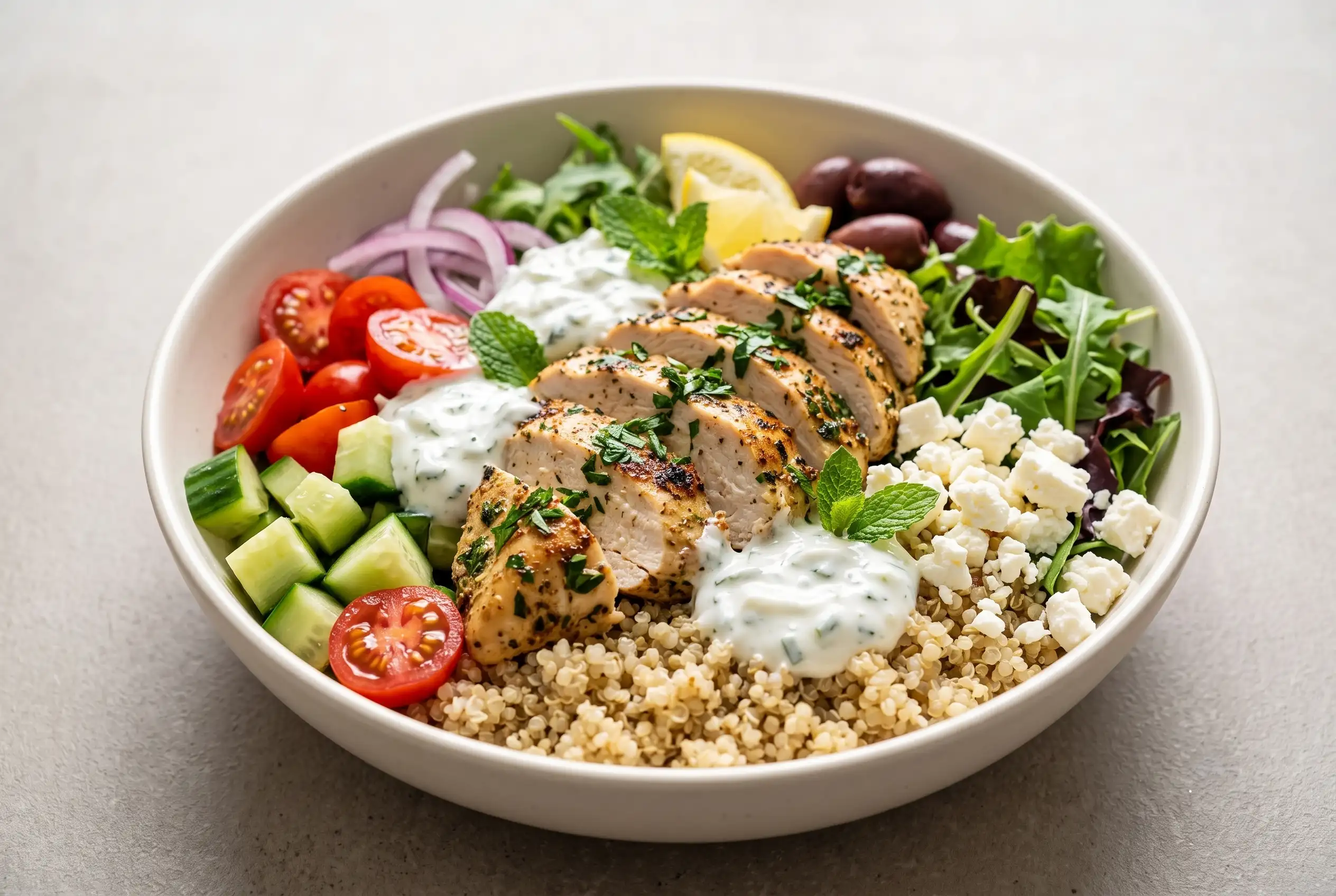
Greek chicken bowls bring together seasoned chicken, fresh vegetables, creamy tzatziki, and a filling quinoa or rice base in a meal designed for flexible serving. The combination creates a balanced mix of textures, from tender sliced chicken and fluffy grains to crisp cucumber and crunchy toppings.
These Greek chicken bowls fit busy schedules because the components can be prepared ahead and assembled when needed. The bright flavors of feta, Kalamata olives, lemon, and yogurt sauce make the bowl feel fresh while keeping the preparation approachable for weeknight dinners, packed lunches, or casual gatherings.
Why Greek Chicken Bowls Work
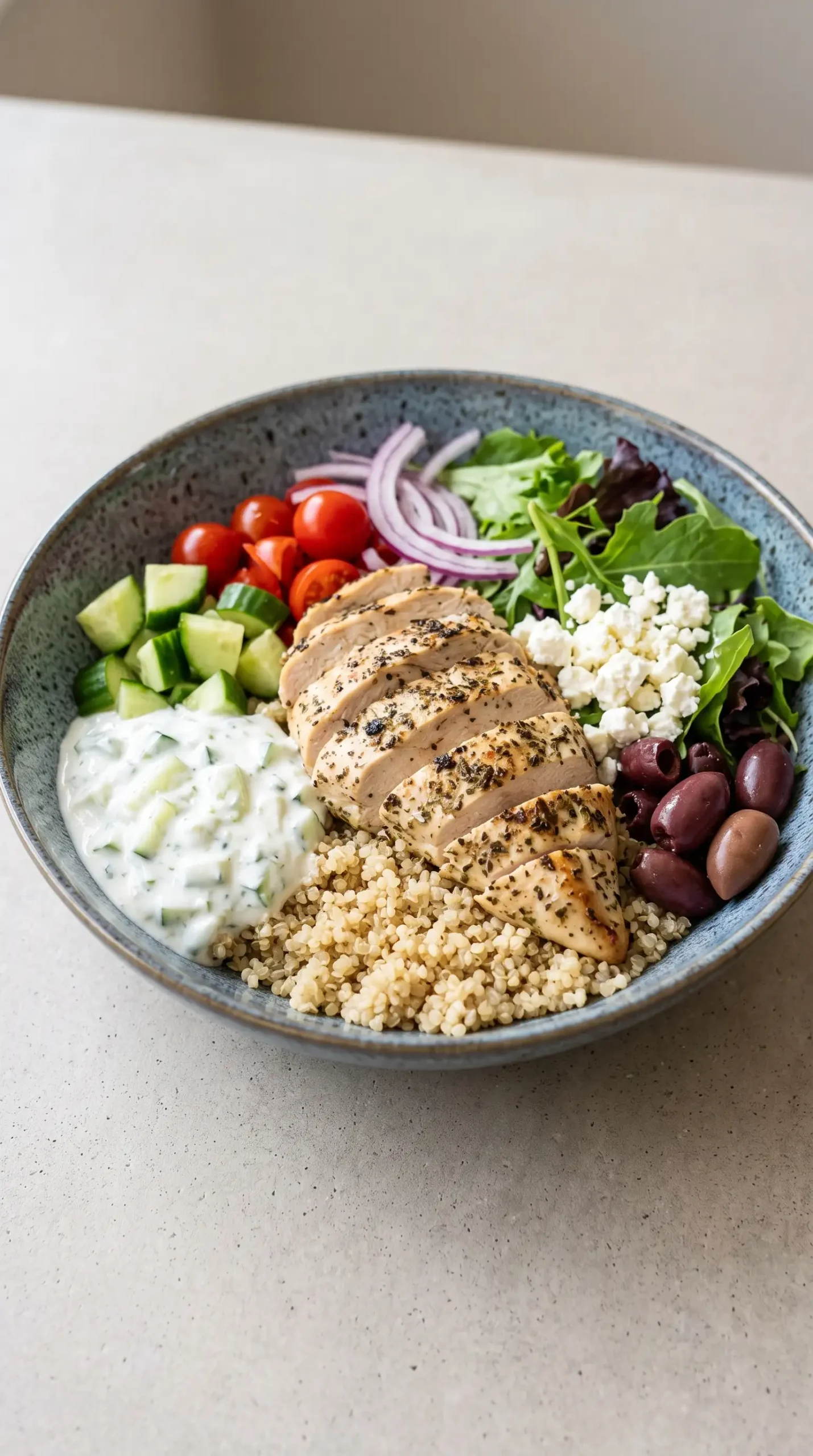
Simple ingredients create a meal with clear contrasts. Warm chicken and grains pair with cool tzatziki, while vegetables add freshness against the richer elements. Each part remains recognizable, which makes the bowls easy to customize for different preferences.
Protein from grilled or pan-fried chicken gives the meal substance, while quinoa or rice provides the base that carries the toppings. Mixed greens, cucumber, tomatoes, and red onion keep the bowl from feeling heavy, especially when finished with a creamy yogurt sauce.
Preparation stays practical because most components can be handled separately. A family can build individual bowls with different topping amounts, and meal prep portions can be stored in containers until serving time.
Building Better Greek Chicken Quinoa Bowls
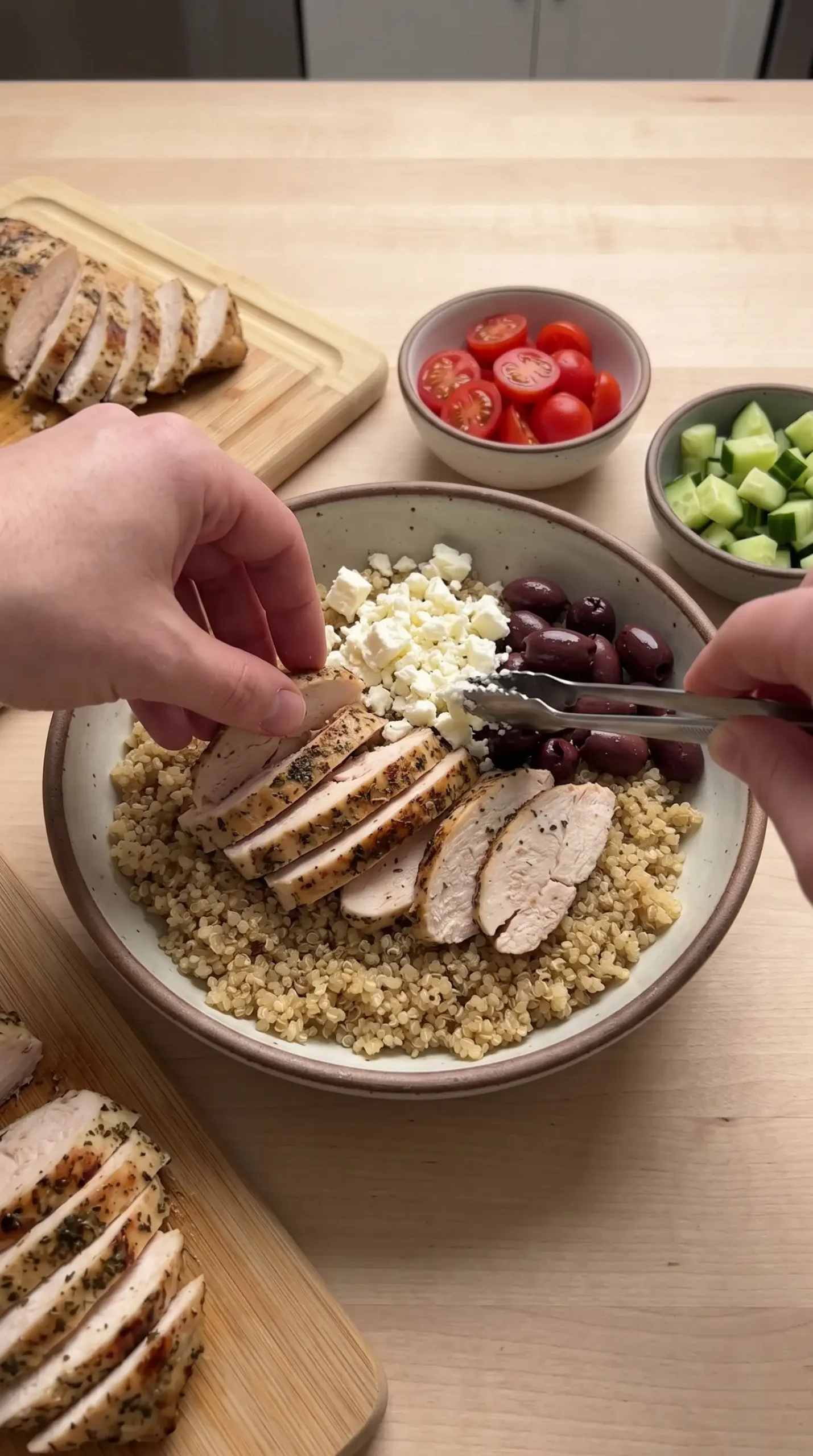
Greek chicken quinoa bowls depend on balance between the grain, protein, vegetables, and sauce. Quinoa offers a slightly nutty base, while rice creates a familiar texture that works well with Mediterranean-inspired toppings.
Slicing the chicken after resting helps distribute it throughout the bowl. Thin pieces allow each serving to include seasoned chicken with creamy tzatziki, salty feta, and the sharp flavor of olives.
| Component | Purpose in the bowl | Best handling choice |
|---|---|---|
| Chicken | Provides the savory protein element | Rest before slicing |
| Quinoa or rice | Creates a filling foundation | Season lightly for brightness |
| Tzatziki | Adds creamy freshness | Add close to serving |
| Vegetables | Creates crisp texture | Keep separate during storage |
Ingredient Choices That Shape Tzatziki Bowls
Quality choices matter most where ingredients are served with minimal cooking. Kalamata olives bring a briny character, feta adds a salty finish, and cucumber creates the fresh texture expected from tzatziki.
Plain Greek yogurt forms the base of the sauce, but cucumber moisture needs attention. draining grated cucumber before mixing helps the sauce stay creamy instead of becoming thin after resting.
Fresh additions can change the character of the bowl without changing its foundation. Lemon juice, dill, or parsley can brighten the finished serving, while olive oil can help adjust a thicker tzatziki.
- Cucumber preparation: Remove excess moisture before combining with yogurt.
- Olive selection: Choose quality Kalamata olives for a stronger briny note.
- Feta placement: Add crumbled feta near serving so its texture remains distinct.
Grain Decisions for Mediterranean Chicken Bowls
Quinoa or rice both support Mediterranean chicken bowls well. Quinoa adds a nuttier texture, while rice provides a softer base that absorbs the flavors from chicken juices, vegetables, and tzatziki.
| Grain option | Texture result | When it fits best |
|---|---|---|
| Quinoa | Light with a subtle bite | When a nutty base is preferred |
| Rice | Soft and familiar | When a classic bowl texture is desired |
| Couscous | Small and fluffy pieces | When changing the grain choice |
Chicken Texture Controls for Juicy Slices
Even chicken thickness improves cooking consistency. Pounding chicken breasts to an even size helps the thinner and thicker areas finish cooking closer together.
Grilling or pan-frying creates a browned exterior while keeping the center tender when the chicken is cooked properly. Seasoning with salt, pepper, and olive oil creates a simple base that works with the stronger toppings in the bowl.
Resting the cooked chicken before slicing is an important texture step. Waiting briefly allows juices to remain in the meat, helping sliced pieces stay moist when combined with grains and vegetables.
Bowl Assembly Keeps Freshness Intact
Layering components with storage and serving in mind keeps the vegetables crisp and the sauce creamy. Place grains and chicken together, but keep greens and tzatziki separate until the bowl is ready to eat.
Greek Chicken Bowl Meal Prep Storage
Separate storage gives each ingredient the conditions it needs. Cooked chicken and grains can stay together in airtight containers, and preparing shredded chicken for meal prep ahead of time makes bowl assembly faster. Fresh vegetables benefit from their own container to prevent excess moisture.
Tzatziki stores well for a short period when kept chilled in an airtight container. Adding the sauce only before eating helps maintain the crisp texture of cucumber, tomatoes, and greens.
Freezing works best for the cooked chicken portion. Fresh vegetables and yogurt-based sauce should remain refrigerated components because their textures change when frozen and thawed.
Mistakes That Hurt Greek Chicken Bowls
Overcooking chicken can make the bowl less enjoyable because dry slices do not combine as smoothly with the creamy toppings. Cook until the juices run clear and use a thermometer when available to confirm the chicken reaches 165°F (74°C).
Watery tzatziki usually comes from cucumber moisture remaining in the sauce. Squeezing grated cucumber before mixing keeps the yogurt base thick and helps the flavors stay concentrated.
Another common issue is assembling bowls too early. Wet toppings can soften greens over time, so keeping components separate until serving protects the texture of the finished meal.
Flavor Variations for Greek Chicken Bowls
The same bowl structure can support different ingredients while keeping the Mediterranean character. Couscous, farro, or bulgur can replace quinoa or rice, and roasted chickpeas or halloumi can replace chicken for a vegetarian version.
Serving Ideas for Chicken Bowls with Tzatziki
Chicken bowls with tzatziki work well served warm or at room temperature. Lemon wedges, warm pita, iced tea, sparkling water with lemon, or a crisp white wine can complement the fresh flavors.
Toppings Balance Each Greek Chicken Bowl
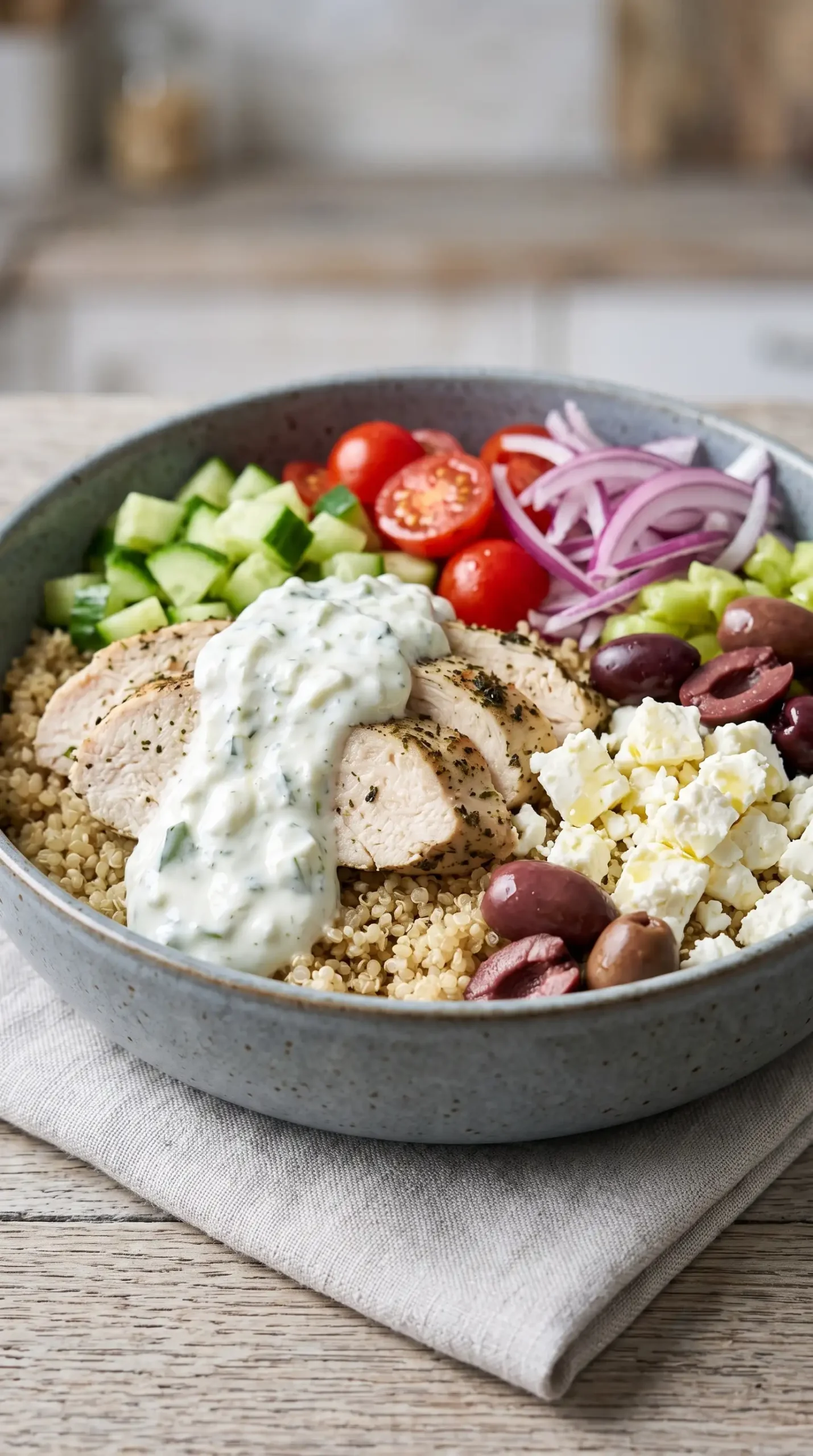
Toppings create the finishing contrast that defines each serving. Crisp vegetables, creamy sauce, salty cheese, and briny olives work together when portions remain balanced across the bowl.
Greek Chicken Bowls Stay Balanced Through Contrast
Greek chicken bowls succeed because each component has a clear role. Tender chicken provides the savory center, grains create a satisfying base, and fresh toppings bring brightness that keeps the meal approachable.
Careful handling of the chicken, cucumber, and storage containers has the biggest effect on the finished texture. Keeping creamy tzatziki fresh and vegetables crisp allows every serving to maintain the contrast that makes these bowls appealing.
Greek Chicken Bowls Questions About Storage and Preparation
Can I prepare the tzatziki before assembling bowls?
Yes. Drain the grated cucumber well, then keep the tzatziki chilled in an airtight container. Use it within 48–72 hours for the best texture and flavor.
What keeps the greens from becoming soggy?
Store mixed greens away from tzatziki, chopped vegetables, and other wet toppings. Add those ingredients shortly before eating so the greens stay crisp.
Can I replace quinoa or rice in these bowls?
Couscous, farro, bulgur, or cauliflower rice can replace the grain base depending on the texture and style you prefer.
How can I make a vegetarian version?
Replace the chicken with roasted chickpeas, grilled tofu, or halloumi while keeping the vegetables, feta, and tzatziki for a similar bowl structure.
How long do leftovers stay fresh?
Cooked chicken and cooked grains can be refrigerated for up to 3 days. Fresh vegetables are best used sooner to maintain their crisp texture.
Greek Chicken Bowls with Quinoa and Tzatziki Sauce
Greek Chicken Bowls with Quinoa and Tzatziki Sauce are fresh, hearty bowls with tender chicken, creamy tzatziki, and crisp toppings. They are an easy choice for a flavorful weeknight meal with a satisfying mix of textures.
Ingredients
Method
Preparation
- Season the chicken breasts with salt, pepper, and olive oil before cooking.
- Grate the cucumber for the tzatziki sauce and prepare the remaining vegetables by dicing, slicing, and halving as needed.
Cooking
- Grill or pan-fry the seasoned chicken breasts for about 6-7 minutes per side until fully cooked and the internal temperature reaches 165°F / 74°C.
- Allow the cooked chicken to rest for 5 minutes, then slice it into thin pieces.
Assembly
- Add cooked quinoa or rice to bowls as the base, then arrange the sliced chicken, diced cucumber, cherry tomatoes, red onion, Kalamata olives, and mixed greens on top.
- Combine Greek yogurt, grated cucumber, minced garlic, lemon juice, and salt to make a creamy tzatziki sauce.
- Spoon the tzatziki sauce over the bowls and add crumbled feta cheese before serving.
Notes
Drain the grated cucumber well before combining it with the yogurt mixture to help keep the tzatziki sauce creamy.