
From morning breakfasts to evening dinners, Tasteza Recipes offers quick and easy recipe ideas, featuring everything from wholesome meals to delicious desserts for every moment and every occasion.


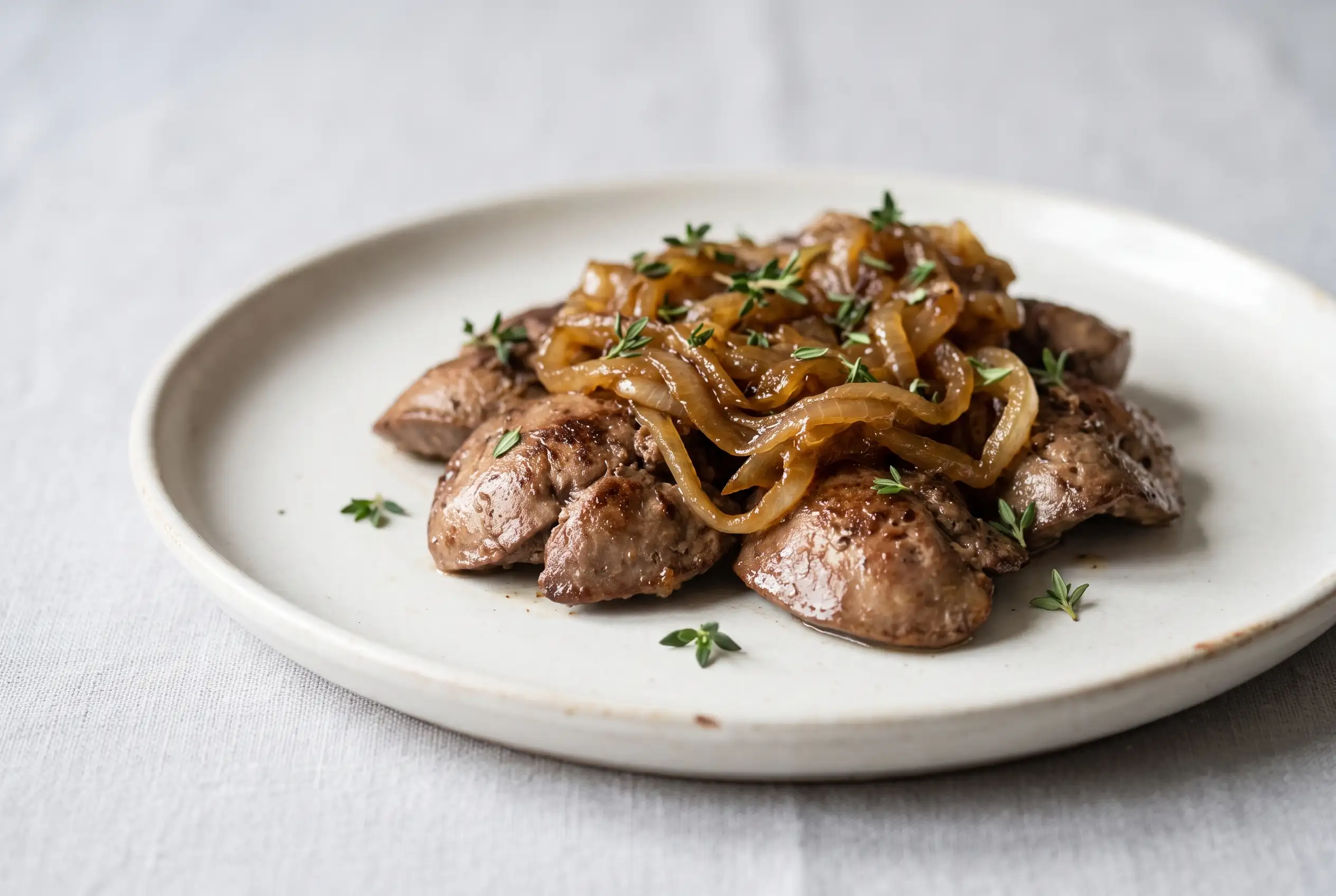
Classic chicken liver brings together a silky skillet texture with the deep sweetness of slowly cooked onions. The combination creates a balanced dish where pan seared chicken livers gain savory depth while caramelized onions provide a rich contrast that works for both casual meals and elegant starters.
Built around simple ingredients and focused cooking techniques, this dish depends on careful handling more than complicated preparation. A well-managed skillet, properly dried livers, and patient onion cooking create the flavors that define chicken liver with caramelized onions.
Why Classic Chicken Liver with Caramelized Onions Works
Balanced flavor comes from the contrast between two different cooking approaches. The onions spend time developing sweetness and color, while the livers receive shorter, higher-heat cooking that creates a browned exterior without sacrificing tenderness.
Simple pantry fats and familiar aromatics support the main ingredients without covering their character. Butter contributes richness, olive oil helps with skillet cooking, and garlic with fresh thyme adds another layer to the finished dish.
Flexible serving options make the preparation useful beyond a single meal style. Smaller portions can be placed on toasted crusty bread as an appetizer, while larger servings pair naturally with a fresh green salad when building a meal around chicken recipes.
Choosing Chicken Livers and Aromatics for Better Results
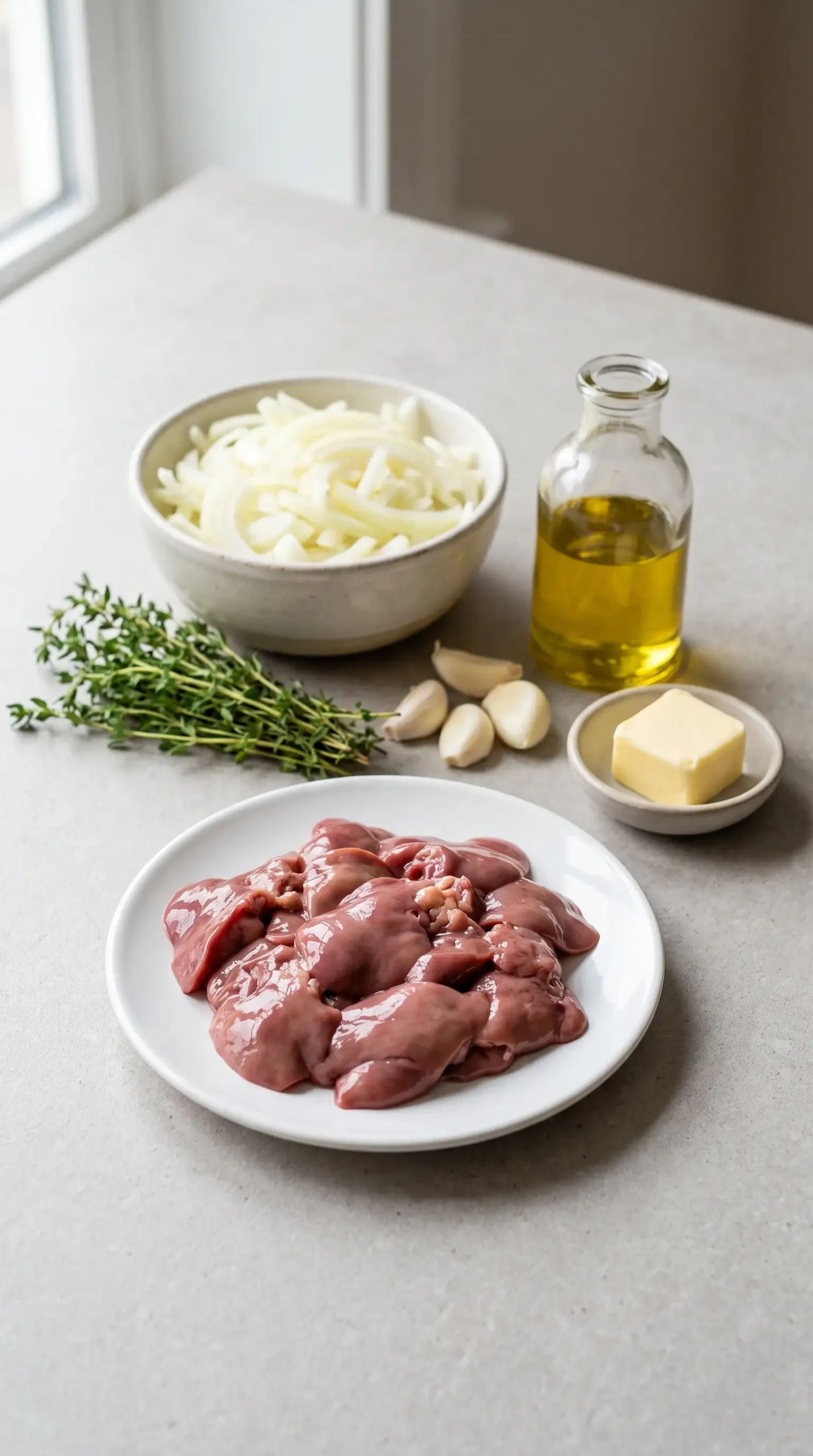
Fresh chicken livers benefit from careful trimming and preparation before they reach the skillet. Removing excess moisture is especially important because a dry surface allows better browning and helps prevent steaming during cooking.
Yellow onions are central to the character of this dish because their slow caramelization creates the sweet, golden element that balances the savory livers. Thin slices help them cook evenly and develop a deeper flavor over time.
Butter and olive oil have separate roles in the pan. The butter brings a rich taste that suits the livers and onions, while olive oil supports the cooking process. Together, they create a useful base for building the skillet flavors.
- Chicken livers: Trim evenly and dry thoroughly before they meet the heat.
- Yellow onions: Slice thinly so the pieces soften and caramelize consistently.
- Fresh thyme: Add near serving to brighten the finished flavors.
Skillet Control for Pan Seared Chicken Livers
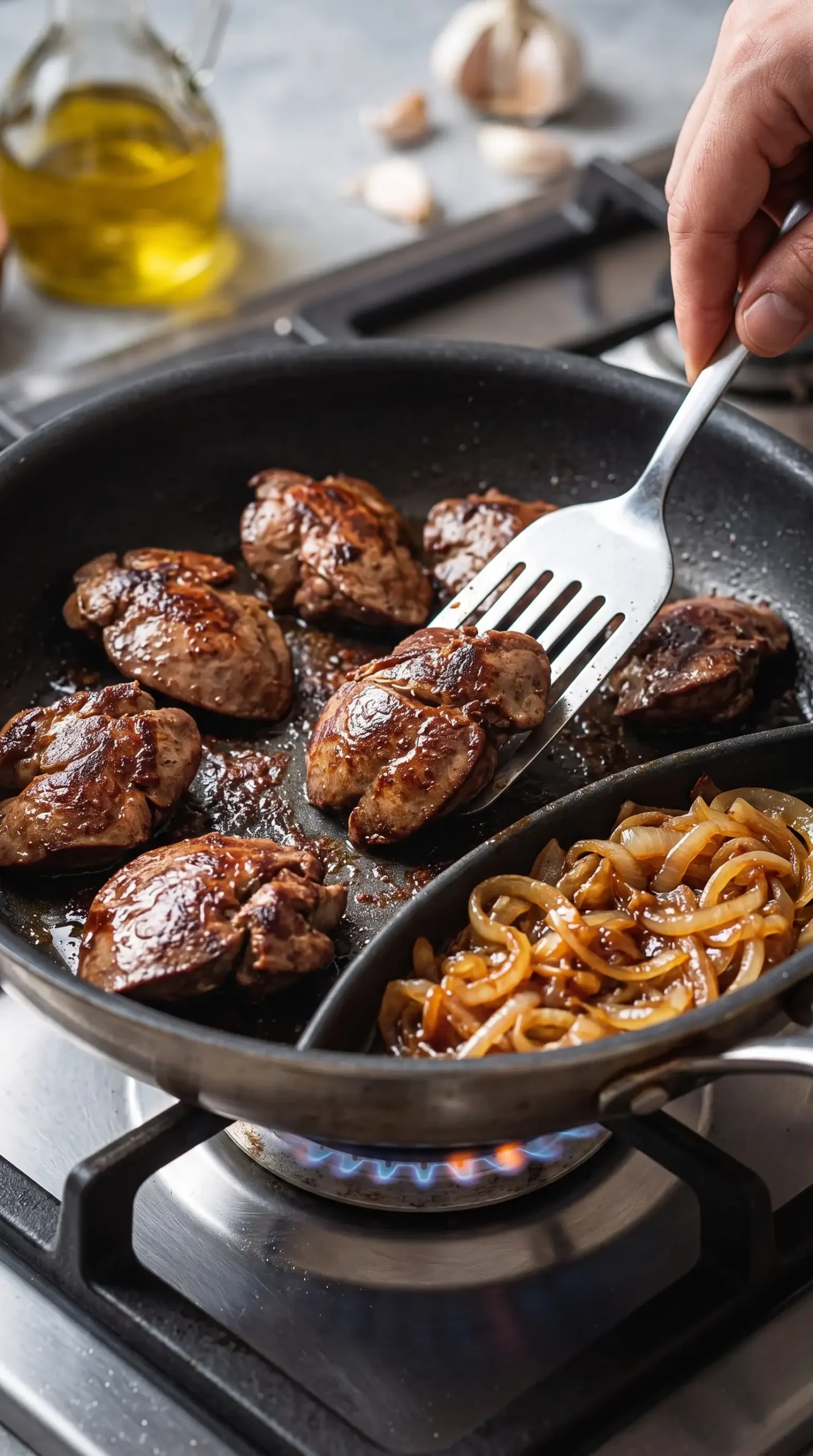
Successful pan seared chicken livers depend on controlling heat at each stage. Lower heat allows the onions to slowly transform, while a hotter skillet later creates the quick sear needed for the livers.
Cooking the onions separately from the livers protects both components. The onions can develop their sweetness without rushing, and the livers avoid spending too much time exposed to heat after they have browned.
Small details influence texture during the searing stage. A crowded pan can reduce browning by lowering heat and releasing moisture, while properly dried livers and enough skillet heat encourage the exterior caramelization that gives the dish its appealing contrast.
Serving Ideas for Chicken Liver with Caramelized Onions
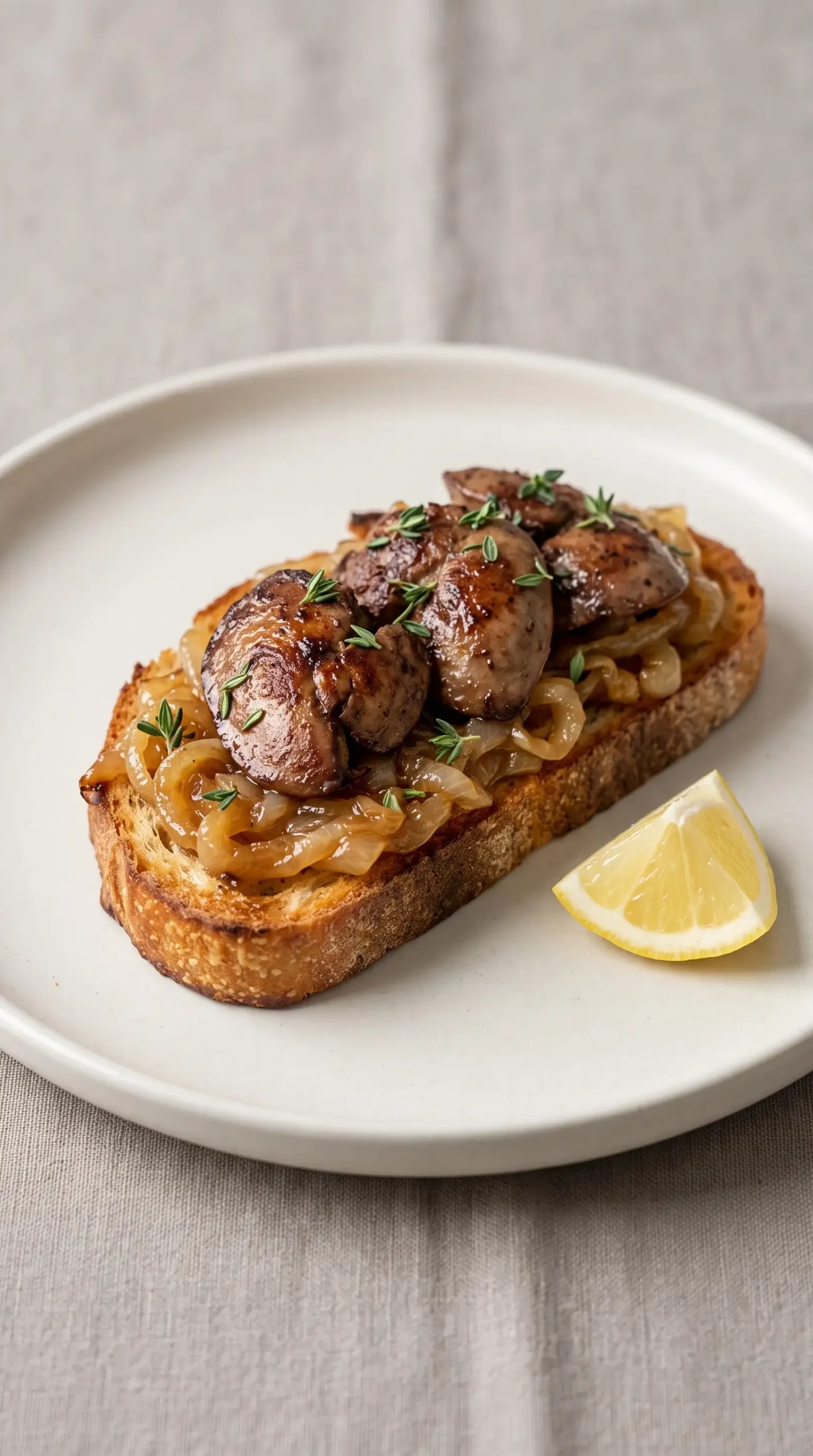
Serve the warm livers immediately over toasted crusty bread for a classic crostini-style presentation, or place them beside a simple green salad for a lighter plate. Fresh thyme leaves and a wedge of lemon add brightness, while pickles or grainy mustard can complement a sharing board.
Storage and Reheating Choices for Leftover Livers
Cooling and storing the dish correctly helps maintain the texture of the cooked livers. Once cooled to room temperature within two hours, the livers and onions can be transferred to an airtight container for refrigerator storage.
Freezing is also possible when the mixture is placed in a freezer-safe container. Thawing overnight in the refrigerator allows the ingredients to warm more evenly before gentle reheating.
Low heat is the best approach when bringing leftovers back to the table. A skillet over gentle heat helps avoid drying, and a small splash of stock or extra butter can help restore moisture if the mixture appears dry.
| Storage option | Best container choice | Handling before serving |
|---|---|---|
| Refrigerator | Airtight container | Reheat gently in a skillet |
| Freezer | Freezer-safe container | Thaw overnight before warming |
| Prepared onions only | Covered refrigerator container | Sear livers fresh before combining |
Small Variations for a Caramelized Onion Chicken Liver Recipe
A few adjustments can change the flavor direction while keeping the core skillet approach intact. A small spoon of balsamic added near the end of onion cooking creates a sweeter tang, while a splash of cream or a knob of butter can create a softer finish. Diced apples cooked with the onions provide another sweet variation.
Classic Chicken Liver Mistakes That Affect Tender Texture
Rushing the onions is one of the easiest ways to lose the signature sweetness of this dish. Higher heat may darken the surface quickly, but slower cooking allows the onions to develop the deeper caramelized character that supports the livers.
Overcooking the livers can also change the result. They should remain tender and slightly pink inside, because extended cooking can make their texture grainy and less pleasant.
Moisture on the livers creates another common problem. Wet surfaces interfere with browning and can lead to steaming, so drying the livers before they enter the pan is an important preparation step.
Signs of Well-Cooked Chicken Livers
Knowing what to look for helps prevent underwhelming results. The table below highlights the visual and texture cues that help guide the cooking process.
| Stage | What to notice | What it indicates |
|---|---|---|
| Before searing | Dry surface | Better chance of browning |
| During cooking | Firm exterior with quick sear | Caramelized surface development |
| After cooking | Slightly pink center | Tender texture without overcooking |
Pairings That Balance Rich Skillet Flavors
The richness of the livers pairs well with simple foods that provide contrast. Toasted bread, fresh green salad, or roasted root vegetables can balance the savory flavors, while crisp white wine or a light red can complement the sweet onion notes.
Preparing Components Without Losing Texture
Advance preparation works best when the components are handled separately. Caramelized onions can be prepared ahead and refrigerated, allowing the livers to be cooked closer to serving time for a fresher texture.
How Sweet Onions and Seared Livers Create Balance
The caramelized onions and chicken livers work together because each component contributes a different quality to the finished skillet. Slow onion cooking develops sweetness, while brief searing preserves the tender character of the livers.
Classic chicken liver becomes most successful when timing supports each ingredient. Keeping the finishing step brief allows the onion flavors and liver juices to combine without unnecessary extra cooking.
Classic Chicken Liver Questions About Texture and Preparation
Can frozen chicken livers be used for this dish?
Frozen chicken livers can be used after they are fully thawed. Drying them carefully before cooking helps maintain even searing and supports better browning in the skillet.
How can I tell when the chicken livers are ready?
The livers should have a browned exterior and remain slightly pink inside with a firm but tender feel. Cooking them too long can make the texture grainy.
Why do the onions need slow cooking?
Slow cooking allows the onions to develop their sweet, golden flavor. Rushing this stage with high heat can brown the outside without creating the deeper caramelized taste desired for the dish.
Can the onions be prepared before the livers?
Yes, the caramelized onions can be made ahead and refrigerated for up to 3 days. Cooking the livers closer to serving keeps their texture more appealing.
Is using butter and olive oil together important?
Combining butter and olive oil provides both richness and practical skillet performance. The pairing supports the flavors of the onions and livers during cooking.
What herbs can replace fresh thyme?
Parsley or rosemary can be used as alternatives. Rosemary has a stronger flavor, so a lighter amount works better when replacing thyme.
Can this dish be served as a main course?
Yes, the livers can be served in larger portions with sides such as salad or roasted vegetables, while smaller portions work well as an appetizer.
Chicken Liver with Caramelized Onions and Fresh Thyme
Chicken Liver with Caramelized Onions and Fresh Thyme is a savory dish featuring tender chicken livers with rich, sweet caramelized onions and fresh herb flavor. It is a comforting recipe that makes a satisfying meal when you want a classic, flavorful dish.
Ingredients
Method
Preparation
- Clean the chicken livers and dry them thoroughly to remove excess moisture.
- Cut the yellow onions into thin rings.
Cooking
- Melt the butter in a large skillet over medium-low heat.
- Add the onions and cook for 20-25 minutes, stirring occasionally, until they become deeply caramelized.
- Transfer the caramelized onions out of the skillet and set them aside.
- Raise the skillet heat to medium-high and sear the chicken livers for 2-3 minutes per side, adding salt, black pepper, and minced garlic while they cook.
- Return the caramelized onions to the skillet with the chicken livers and gently combine the ingredients.
- Add fresh thyme leaves and serve warm over toasted crusty bread or with a fresh green salad.
Notes
Dry the chicken livers well before searing and avoid cooking them too long to help maintain a tender texture.