
From morning breakfasts to evening dinners, Tasteza Recipes offers quick and easy recipe ideas, featuring everything from wholesome meals to delicious desserts for every moment and every occasion.


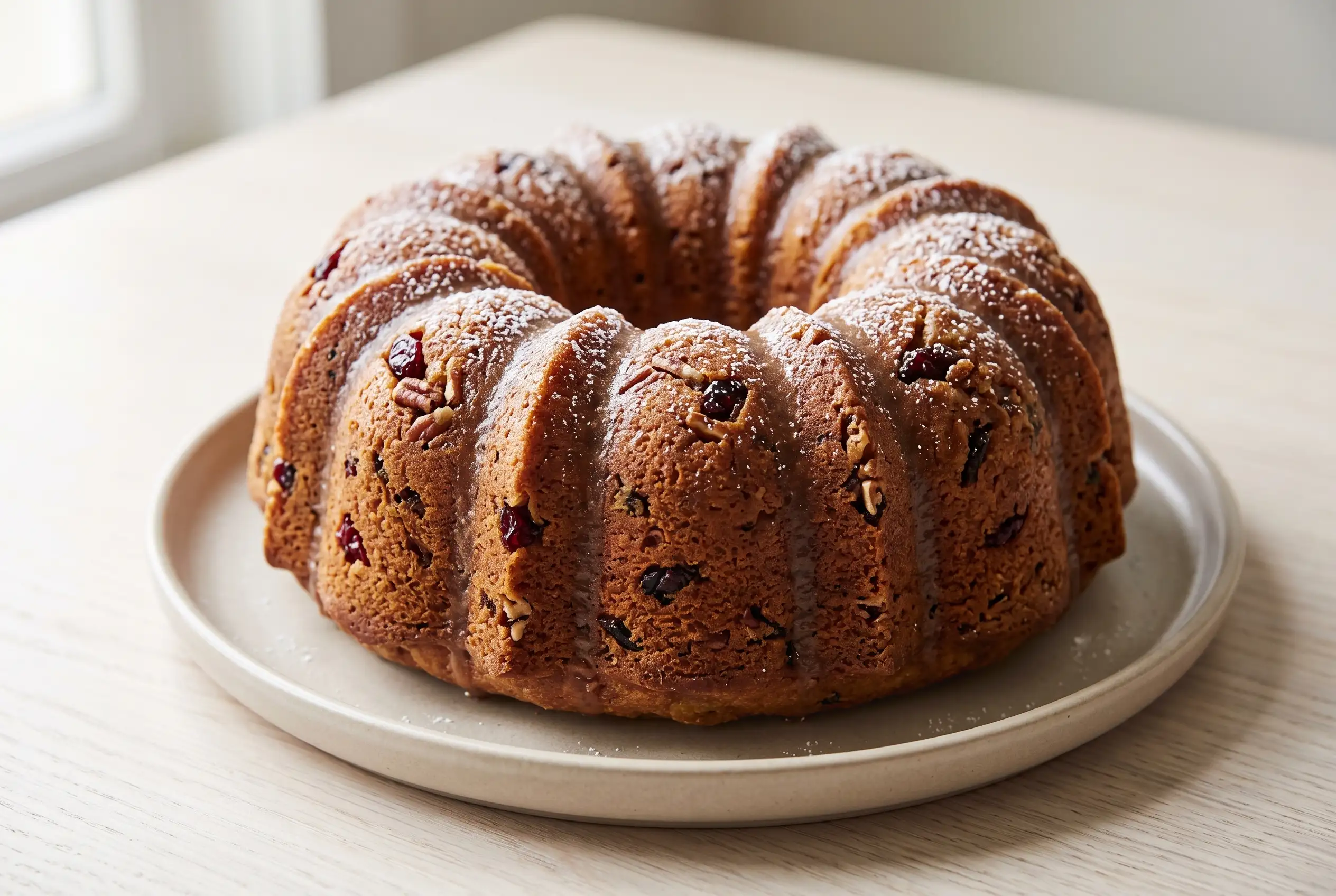
Christmas fruit bundt cake brings together a tender spiced crumb, dried fruits, and nuts in a holiday dessert that suits gatherings, gifting, and relaxed seasonal baking. The cake uses familiar pantry ingredients, a bundt pan for an attractive shape, and a straightforward preparation style that fits into busy celebrations.
Holiday gatherings often call for desserts that can be prepared ahead and served with coffee, festive drinks, or simple toppings. A fruit-filled bundt cake works well in that role because it travels easily and keeps its texture when stored properly.
Many bakers choose this style of cake when they want the character of a traditional holiday fruit dessert without complicated decorating. The combination of cinnamon, nutmeg, dried fruits, and chopped nuts creates a recognizable seasonal flavor while leaving room for small ingredient choices.
Christmas Fruit Bundt Cake for Holiday Gatherings
The shape of a bundt cake makes a strong presentation without requiring elaborate decoration. The ridged form creates a centerpiece that can be finished with a light coating of powdered sugar or a thin glaze before it reaches the table.
Seasonal celebrations benefit from desserts that can be sliced and shared easily. The sturdy structure from the flour mixture, eggs, butter, and buttermilk helps each serving hold together while keeping the interior moist.
A holiday fruit bundt cake recipe can also provide flexibility for hosts who need a dessert that fits different serving moments. The same cake can appear at a morning coffee gathering, an afternoon celebration, or a gift exchange.
The Fruit and Spice Choices That Shape Christmas Fruit Bundt Cake
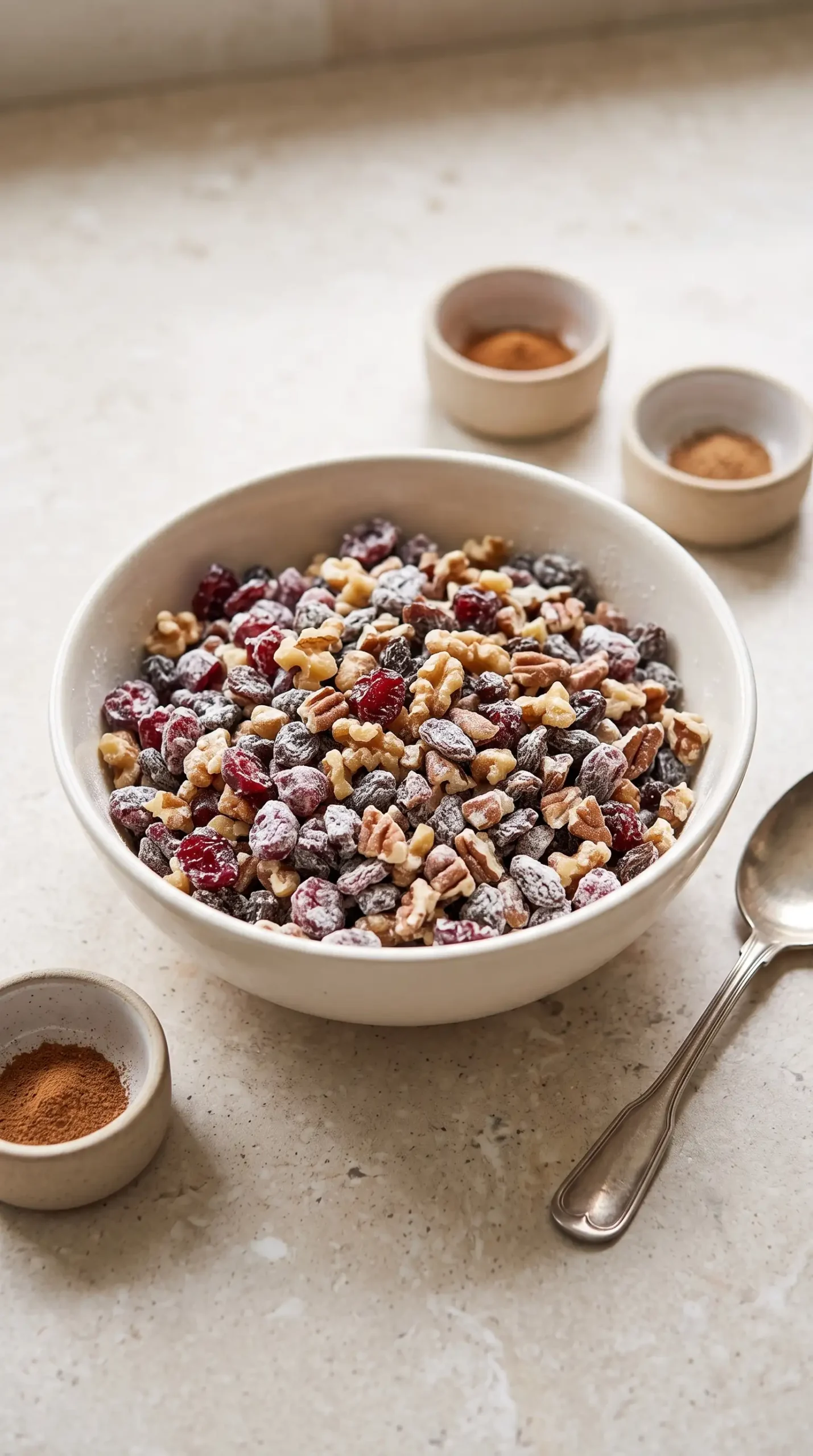
Dried fruits and nuts define the character of the cake, with raisins, cranberries, cherries, walnuts, or pecans creating different bites throughout the crumb. Chopping larger pieces helps the additions distribute evenly, while lightly coating dried fruits with flour can help keep them suspended during baking.
A Bundt Pan Approach That Keeps the Cake Balanced
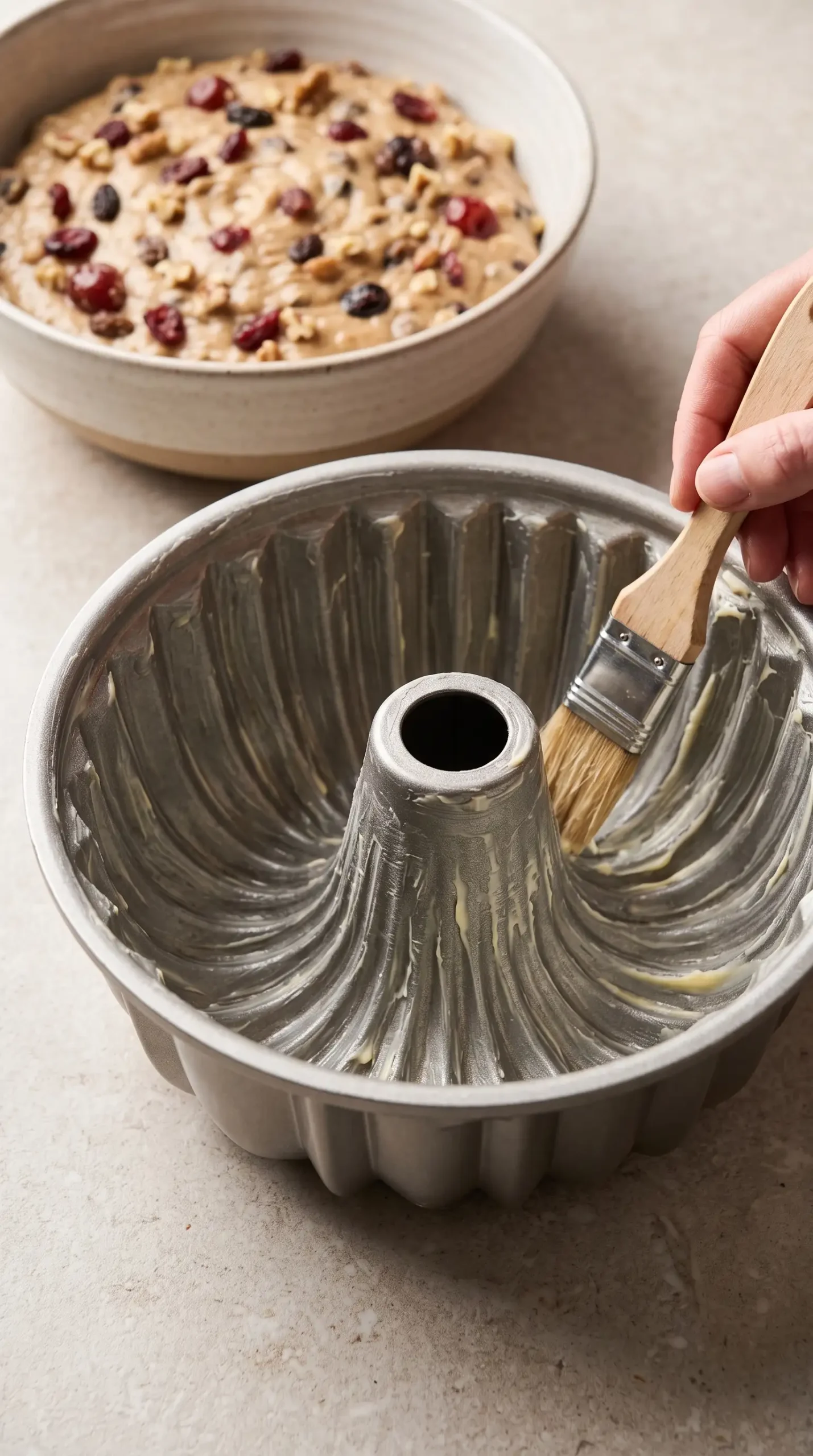
Bundt pans influence both appearance and baking behavior because the center opening allows heat to move through the batter. A properly prepared pan supports an even release after cooling and helps preserve the detailed shape of the finished cake.
After baking, let the cake rest in the pan for about 10 minutes before turning it onto a cooling rack, since careful release timing helps protect the detailed shape.
Proper preparation begins before the batter enters the pan. Greasing the surface thoroughly and avoiding overfilling gives the cake room to rise while reducing the chance of sticking or overflow.
- Pan preparation: Coat the bundt pan carefully so the baked cake can release cleanly.
- Batter placement: Keep the pan around two-thirds full to allow space for expansion.
- Cooling control: Let the cake rest briefly in the pan before turning it out onto a rack.
Mixing Decisions Behind a Tender Fruit Bundt Cake
Gentle mixing protects the soft texture of the cake. Alternating the flour mixture with buttermilk helps combine the batter evenly while limiting unnecessary mixing once the flour is added.
Serving Ideas for Holiday Fruit Bundt Cake Moments
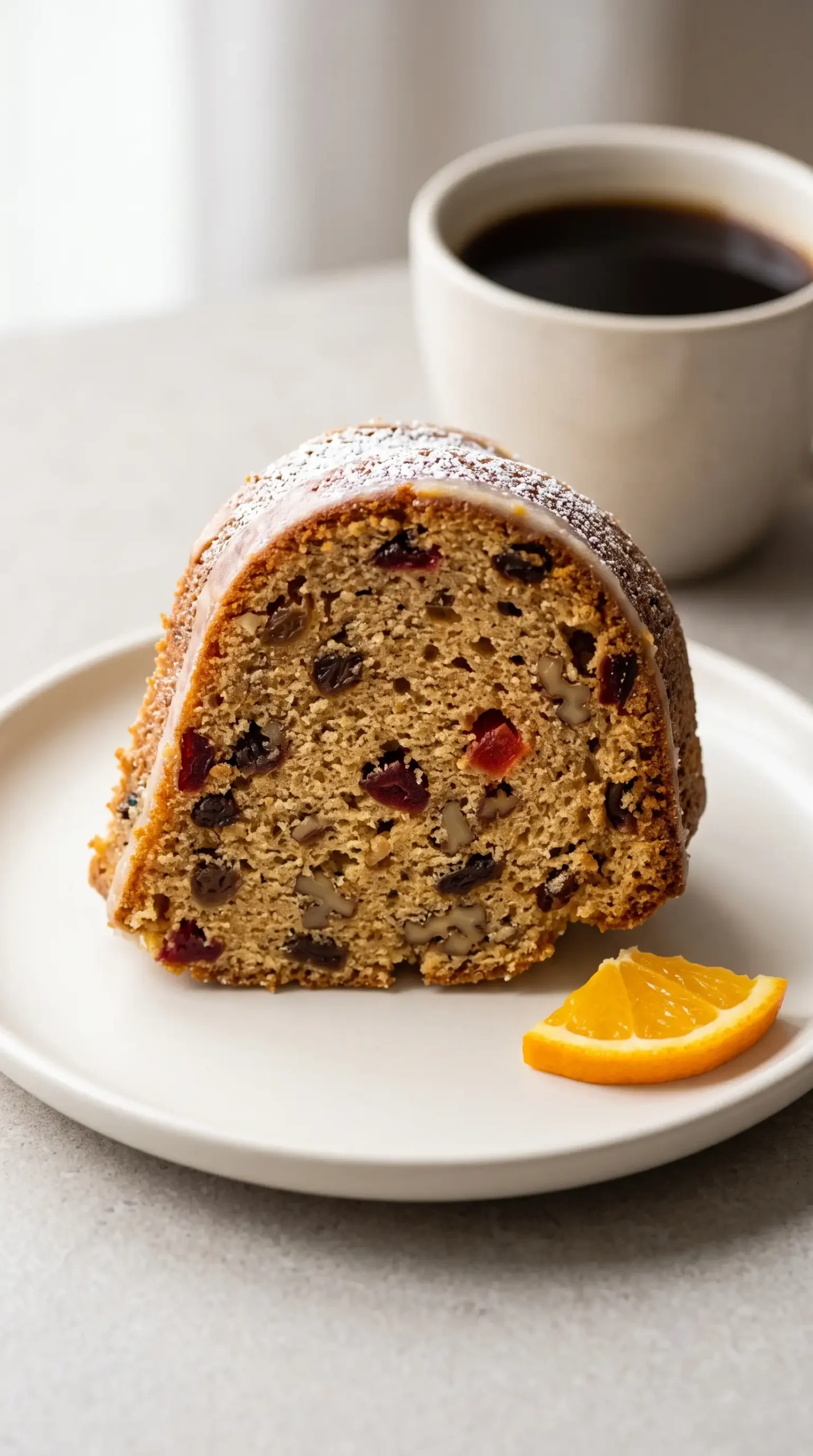
Slices of Christmas fruit bundt cake are enjoyable slightly warm or at room temperature, when the spiced flavors and tender crumb are easy to appreciate. The cake pairs naturally with strong coffee, mulled wine, or whipped cream.
Coffee tables and dessert spreads can be brightened with simple additions that do not hide the fruit and spice profile. A dusting of powdered sugar, a thin citrus glaze, or fresh pear and orange slices can provide contrast.
Festive presentation does not require complicated decoration because the bundt shape already creates visual interest. A clean slice reveals the dried fruit pieces and nuts that make each portion distinct.
| Serving choice | Best use | Helpful addition |
|---|---|---|
| Room-temperature slices | Holiday gatherings and gifting | Powdered sugar or light glaze |
| Slightly warm portions | Casual dessert service | Coffee or whipped cream |
| Chilled stored slices brought back to temperature | Planned serving after storage | Fresh fruit accompaniment |
Keeping Christmas Fruit Bundt Cake Fresh After Baking
Wrapped storage helps maintain moisture after baking. Keep the cake covered at room temperature for up to 3 days, refrigerate it for up to 7 days when conditions require it, and use freezer wrapping for longer storage.
Simple Adjustments for a Fruit Bundt Cake with Dried Fruit
Ingredient choices can be adjusted while keeping the basic character of the dessert intact. Mixed dried fruits allow bakers to use available varieties, while a fruit loaf format can be useful when adapting fruit-filled cakes for a different baking shape.
Fresh fruit requires extra attention because it introduces more moisture into the batter. Small pieces and careful adjustments to added liquid help prevent changes in texture when replacing dried fruit.
Loaf pan baking is another option for those who prefer a different shape. The batter can be adapted to a suitable loaf pan, with attention to baking time because a loaf may require additional time to cook through.
Christmas Fruit Bundt Cake Mistakes That Affect Texture
Overmixing after adding flour can create a denser result because the batter develops more gluten. Mix only until the ingredients are combined, then fold in the fruit and nuts gently.
Crowded pans can interfere with the cake’s rise and may lead to overflow. Keeping enough space in the bundt pan allows the batter to expand during baking.
Improper preparation or oversized additions can create avoidable problems. These checks help prevent common issues:
- Fruit size: Chop large dried fruits and nuts so slices have a more even texture.
- Moist additions: Pat very moist fruits dry to avoid adding extra liquid.
- Doneness testing: Use a long skewer to check that the center is fully baked.
- Release timing: Cool briefly before inverting to reduce the chance of sticking.
Planning the Cake for Gifting and Sharing
Gift giving becomes easier with a cake that holds its shape and keeps well. The dense fruit-and-nut structure makes Christmas fruit bundt cake suitable for wrapping and transporting to holiday events.
Choosing the Right Finish for Christmas Bundt Cake Recipe Slices
Powdered sugar provides a simple finish that highlights the cake’s shape without adding extra preparation. A glaze can offer another option when a brighter surface and additional sweetness are desired.
Citrus flavors can complement the dried fruit notes when used as a light finishing touch. Fresh orange slices or a thin citrus glaze can add contrast while keeping the focus on the spiced cake.
Additional toppings should support the existing flavors instead of covering them. The nuts, fruit pieces, and warm spices already create the main seasonal identity of the dessert.
Careful Baking Gives Christmas Fruit Bundt Cake Its Holiday Character
Careful handling of the batter, fruit, and bundt pan shapes the outcome of Christmas fruit bundt cake. Balanced mixing, thoughtful preparation, and controlled cooling are the choices that most influence the tender crumb and reliable presentation.
A well-made cake offers the convenience of advance preparation while preserving the flavors expected from a festive dessert. The combination of dried fruit, nuts, and spices creates a holiday centerpiece that remains practical from baking day through serving time.
Questions About Fruit Distribution and Christmas Fruit Bundt Cake
Why does my dried fruit sink in the cake?
Dried fruit can settle when pieces are heavy or the batter does not support them evenly. Tossing the fruit with a little flour before folding it in can help keep the pieces distributed through the cake.
Can soaked dried fruit be used in Christmas fruit bundt cake?
Soaking dried fruit is optional, but drained and dried pieces should be used afterward so extra moisture does not affect the batter consistency.
What can replace buttermilk in the batter?
Milk combined with a teaspoon of lemon juice or vinegar can stand in for buttermilk after resting for about 5 minutes. This keeps the acidity needed for a tender texture.
How should a finished bundt cake be frozen?
Wrap the cooled cake in plastic wrap and aluminum foil before freezing. Thaw it overnight in the refrigerator and bring it back to room temperature before serving.
Can butter be replaced with oil in this holiday cake?
Part or all of the butter can be replaced with neutral oil, though the finished cake may have a different flavor and crumb from the original version.
Christmas Fruit Bundt Cake with Dried Fruits and Nuts
This Christmas fruit bundt cake is a warmly spiced, tender dessert filled with dried fruits and chopped nuts. It is a festive choice for holiday gatherings and seasonal celebrations.
Ingredients
Method
Preparation
- Preheat the oven to 350°F / 175°C. Thoroughly grease a standard bundt pan.
- In a medium bowl, combine the flour, baking powder, baking soda, salt, cinnamon, and nutmeg with a whisk.
- In a large bowl, beat the softened butter with the sugar until pale and fluffy.
- Add the eggs individually, beating well after each one. Mix in the vanilla extract.
- Mix in the dry ingredients in several portions, alternating with the buttermilk. Begin and finish with the flour mixture, and stop mixing as soon as the batter is combined.
- Gently fold in the dried fruits and chopped nuts, distributing them evenly throughout the batter.
Baking
- Spoon the batter into the prepared bundt pan and level the top.
- Bake for 45 to 50 minutes, or until a long skewer or toothpick inserted in the center comes out clean.
Cooling
- Leave the cake in the pan for 10 minutes. Turn it out onto a wire rack and cool completely before slicing.
Notes
To help the fruit remain evenly dispersed, coat the dried fruits with a small spoonful of the measured flour before folding them into the batter.