
From morning breakfasts to evening dinners, Tasteza Recipes offers quick and easy recipe ideas, featuring everything from wholesome meals to delicious desserts for every moment and every occasion.


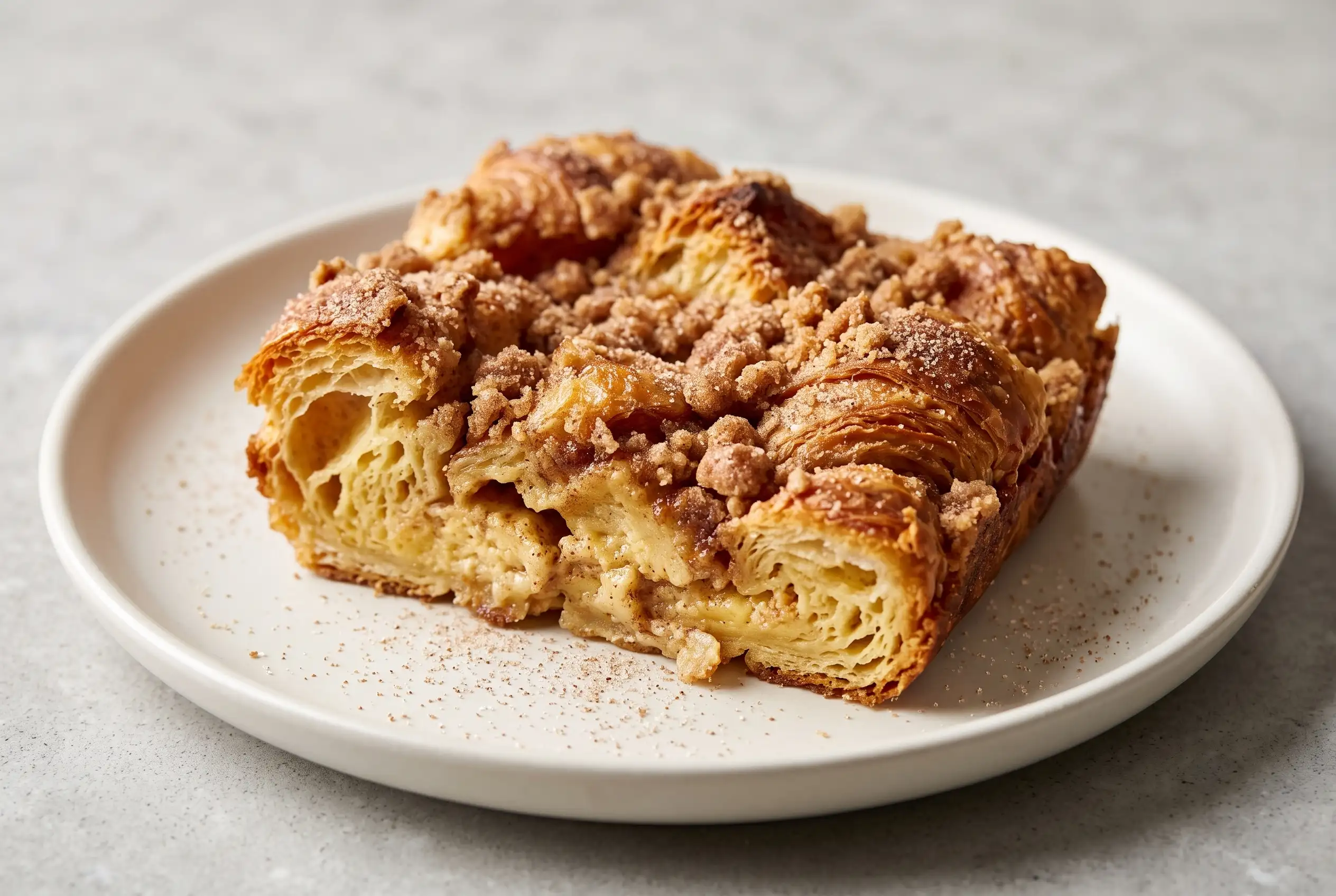
Croissant cinnamon french toast is transformed into a warm baked breakfast centerpiece when day-old pastries soak up a rich custard and bake beneath a crisp cinnamon crumb topping. Baked croissant cinnamon French toast combines torn croissants, eggs, milk, Greek yogurt, and a buttery topping for a comforting brunch dish with a soft center and textured edges.
Using older croissants gives the pastry enough structure to absorb the custard while keeping the finished bake from becoming overly soft. The overnight croissant french toast casserole style preparation also makes the dish useful for relaxed mornings, holiday gatherings, or any time leftover pastries need a new purpose.
Croissant Cinnamon French Toast Creates a Custardy Brunch Bake
Rich pastries work especially well in this style of baked breakfast because their layers capture the egg and dairy mixture as the dish rests. The croissant pieces become tender inside while the exposed edges develop a pleasant baked texture.
Greek yogurt changes the custard character by adding body and a slight tang. Along with eggs, milk, sugar, and vanilla, it helps create the balanced texture expected from a baked croissant french toast bake without relying on complicated techniques.
Weekend cooks often choose croissant cinnamon french toast because the preparation separates active work from baking time. The pan can be assembled ahead, chilled, and finished when brunch is ready.
Stale Croissants Shape the Best Baked Texture
A few days of age makes croissants better suited for soaking because the drier crumb absorbs more of the custard. Fresh pastries can soften too quickly and lose the structure needed for a satisfying slice.
Tearing the croissants into uneven pieces creates different textures throughout the pan. Smaller areas collect custard deeply, while larger pieces provide slightly firmer bites and baked edges.
These pastry choices are the foundation of the dish, so selecting croissants with enough dryness is one of the most important decisions before mixing the custard.
Custard Details Keep the Cinnamon Croissant French Toast Bake Balanced
The combination of eggs, milk, Greek yogurt, sugar, and vanilla creates the soaking mixture that defines the finished bake. Smooth whisking helps distribute the dairy and eggs evenly over every pastry piece.
As the bake heats, egg proteins coagulate and create the set structure that gives baked custard its finished texture.
Greek yogurt is a useful addition because it gives the custard more structure and contributes a mild tang that offsets the sweetness. It can be left out, but the texture will have a slightly different character.
Small flavor choices also matter. Cinnamon in the topping, brown sugar for caramel notes, and vanilla in the custard work together without requiring a long ingredient list.
Overnight Chilling Fits Relaxed Brunch Plans
Preparing the pan ahead allows the croissant pieces to absorb the custard for several hours or overnight, making it easier to serve a warm brunch without completing every task in the morning.
Texture Clues for a Baked Croissant French Toast Bake
| Stage | What to notice | Helpful action |
|---|---|---|
| Before chilling | Croissant pieces are coated with custard | Spread the mixture evenly through the pan |
| Before baking | Pastries have absorbed the liquid | Add the crumb topping before the oven |
| After baking | Center is set and edges are textured | Allow a short rest before serving |
Observing these stages helps cooks understand the texture changes without depending only on timing. A well-soaked pan produces the custardy interior that makes this breakfast stand out.
Cinnamon Crumb Topping Needs Careful Handling
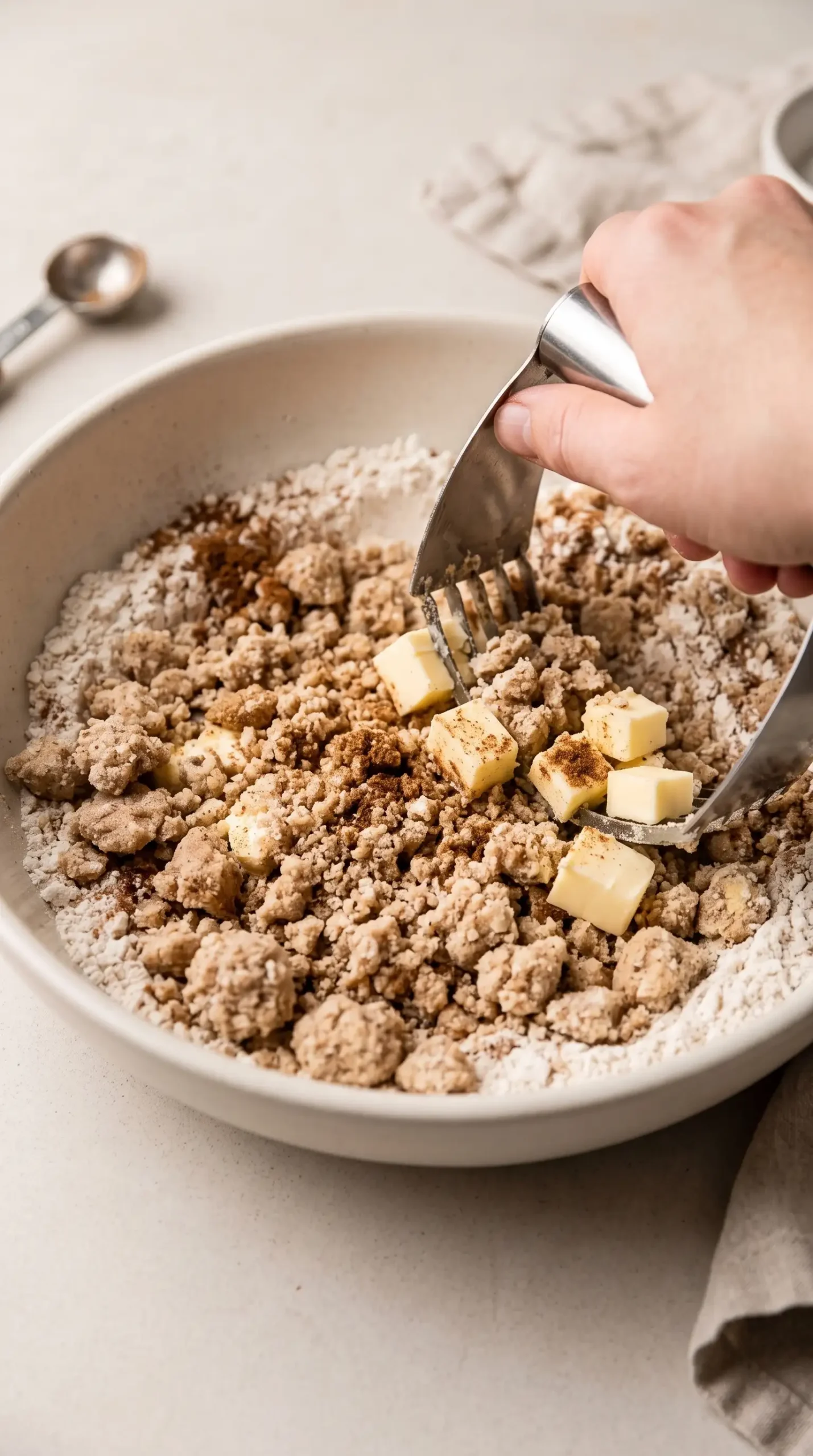
The topping combines flour, brown sugar, cinnamon, salt, and cold butter to create a crumbly layer over the soaked croissants. Keeping the butter cold helps maintain a streusel-like texture during baking.
Cutting the butter into the dry ingredients until the mixture becomes crumbly creates small pockets that bake into a textured finish.
Baking Control Improves Croissant Cinnamon French Toast Results
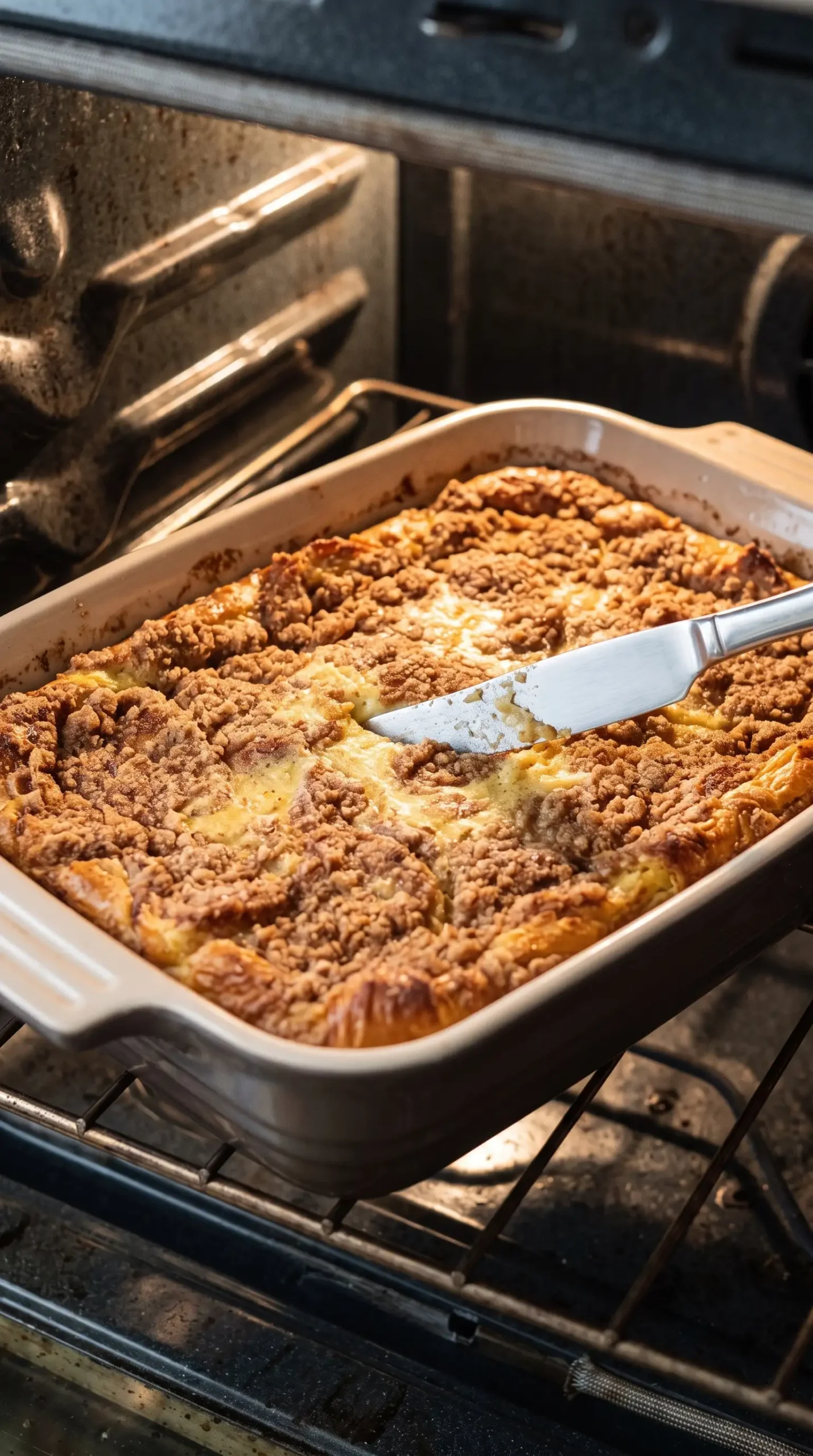
The oven stage determines whether the custard stays tender while the topping develops a baked finish. Preheating to 350 degrees Fahrenheit gives the pan a consistent environment from the start.
Checking the center near the shortest baking time helps prevent an overly dry result. The bake should be cooked through, and a knife inserted near the center should come out mostly clean.
After baking, a brief rest allows the structure to settle. Croissant cinnamon french toast is easier to serve when the interior has had a chance to firm slightly while keeping its custardy quality.
Common Croissant Cinnamon French Toast Bake Mistakes to Avoid
Fresh croissants can create a softer, less structured bake because they have not had enough time to absorb the custard properly. Using pastries that are a day or two old supports a better balance.
Overbaking is another issue that affects this dish. A long oven stay can remove moisture from the custardy center, so checking for doneness early helps protect the texture.
Skipping the chill period may also change the result because the custard needs time to move through the torn pastry pieces. When possible, allow several hours of resting before baking.
Serving Croissant Cinnamon French Toast for Brunch
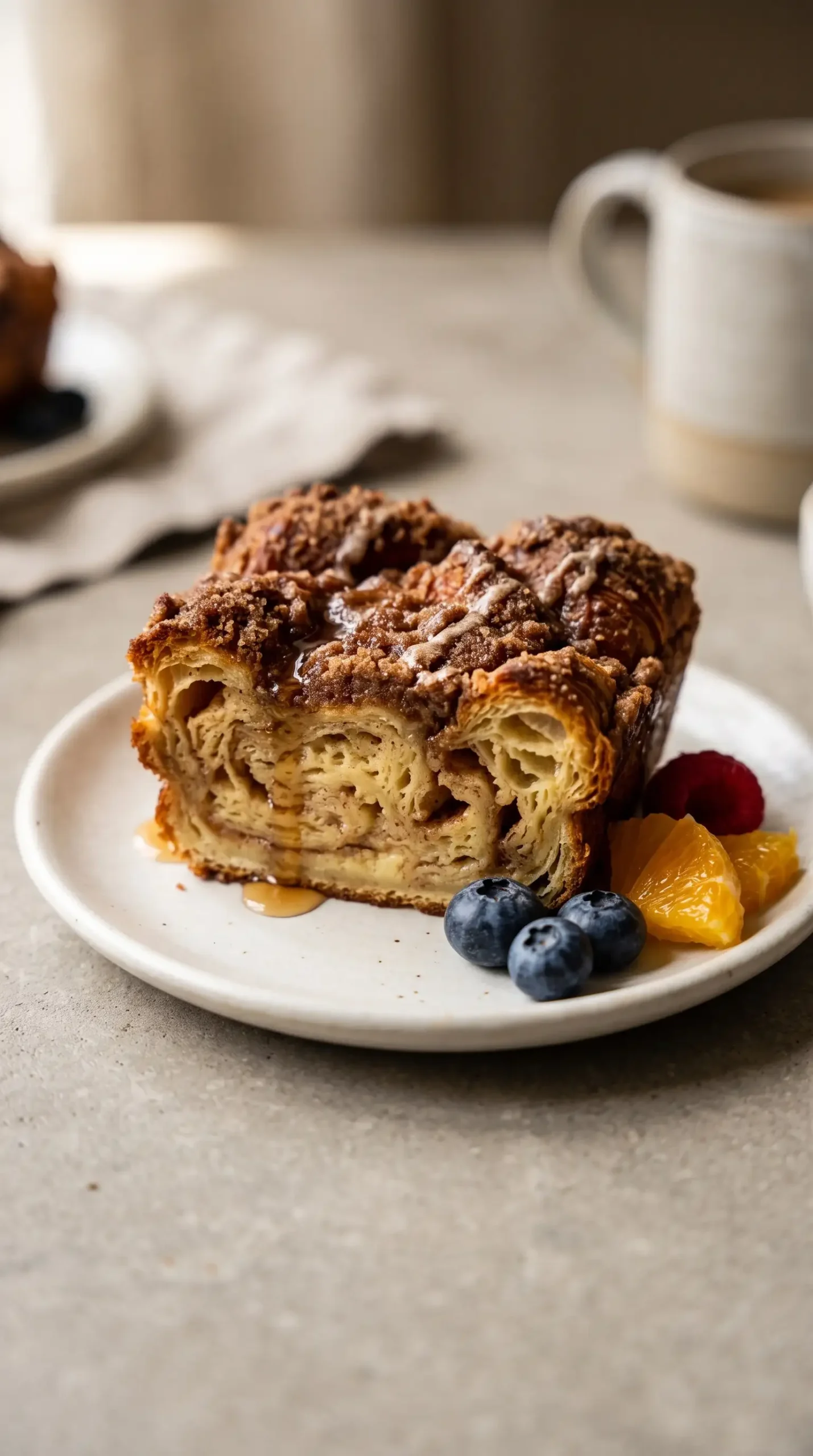
Serve the warm bake with butter and a drizzle of maple syrup just before eating. Fresh fruit such as apples, berries, or orange segments adds brightness beside the rich pastry layers.
Storage Keeps Leftover French Toast Ready
Cooling the bake completely before storage helps reduce condensation. Refrigerated portions can be kept in an airtight container for up to 3 days.
Freezing works well when portions are wrapped in plastic wrap and foil. Frozen pieces can be reheated covered in a 325°F oven until warmed through.
Oven reheating helps maintain the texture of the croissant cinnamon french toast because gentle covered warming avoids the soggy texture that can happen with microwave reheating.
Variations Add New Directions Without Changing the Bake
Fruit additions can change the character of the dish while keeping the same custard foundation. Chopped apples or pears can be folded in before chilling for a fruit and pastry combination.
For a richer version, half-and-half can replace milk, or a tablespoon of bourbon can be added to the custard for additional depth of flavor.
Ingredient Choices Guide Simple Recipe Adjustments
| Choice | Original approach | Possible adjustment |
|---|---|---|
| Pastry base | Stale croissants | Brioche or challah can also absorb custard |
| Dairy element | Milk with Greek yogurt | Half-and-half can create a richer finish |
| Topping texture | Cold butter crumb mixture | Keep butter cold for a crumbly result |
These choices affect texture most noticeably. Keeping the pastry and custard relationship consistent matters more than adding many extra flavors.
Make-Ahead Decisions Simplify Morning Baking
An assembled pan of croissant cinnamon french toast can fit naturally into a prepared breakfast schedule because most of the work happens before baking. The overnight soak gives the pastry time to develop its soft interior.
Croissant Cinnamon French Toast Becomes a Reliable Brunch Centerpiece
The baked croissant cinnamon french toast method depends on a simple balance: dry enough pastries to absorb custard, enough resting time for even soaking, and careful baking to protect the center. Those choices create the contrast between tender custard, crisp topping, and buttery pastry.
When day-old croissants meet a smooth custard and cinnamon crumb topping, the result is a breakfast bake that turns ordinary leftovers into a planned brunch dish with dependable texture.
Croissant Cinnamon French Toast Questions and Answers
Can fresh croissants be used for this bake?
Fresh croissants can be used, but they may soften more quickly because they have not dried enough to absorb the custard. Slightly older croissants are preferred for maintaining structure.
Why does the custard need time before baking?
The resting period allows the torn pastry pieces to absorb the egg, milk, and yogurt mixture more evenly, creating a more consistent interior after baking.
Can another bread replace croissants?
Brioche or challah can replace croissants because both are rich breads that work well with custard soaking. Bakers exploring Bread Recipes can find additional bread-based preparations, while the finished texture will differ because the pastry layers are unique.
How can the crumb topping stay textured?
Cold butter is important when making the topping because it helps the flour and sugar mixture form crumbs that bake into a textured layer.
Can the bake be doubled for more guests?
The recipe can be doubled by using a larger baking dish. Baking time may need adjustment, so checking the center near the end of the bake window is useful.
Croissant Cinnamon French Toast with Cinnamon Crumb Topping
Croissant Cinnamon French Toast with Cinnamon Crumb Topping is a comforting breakfast bake with a soft, creamy center and crisp crumb topping. It is an easy choice for a cozy breakfast or gathering treat.
Ingredients
Method
Preparation
- Coat a small baking pan with butter.
- Tear the croissants into small pieces and place them evenly in the prepared pan.
- Whisk the eggs, milk, Greek yogurt, sugar, and vanilla extract together until the custard is smooth.
- Pour the custard over the croissant pieces, making sure they are evenly covered.
- Cover the pan and refrigerate for several hours or overnight.
Topping
- Combine the flour, brown sugar, cinnamon, and salt to prepare the crumb topping mixture.
- Work the cold butter into the flour mixture until coarse crumbs form.
Baking
- Preheat the oven to 350°F / 175°C.
- Scatter the cinnamon crumb topping over the soaked croissants.
- Bake for 30-45 minutes, until the center is set and a knife inserted near the middle comes out mostly clean.
- Allow the baked French toast to rest for 10-15 minutes before serving.
Serving
- Serve warm with a pat of butter and a drizzle of maple syrup if desired.
Notes
Use stale croissants so they can absorb the custard while maintaining a soft center and crisp edges.