
From morning breakfasts to evening dinners, Tasteza Recipes offers quick and easy recipe ideas, featuring everything from wholesome meals to delicious desserts for every moment and every occasion.


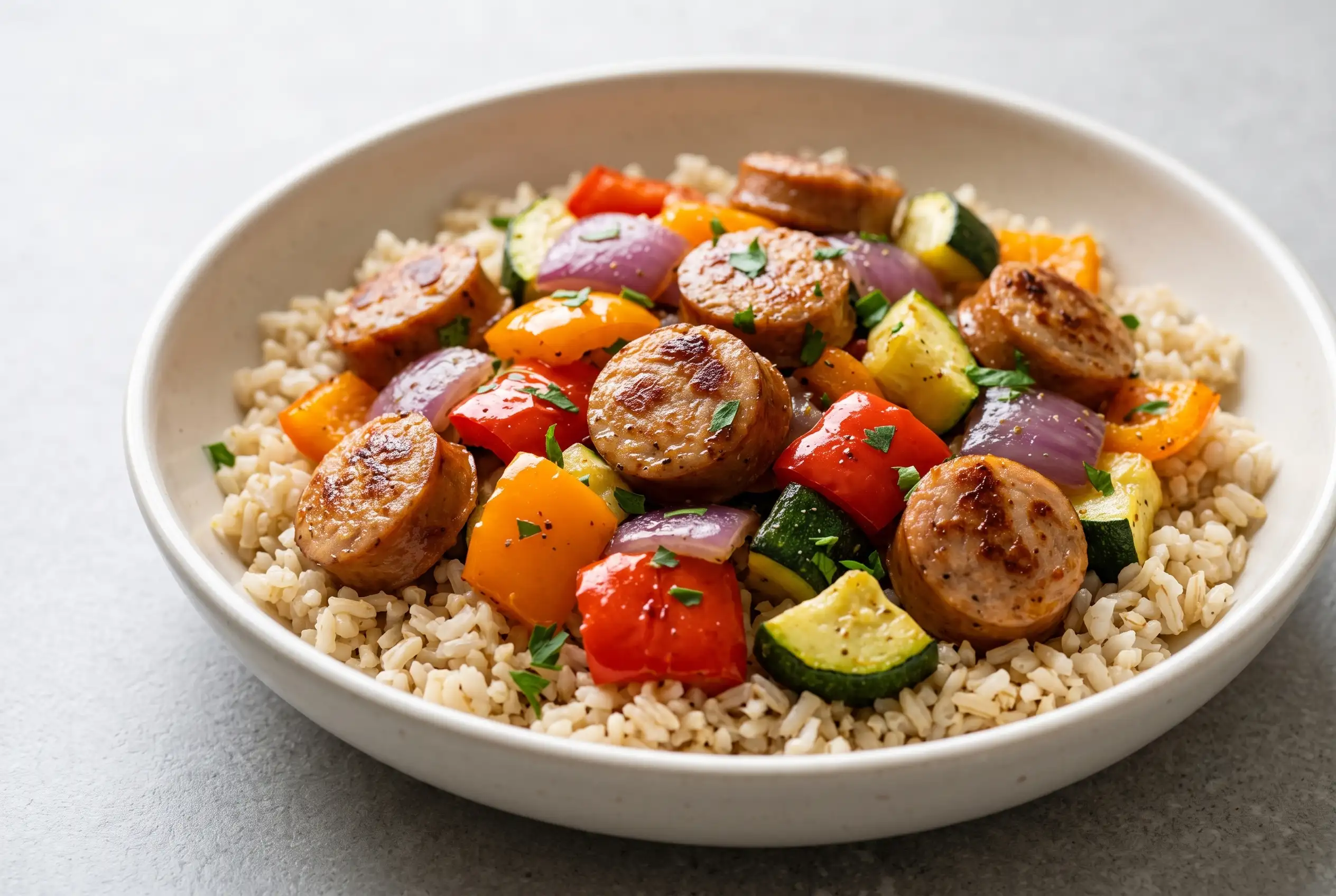
Air fryer chicken sausage turns colorful vegetables and savory sausage rounds into a fast, complete meal with browned edges and very little cleanup. Red and orange bell peppers, red onion, and zucchini cook beside Italian-style chicken sausage, creating a practical dinner for busy evenings, simple lunches, or meal prep.
Consistent cutting matters more than complicated preparation. One-inch vegetable pieces and evenly sliced sausage help every component finish within the same short cooking window, while avocado oil and pantry seasonings encourage caramelization at 390°F.
Because the entire mixture cooks in one basket, air fryer chicken sausage and veggies can move from cutting board to plate without several pans or separate cooking stages. Cauliflower rice keeps the plate lighter, while brown rice makes it more filling.
Fast Air Fryer Chicken Sausage Starts with Even Pieces
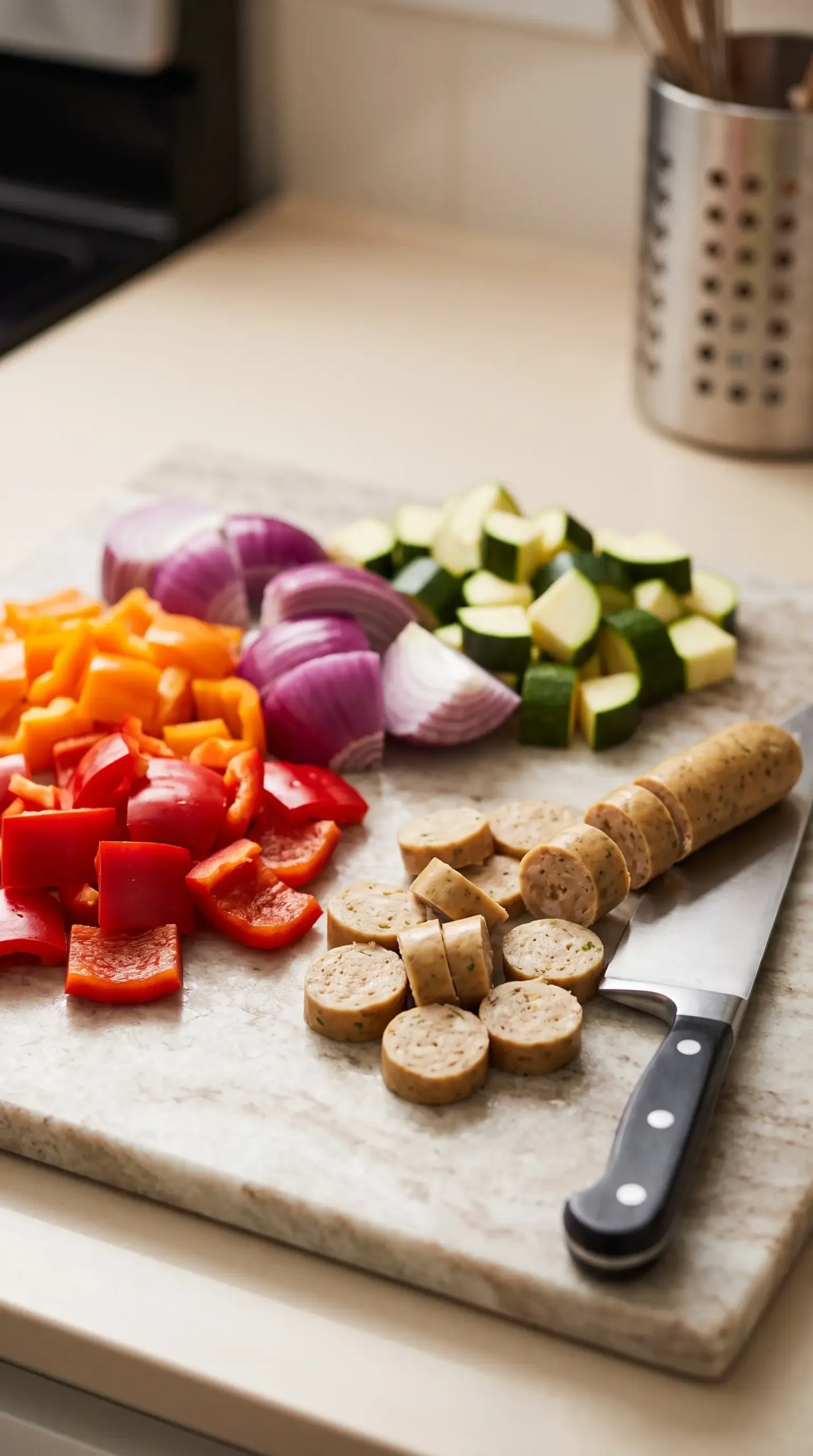
Strong knife technique matters because uniform cuts promote even cooking. Bell peppers, onion, and zucchini should be cut into pieces close to one inch, avoiding a mixture of tiny fragments and large chunks that would finish at different rates.
Sausage rounds need similar consistency. Slicing the links about three-quarters of an inch thick creates pieces sturdy enough to remain juicy while exposing cut surfaces that can brown during the ten-minute cycle.
Once chopping is complete, the remaining preparation is simple: coat the vegetables lightly, distribute the seasonings, add the sliced sausage, and toss until the mixture looks evenly covered. Careful preparation at this stage supports faster, more predictable cooking later.
Bell Peppers, Onion, and Zucchini Share the Cooking Clock
Red and orange bell peppers hold their shape while their edges soften and caramelize. Their one-inch cut also prevents them from becoming overly tender before the onion and sausage have browned.
Red onion separates naturally into layers as it cooks, which exposes more surface area to the circulating heat. Keeping the pieces substantial allows some edges to darken while the centers retain enough structure for a satisfying bite.
Zucchini contains more moisture than the peppers or onion, so oversized pieces may stay watery while very small pieces can soften too quickly. Medium, evenly cut chunks help air fryer chicken sausage with vegetables develop a balanced mixture of crisp edges and tender centers.
| Ingredient | Best Cut | Cooking Sign |
|---|---|---|
| Bell peppers | One-inch pieces | Softened with browned edges |
| Red onion | One-inch sections | Lightly caramelized outer layers |
| Zucchini | One-inch chunks | Tender without becoming watery |
| Chicken sausage | Three-quarter-inch rounds | Browned cut surfaces and hot centers |
Thick Sausage Rounds Protect Juiciness
Chicken sausage sliced into substantial rounds gains color without exposing so much interior that the pieces dry out. Patting the links dry before cutting can also reduce surface moisture and help the sausage brown more readily beside the vegetables.
Open Basket Space Creates Roasted Edges
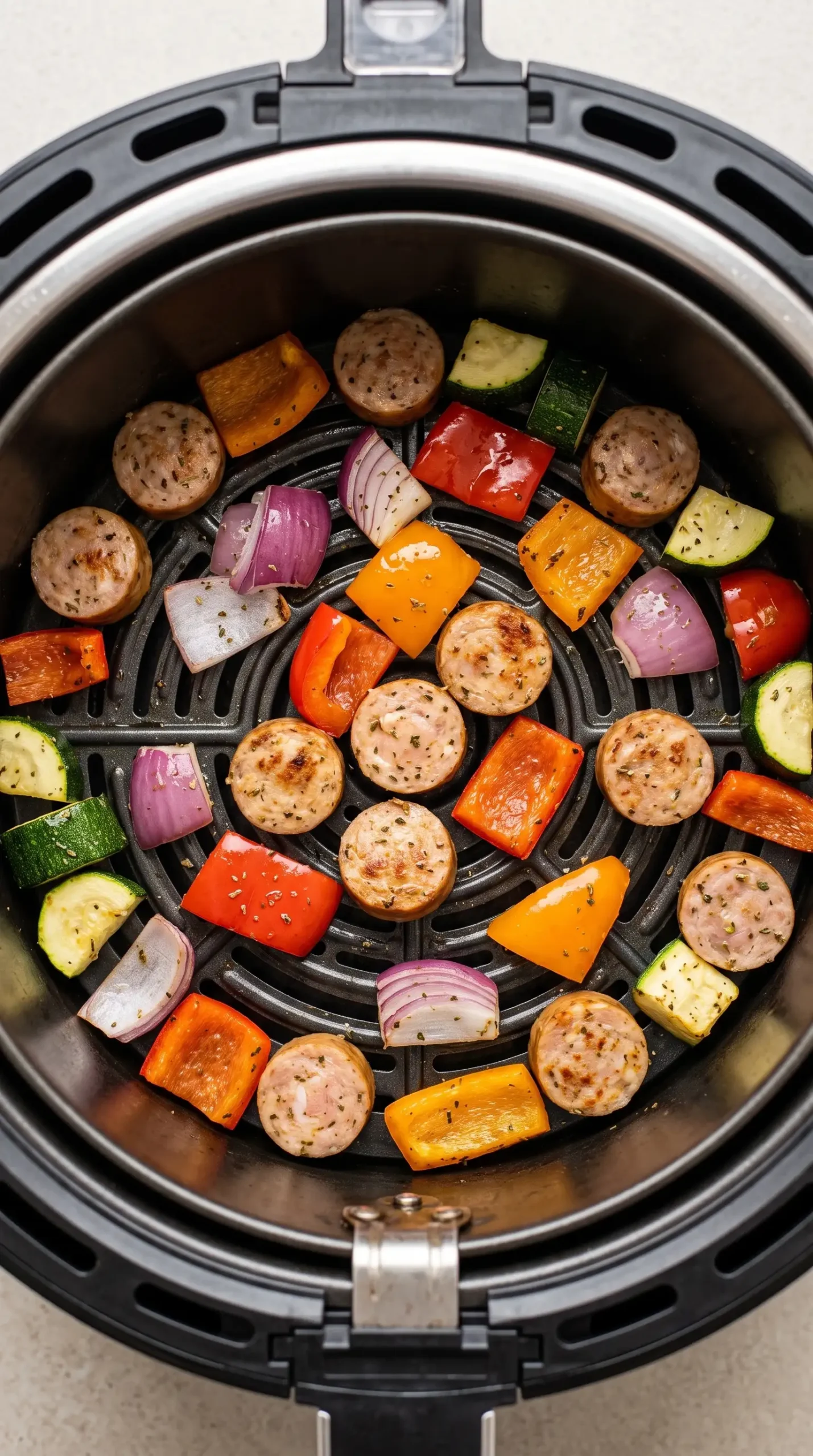
Airflow is the main control point for crisp vegetables. When the basket is filled in a loose, even layer, hot air moves around the peppers, onion, zucchini, and sausage instead of becoming trapped beneath a dense pile.
Crowded food releases moisture that cannot escape quickly. That trapped steam softens the vegetables and limits browning, even when the temperature and cooking time remain unchanged.
For smaller air fryers, dividing the mixture into batches produces a better result than forcing everything into one basket. A little space between pieces gives 10 minute air fryer chicken sausage the caramelized finish that separates air-fried food from steamed food.
A Light Oil Coating Holds the Seasonings
One tablespoon of avocado oil is enough to help garlic powder, onion powder, Italian seasoning, kosher salt, and black pepper cling to the vegetables. The coating should look light and even, not glossy or pooled at the bottom of the bowl; olive oil can be used when avocado oil is unavailable.
The Ten-Minute Window Depends on Midway Movement
Preheating to 390°F can improve early browning when the appliance manufacturer recommends it. Starting with a hot basket allows the food to begin roasting promptly instead of warming gradually during part of the cooking cycle.
Halfway through the ten-minute cook, shaking or flipping the mixture changes which surfaces face the strongest heat. Pieces sitting against the basket can release, while paler sides become exposed to circulating air.
At the end of the cycle, look for browned sausage surfaces, softened peppers, caramelized onion edges, and zucchini that is tender but still holds its shape. Air fryer chicken sausage may need a brief additional minute when the basket is heavily loaded or the vegetable pieces are slightly larger.
- Arrange the seasoned mixture in an even layer without tightly packing the basket.
- Cook at 390°F and shake or flip the food at the halfway point.
- Check the vegetable texture and sausage browning after ten minutes.
- Add only a brief extension when the pieces have not reached the desired finish.
Mistakes That Soften Chicken Sausage and Veggies
Overcrowding is the most common cause of pale, soft vegetables. Visible moisture collecting beneath the food signals that the basket needs more space, so remove part of the mixture and finish cooking in separate batches.
Uneven cutting creates a different problem. Tiny zucchini pieces may become overly soft while large onion sections remain firm, and thin sausage slices can dry before thick vegetables are ready.
Excess surface water also interferes with browning. Dry washed produce before cutting, thaw and pat dry any frozen vegetables, and avoid adding more oil than needed for a thin seasoning coat.
- Pale vegetables: Spread the food more loosely or divide it into batches.
- Mixed textures: Trim oversized pieces before cooking and keep cuts consistent.
- Watery zucchini: Dry the produce thoroughly and leave room for steam to escape.
- Dry sausage: Use thicker rounds and stop cooking once the mixture is hot and browned.
Rice and Salad Shift the Meal’s Weight
Serve air fryer chicken sausage and veggies directly from the basket for a simple plate, spoon the mixture over cauliflower rice for a lighter option, or add jasmine rice for a more filling meal that absorbs the seasoned juices. A green salad provides fresh contrast without competing with the Italian seasoning and roasted vegetables.
Meal Prep Works Best with Thoughtful Cooling
Cooked portions should cool before being sealed in storage containers, but they should not remain at room temperature for more than two hours. Once cooled, refrigerate the sausage and vegetables in airtight containers for up to four days.
Dividing the mixture into individual portions makes lunches easier to assemble. Store rice separately when possible so moisture from the vegetables does not soften it during refrigeration.
Freezer storage is also possible for up to two months. Arrange cooled portions in freezer-safe containers, thaw them overnight in the refrigerator, and expect zucchini to become somewhat softer after freezing and reheating.
Brief Reheating Preserves the Sausage
Warm refrigerated air fryer chicken sausage at 350°F for about five to eight minutes, checking early to prevent drying. A skillet can also refresh the mixture; add only a small splash of water or broth when extra moisture is needed, then cook until the liquid evaporates and the food is hot.
Variations Must Respect the Original Cut Size
Turkey or pork sausage can replace chicken sausage when a different flavor is preferred. Keep the slices close to the same thickness so the cooking pattern remains compatible with the vegetables.
Cherry tomatoes or small broccoli florets offer useful vegetable changes, but their size still matters. Large florets may stay firm during the short cycle, while very small tomatoes can collapse and release moisture into the basket.
For stronger heat, use spicy Italian sausage or add a modest pinch of crushed red pepper to the seasoning blend. Air fryer chicken sausage can also be finished with grated Parmesan after cooking, allowing the cheese to stay distinct instead of coating the basket.
Lemon, Parsley, and Parmesan Add Contrast
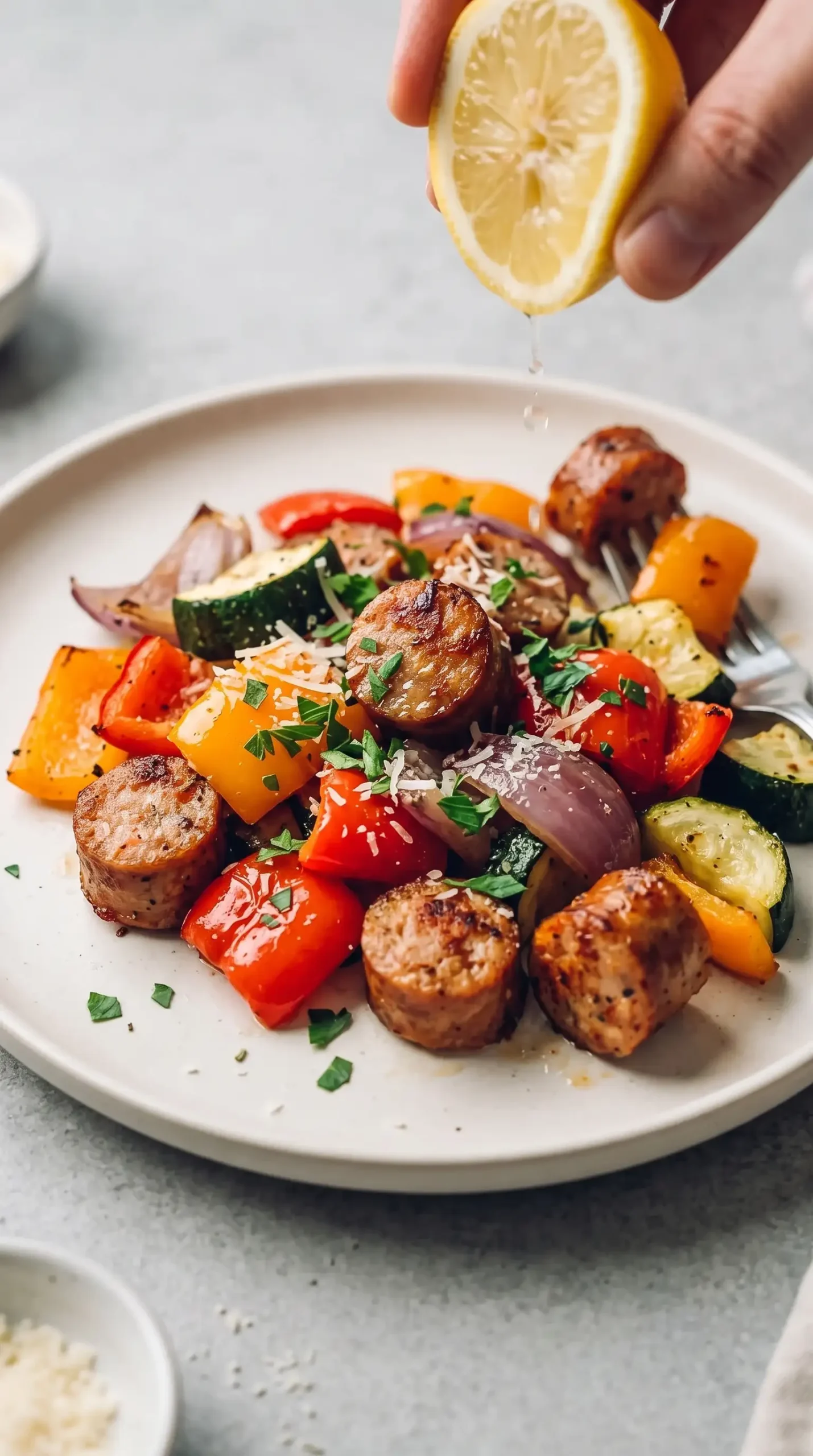
A squeeze of lemon brightens the savory sausage and roasted vegetables, chopped parsley adds a fresh finish, and Parmesan contributes extra richness. Apply these additions after cooking so their flavor and appearance remain noticeable on the finished chicken sausage with vegetables.
Even Cuts Make the Ten-Minute Dinner Possible
One-inch vegetables, thick sausage rounds, and an uncrowded basket allow heat to work evenly across the entire mixture. Those three decisions determine whether the food emerges browned and balanced or soft in some places and overcooked in others.
With the sizing and spacing handled carefully, air fryer chicken sausage becomes a dependable one-basket meal that can be served alone, paired with rice, or portioned for later meals without adding unnecessary preparation.
Crisping, Frozen Vegetables, and Reheating Questions
Can frozen vegetables go directly into the air fryer?
Thawing and drying them first gives the best chance of browning because frozen produce releases considerable moisture. They may also require a slightly longer cooking period than fresh vegetables, so check texture near the end and extend the cycle only as needed.
Why are the vegetables cooked but not crisp?
Insufficient airflow is usually responsible. Spread the pieces into a looser layer, cook in batches when necessary, and shake the basket midway so damp surfaces are exposed to hot circulating air.
Does every air fryer need to be preheated?
Appliance guidance varies by model. Follow the manufacturer’s instructions; when preheating is recommended, bring the unit to 390°F before adding the sausage mixture to encourage prompt browning.
How can gluten be avoided in this meal?
Review the chicken sausage label and choose a certified gluten-free product when required. The vegetables, oil, and listed seasonings are simple components, but packaged sausage may contain additional ingredients that differ by brand.
Can the cooked mixture be reheated in a microwave?
Microwaving warms leftovers quickly but softens the roasted surfaces. Heat the portion briefly, then transfer it to a hot skillet or air fryer for a short finish when a crisper texture is important.
How can extra char be added without overcooking everything?
Raise the temperature by 25°F only during the last one or two minutes and watch closely. The vegetables and sausage are already nearly cooked at that stage, so a brief hotter finish can deepen color without requiring a long extension.
Air Fryer Chicken Sausage with Colorful Vegetables
Air Fryer Chicken Sausage with Colorful Vegetables is a quick, flavorful meal with tender sausage and crisp-tender vegetables. It is an easy option for busy weeknights when you want a simple, satisfying dinner.
Ingredients
Method
Preparation
- Place the red bell pepper, orange bell pepper, red onion, and zucchini in a large bowl and coat them with avocado oil.
- Combine the garlic powder, onion powder, Italian seasoning, kosher salt, and black pepper, then distribute the seasoning mixture evenly over the vegetables.
- Add the sliced chicken sausage to the seasoned vegetables and mix until combined.
- Preheat the air fryer if needed to 390°F / 199°C and lightly spray the basket with cooking spray.
Cooking
- Spread the chicken sausage and vegetables in a single layer in the air fryer basket, cooking in batches if necessary.
- Air fry for 10 minutes, shaking the basket or turning the ingredients halfway through the cooking time.
- Serve the cooked chicken sausage and vegetables hot with cauliflower rice or brown rice if desired.
Notes
Cut the vegetables into similar sizes and keep the air fryer basket from becoming overcrowded to encourage even browning of the sausage and vegetables.