
From morning breakfasts to evening dinners, Tasteza Recipes offers quick and easy recipe ideas, featuring everything from wholesome meals to delicious desserts for every moment and every occasion.


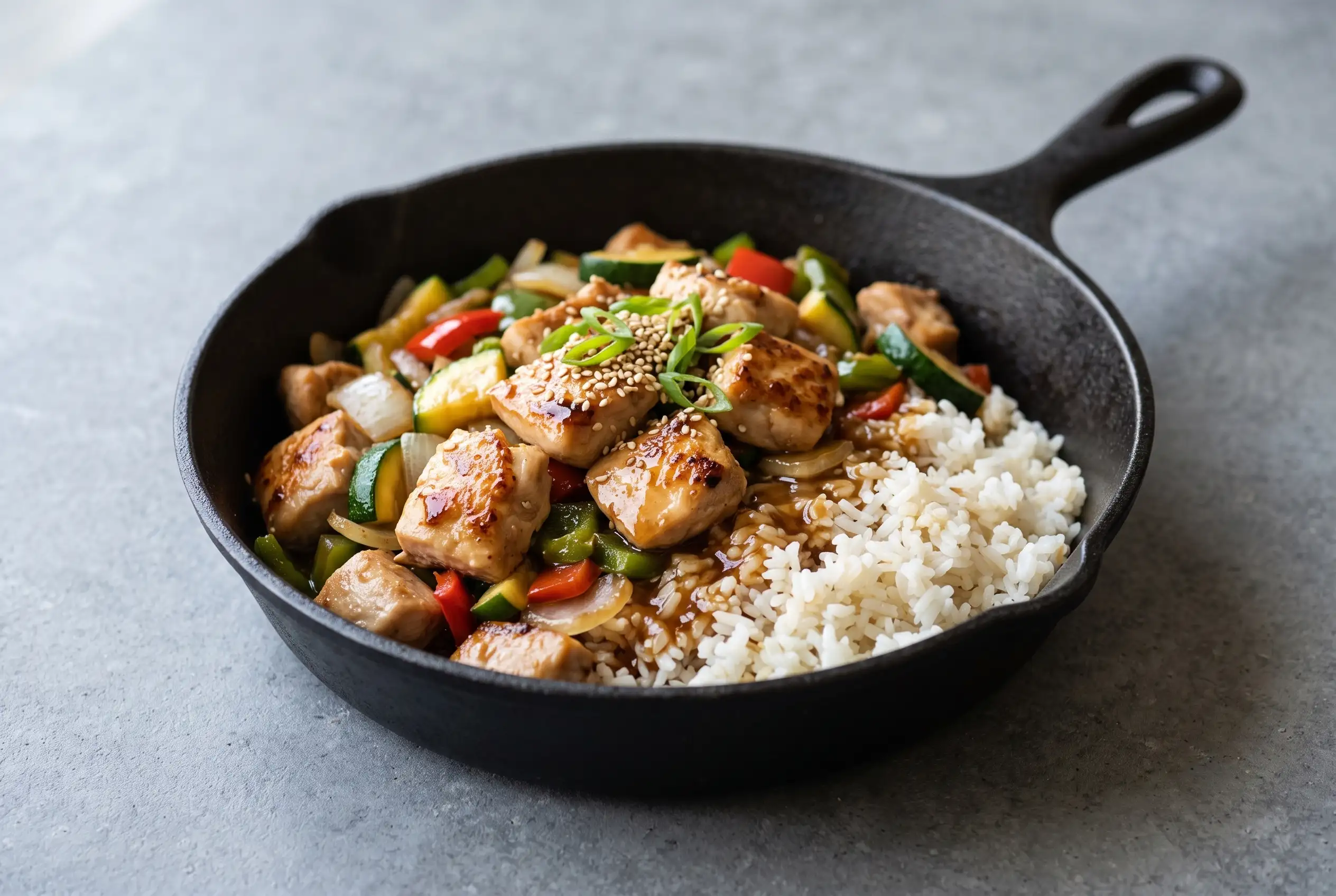
Hibachi chicken skillet is a fast way to bring seared chicken, crisp-tender vegetables, and a glossy soy-garlic butter finish together in one pan. The dish captures the appeal of a restaurant-style hibachi dinner while keeping the cooking process practical for a weeknight meal.
A homemade hibachi chicken recipe works because the main flavors come from familiar pantry staples. Small pieces of chicken develop browning in a hot skillet, then a buttery sauce adds savory depth after the sear is established. The same pan also becomes the place where vegetables and optional fried rice come together.
Why Hibachi Chicken Skillet Works
The appeal of a hibachi chicken skillet comes from contrast. The chicken receives a flavorful browned exterior while the vegetables stay bright and crisp-tender. A short finishing toss with sauce creates a coating that connects every part of the meal without requiring a long simmer.
Small chicken pieces make the cooking process efficient because they expose more surface area to the skillet. That helps create the browned texture associated with hibachi-style cooking while allowing the chicken to finish quickly once it is stirred.
Families often choose this style of dinner because the ingredients are flexible. Boneless skinless chicken breasts provide a lean option, while thighs offer a more forgiving texture. Either choice works with the same soy, garlic, butter, sugar, and rice vinegar flavor base.
| Cooking Choice | Result in the Skillet | Best Use |
|---|---|---|
| Chicken breasts | Lean pieces with a mild flavor | When watching cook time closely |
| Chicken thighs | Moist, tender bites | When a more forgiving texture is preferred |
| Cold cooked rice | Separate grains in fried rice | For a complete one-pan meal |
Building Flavor with Hibachi Chicken Skillet Ingredients
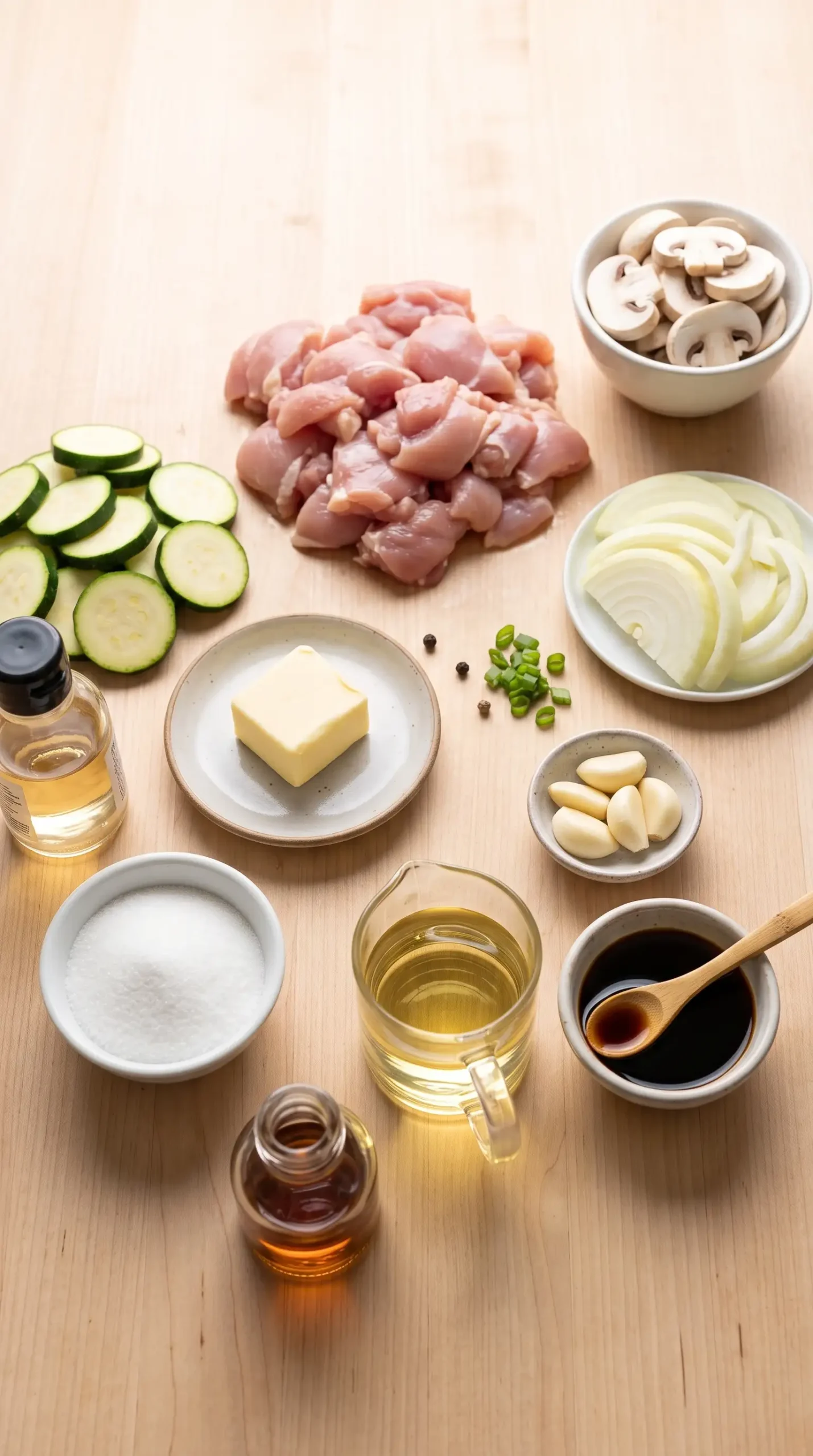
The most important ingredient decisions in a hibachi chicken skillet are about balance. Soy sauce supplies savory seasoning, while sugar and rice vinegar create the sweet and tangy notes that keep the sauce from tasting flat. Garlic and butter round out the finish with richness.
Sesame oil is optional, but a small amount can add a nutty character to the overall flavor. Neutral oil is used for the higher-heat cooking stage because the chicken needs a strong sear before the butter-based sauce is added.
- Soy sauce balance: Combine salty and sweet flavors carefully before serving.
- Butter finish: Add it after browning so the sauce coats the food without interfering with the sear.
- Vegetable mix: Onions, zucchini, and mushrooms provide different textures in the same skillet.
The vegetables are not just an addition on the side. Cooking them in the same pan allows them to pick up browned bits left from the chicken, creating a connected flavor throughout the meal.
Searing Control for a Better Chicken Hibachi Skillet Recipe
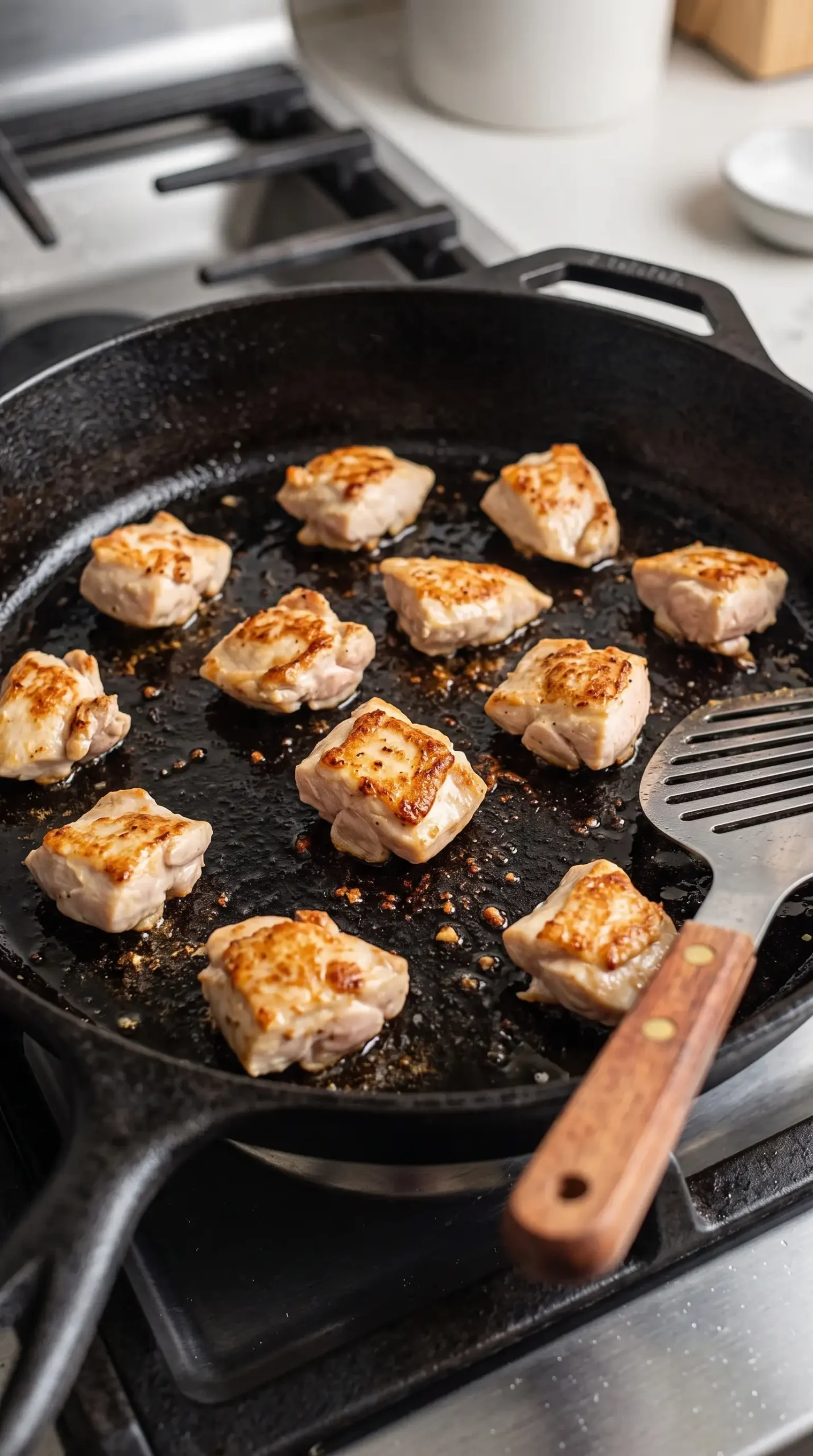
A successful chicken hibachi skillet recipe depends on managing the heat at the right moments. The chicken should begin in a hot skillet with enough space to touch the surface and develop browning before it is moved.
The reason a hot skillet works so well is that dry surfaces brown best when moisture has been reduced before the searing stage. This helps the chicken develop deeper color and flavor before the sauce is added.
Patting the chicken dry helps reduce surface moisture, which supports better contact with the pan. Cutting pieces evenly also matters because smaller and larger pieces will not finish at the same pace.
The sauce belongs near the end of cooking. Soy sauce, garlic, sugar, rice vinegar, and butter create a flavorful glaze, but adding them too early can interfere with the high-heat searing stage.
| Stage | Skillet Focus | Visual Cue |
|---|---|---|
| Chicken sear | High heat and single layer cooking | Browned exterior develops |
| Sauce finish | Quick tossing with butter mixture | Chicken looks glossy and coated |
| Vegetable sauté | Brief cooking over medium-high heat | Vegetables keep some bite |
Choosing Rice and Vegetables for the Skillet
Cold cooked rice turns the hibachi chicken skillet into a more complete meal. The chilled grains separate more easily during cooking, helping create the texture expected from hibachi chicken fried rice. A prepared fried rice recipe can guide the timing of adding vegetables, seasonings, and rice so the skillet keeps a balanced texture.
Freshly cooked hot rice tends to hold together more, which can make fried rice clump. Using cold rice allows the grains to move through the skillet while absorbing soy sauce and butter.
Vegetables should be cooked briefly enough to maintain texture. Onions, zucchini, and mushrooms each soften at different rates, so attention during the sautéing stage helps preserve contrast.
Serving Hibachi Chicken Skillet for Dinner
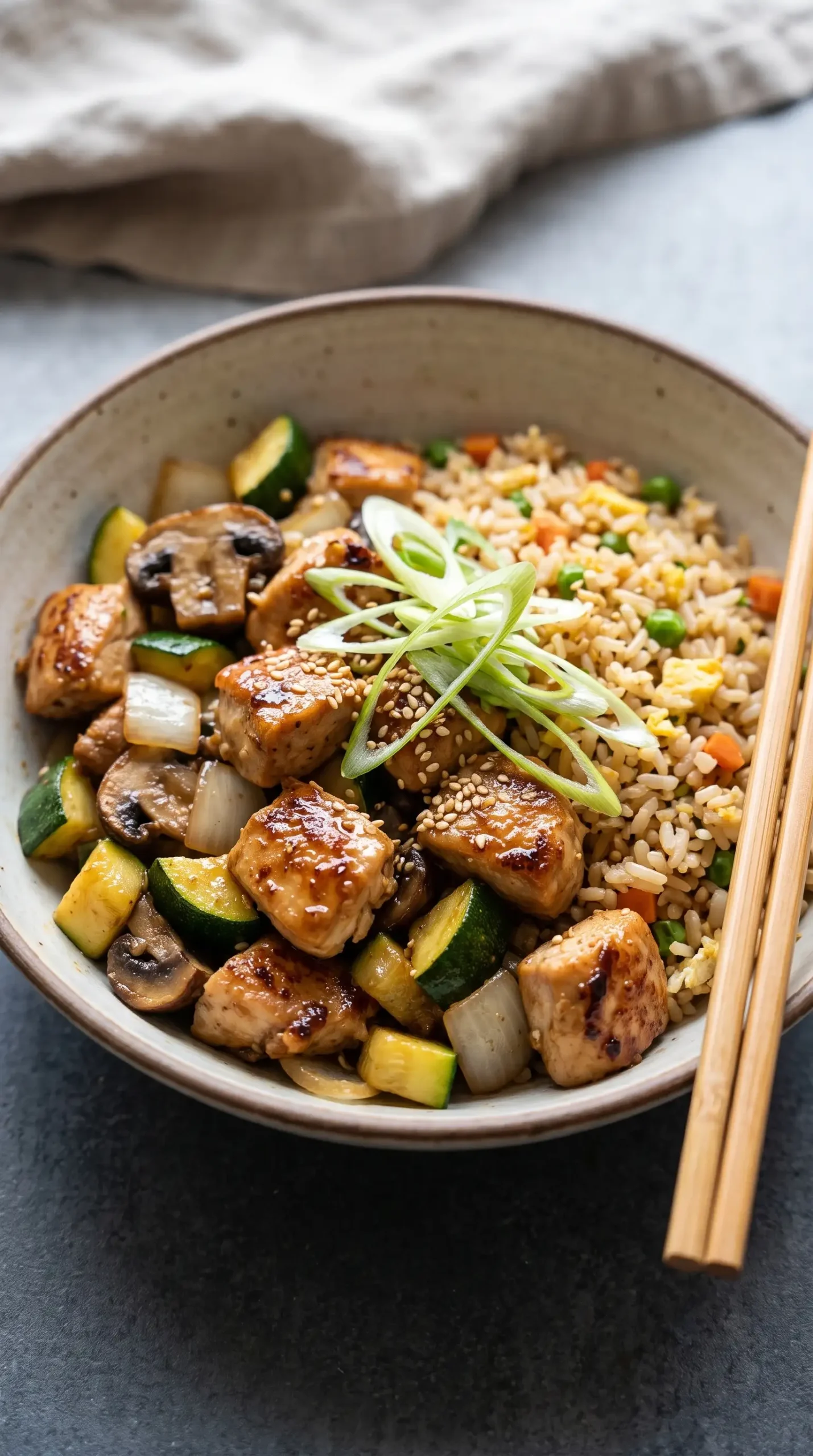
Serve the hibachi chicken skillet directly from the pan over steamed rice or alongside hibachi chicken fried rice. The sauce from the chicken and vegetables provides enough flavor to make simple rice feel complete.
Fresh additions can brighten the savory flavors. Sliced cucumber, a simple green salad, or lemon wedges add a clean contrast, while extra soy sauce lets each person adjust seasoning.
Small toppings work best because they support the main skillet flavors. Toasted sesame seeds, thinly sliced scallions, chili oil, or sriracha can add finishing touches without covering the soy-garlic butter profile.
Storing and Reheating Hibachi Chicken
Leftover hibachi chicken should cool before being placed in an airtight container in the refrigerator. Proper storage keeps the chicken and vegetables ready for another quick meal.
For longer storage, the cooked dish can be frozen in a freezer-safe container. Thawing in the refrigerator before reheating helps the texture recover more evenly.
Reheating works best with gentle heat. A skillet with a small splash of water or a little butter helps prevent the chicken from becoming dry while warming the sauce back into a smooth coating.
Tips That Improve Hibachi Chicken Skillet Results
A few focused choices can make the cooking process more reliable. The most useful improvements involve moisture control, heat management, and timing the sauce correctly.
- Dry the chicken: Remove excess surface moisture before it reaches the skillet.
- Space the pieces: Keep chicken in a single layer for stronger browning.
- Watch breasts closely: Lean meat needs attention to avoid a dry texture.
- Prepare ahead: Cut chicken and vegetables separately and refrigerate them for up to a day.
Cold rice preparation is another simple improvement when making fried rice. Having the rice ready before cooking keeps the skillet moving quickly once the chicken and vegetables are finished.
Avoiding Hibachi Chicken Skillet Mistakes
Overcrowding is one of the biggest problems with a hibachi chicken skillet. Too many pieces in the pan lower the cooking temperature and reduce the browning that creates the signature texture.
Another common mistake is adding the sauce before the chicken has developed its crust. Butter can burn during intense heat, so the glaze works best after the main searing step is complete.
Fried rice also depends on the right rice texture. Using warm, freshly cooked rice can create clumps, while cold cooked rice helps individual grains stay separate during tossing.
Variations for Hibachi Chicken Skillet Meals
The same skillet approach can adapt to different proteins and vegetable combinations. Shrimp or thinly sliced steak can replace chicken, while the same sauce style keeps the meal connected.
Vegetable swaps also work well. Bell peppers or broccoli can replace zucchini when a different texture or color combination is desired. For a gluten-free version, tamari can replace soy sauce.
Preparing Components for Faster Skillet Cooking
Advance preparation makes the cooking process smoother without changing the final texture. Chicken can be cut into bite-sized pieces ahead of time, and vegetables can be sliced and stored separately until needed.
Keeping ingredients organized helps maintain the order of cooking. The chicken needs space for browning, while the vegetables benefit from a quick sauté after the pan has collected savory browned bits.
Hibachi Chicken Skillet Texture Comes from Timing
The best texture in a hibachi chicken skillet comes from knowing when each element belongs in the pan. Chicken needs direct heat for browning, vegetables need brief cooking for crisp-tender results, and sauce needs a short finishing period.
That timing creates a meal where every part keeps its own character while sharing the same soy-garlic butter flavor. The skillet becomes a simple tool for building layers of texture without complicated preparation.
Hibachi Chicken Skillet Delivers Balanced One-Pan Flavor
Hibachi chicken skillet brings together browned chicken, crisp vegetables, and a glossy finishing sauce through careful heat control. The most important choice is keeping the sear, sauce, and vegetable textures distinct so the finished meal stays balanced.
The combination also leaves room for a flexible finish, whether served with rice or transformed into hibachi chicken fried rice. A few simple cooking decisions create a complete skillet dinner with restaurant-style appeal.
Hibachi Chicken Skillet Questions About Rice and Texture
Can chicken thighs replace breasts in a hibachi chicken skillet?
Yes. Chicken thighs work well because they are more forgiving and tend to stay moist. Adjust cooking time slightly based on the size of the pieces.
Why does hibachi chicken fried rice use cold rice?
Cold cooked rice helps the grains remain separate during cooking. This creates a better fried rice texture than using freshly cooked warm rice.
How can I keep vegetables crisp-tender?
Cook onions, zucchini, and mushrooms briefly over medium-high heat. Removing them while they still have some bite keeps the skillet from becoming soft and heavy.
Is sesame oil required for this hibachi chicken recipe?
No. Sesame oil adds nuttiness but is optional. The soy sauce, garlic, butter, sugar, and rice vinegar combination still provides the main flavor profile.
How can I add heat to the chicken hibachi skillet?
Chili flakes, chili oil, or sriracha can add spice at the table. These options allow each serving to be adjusted without changing the base sauce.
Hibachi Chicken Skillet with Soy Garlic Butter Sauce
Hibachi Chicken Skillet with Soy Garlic Butter Sauce is a quick, savory skillet meal featuring tender chicken, crisp-tender vegetables, and rich soy garlic butter flavor. It is an easy weeknight dinner option with a satisfying homemade hibachi-style appeal.
Ingredients
Method
Preparation
- Slice the chicken into small pieces and pat the surface dry before cooking.
- Combine soy sauce, minced garlic, sugar, rice vinegar, optional sesame oil, and 2 tablespoons (28 g) butter in a bowl to prepare the sauce mixture.
Cooking
- Warm a large skillet over medium-high heat, then add the neutral oil.
- Place the chicken in the skillet in a single layer and sear without moving it for about 1 minute. Stir and continue cooking for 5 to 7 minutes until the chicken reaches 165°F / 74°C internally.
- Lower the heat, pour in the soy garlic butter sauce, add the remaining 2 tablespoons (28 g) butter, and toss the chicken until evenly coated.
- Cook the sliced onion, zucchini, and mushrooms in the same skillet until crisp-tender, then add the chicken back and stir everything together.
Fried Rice Option
- Scramble the eggs in the skillet, add the cold cooked rice, soy sauce, and butter, then stir until the rice is warmed through. Serve with the hibachi chicken.
Notes
Use cold cooked rice for the fried rice option to help the grains remain separate while cooking.