
From morning breakfasts to evening dinners, Tasteza Recipes offers quick and easy recipe ideas, featuring everything from wholesome meals to delicious desserts for every moment and every occasion.


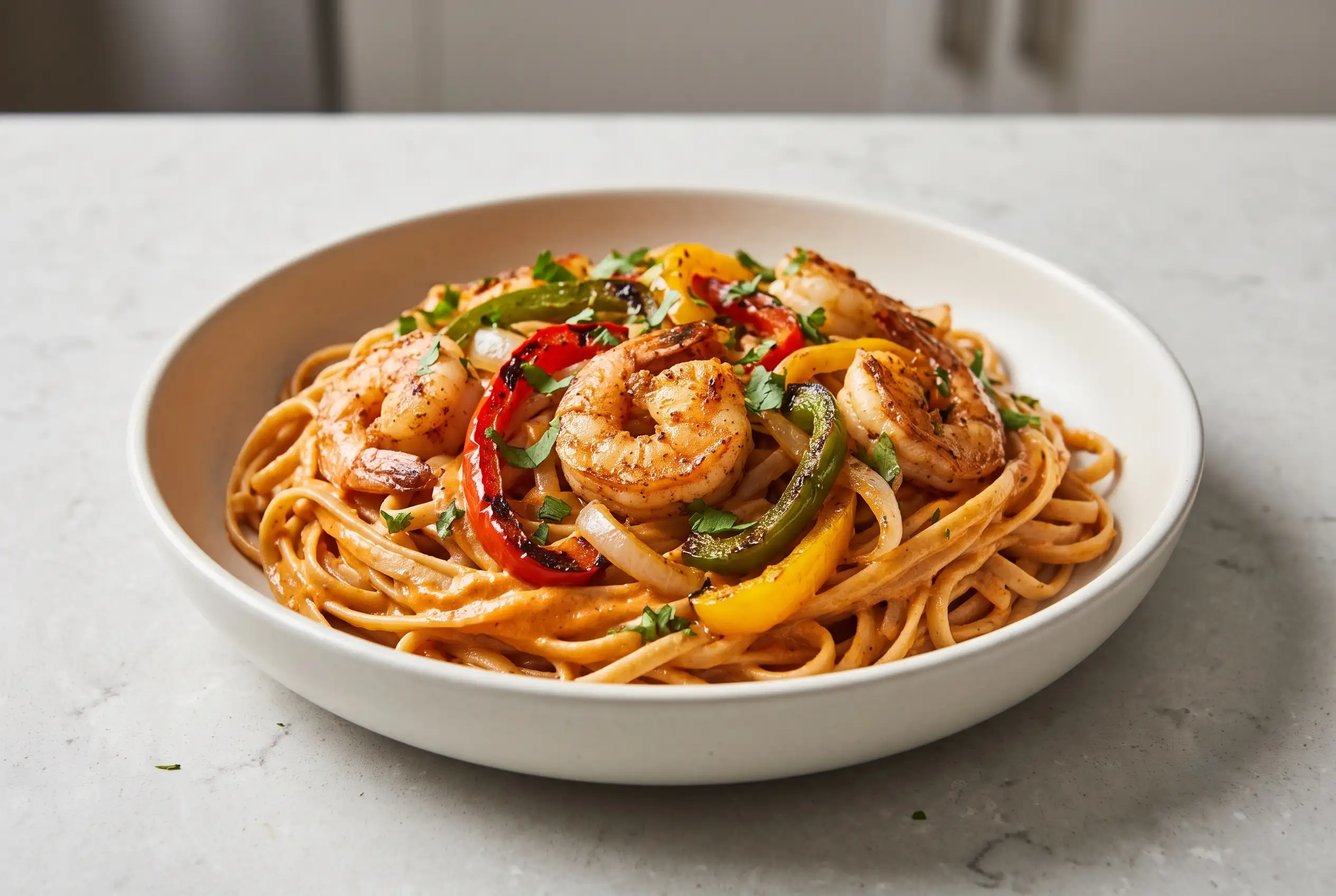
Fajita shrimp pasta brings together seared shrimp, browned peppers, tender pasta, and a creamy enchilada sauce for a flavorful weeknight meal. The combination delivers the familiar taste of fajitas in a skillet pasta format, using whole wheat pasta and light cream cheese to create a lighter dinner option that still feels satisfying.
Busy evenings often call for meals that use straightforward ingredients without sacrificing texture or flavor. Fajita shrimp pasta answers that need with a quick cooking approach, allowing vegetables, shrimp, and pasta to come together in one cohesive dish.
Why Fajita Shrimp Pasta Fits Busy Evenings
Simple timing is one reason this shrimp fajita pasta recipe works well for home cooks. Pasta preparation and skillet cooking can happen alongside each other, reducing the amount of waiting between starting dinner and serving it.
Common ingredients make the dish approachable for regular meal planning. Whole wheat pasta, shrimp, bell peppers, onions, garlic, Mexican seasoning, enchilada sauce, and light cream cheese create a combination that feels more special than a basic pasta bowl while staying familiar.
Another advantage comes from flexibility after cooking. Fajita shrimp pasta works for casual dinners and reheats well for lunches, making it useful when one meal needs to cover more than one occasion.
Creamy Sauce Balance in Fajita Shrimp Pasta
The creamy finish comes from combining enchilada sauce with light cream cheese over low heat. This approach creates a smooth coating for the pasta while keeping the smoky, tangy character of the sauce visible instead of overwhelming the shrimp and vegetables.
Shrimp and Vegetable Choices That Shape the Dish
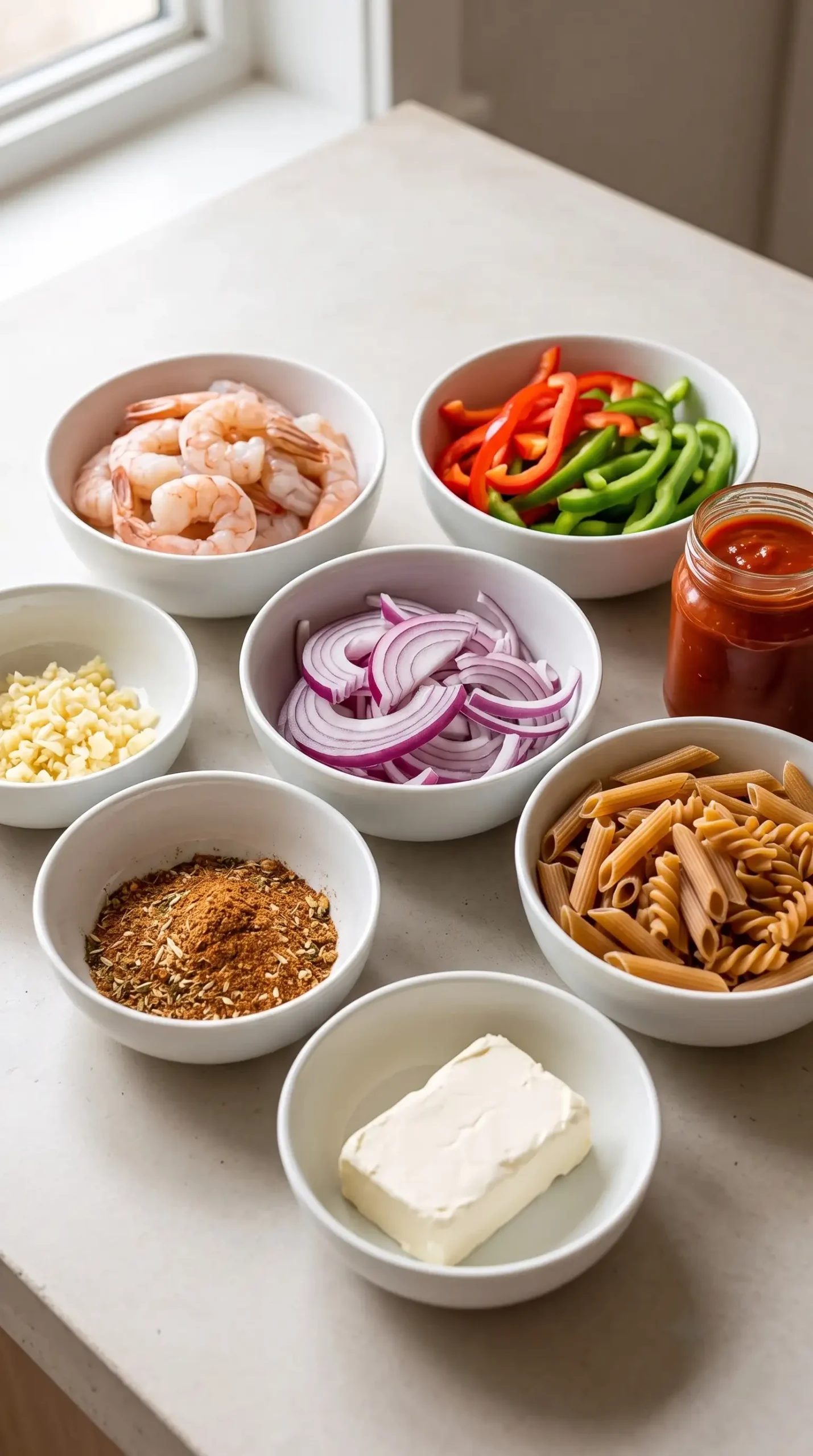
Shrimp selection affects how easily the skillet comes together. Peeled and deveined shrimp are practical because they cook evenly and require less preparation at the table. Fresh or frozen shrimp can both work when frozen shrimp are fully thawed and dried before seasoning, which is an important step for dishes like shrimp fried rice weeknight skillet where shrimp texture depends on proper preparation.
Peppers and onions provide the browned fajita element that defines the dish. Thin, even slices help the vegetables cook at a similar pace, allowing them to develop color and a deeper flavor before being mixed with the pasta.
Garlic, Mexican seasoning, and enchilada sauce guide the overall direction of the meal. The ingredients work together to create a Southwestern-style pasta without requiring a long list of specialty items.
Whole Wheat Pasta and Sauce Decisions
Whole wheat pasta gives the skillet a firmer texture and adds a heartier bite. Regular pasta can be used if preferred, but changing the pasta type may slightly alter the finished texture and overall feel of the meal.
Cooking Controls That Protect Texture
Temperature management has a major effect on the finished skillet. High heat helps peppers and onions brown, while shrimp need careful attention so they become opaque and shrimp reaches 145°F for a properly cooked finish without spending unnecessary time in the pan.
Lowering the heat before adding light cream cheese is an important control point. Gentle stirring allows the cream cheese to melt into the enchilada sauce smoothly and helps prevent a separated or uneven sauce.
Fajita shrimp pasta benefits from keeping each component distinct before combining. Properly browned vegetables, quickly cooked shrimp, and a smooth sauce create clearer layers of flavor and texture in every serving.
Browning Peppers and Shrimp Without Losing Flavor
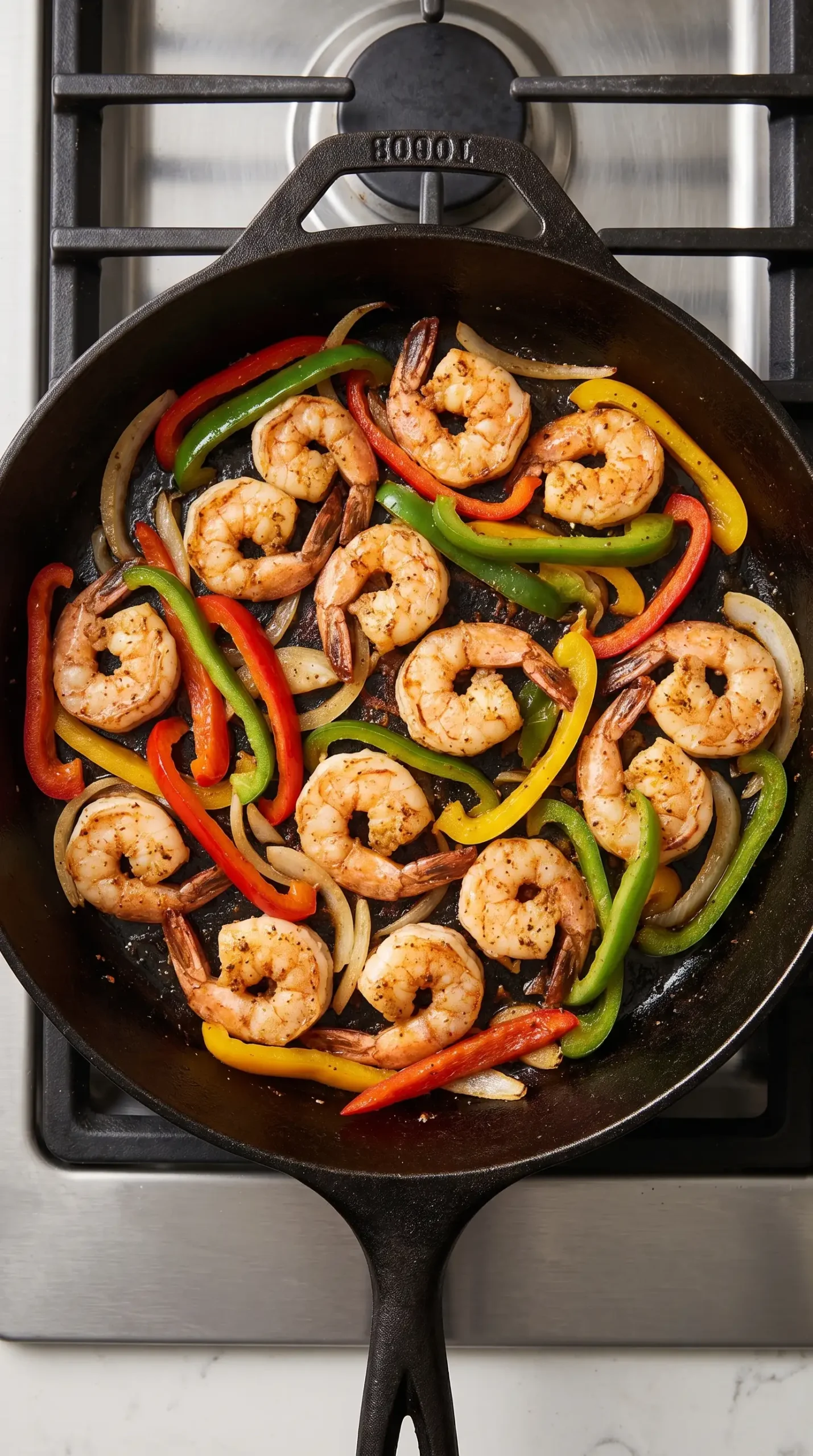
A heavy-duty skillet with enough space helps the vegetables and shrimp maintain contact with heat. Crowding the pan can reduce browning, so working in smaller batches when needed helps preserve the caramelized flavor that gives the dish its fajita character.
Fajita Shrimp Pasta Mistakes That Ruin the Finish
Several small errors can change the texture of this skillet meal. Overcrowding the pan is a common problem because peppers, onions, or shrimp may steam instead of browning when too much food is added at once.
Adding cream cheese while the pan is still very hot can also cause problems. The smoother approach is to reduce the heat and stir gently until the sauce becomes cohesive and creamy.
Another issue is cooking shrimp beyond the point where they are no longer translucent. Watching the shrimp closely and removing them once cooked helps keep the seafood tender and prevents a rubbery texture.
- Shrimp preparation: Pat thawed shrimp dry before seasoning to encourage better searing.
- Vegetable slicing: Keep peppers and onions similar in size so they brown evenly.
- Sauce adjustment: Add extra enchilada sauce or cream cheese gradually when changing thickness.
Serving Skinny Fajita Shrimp Pasta With Fresh Accents
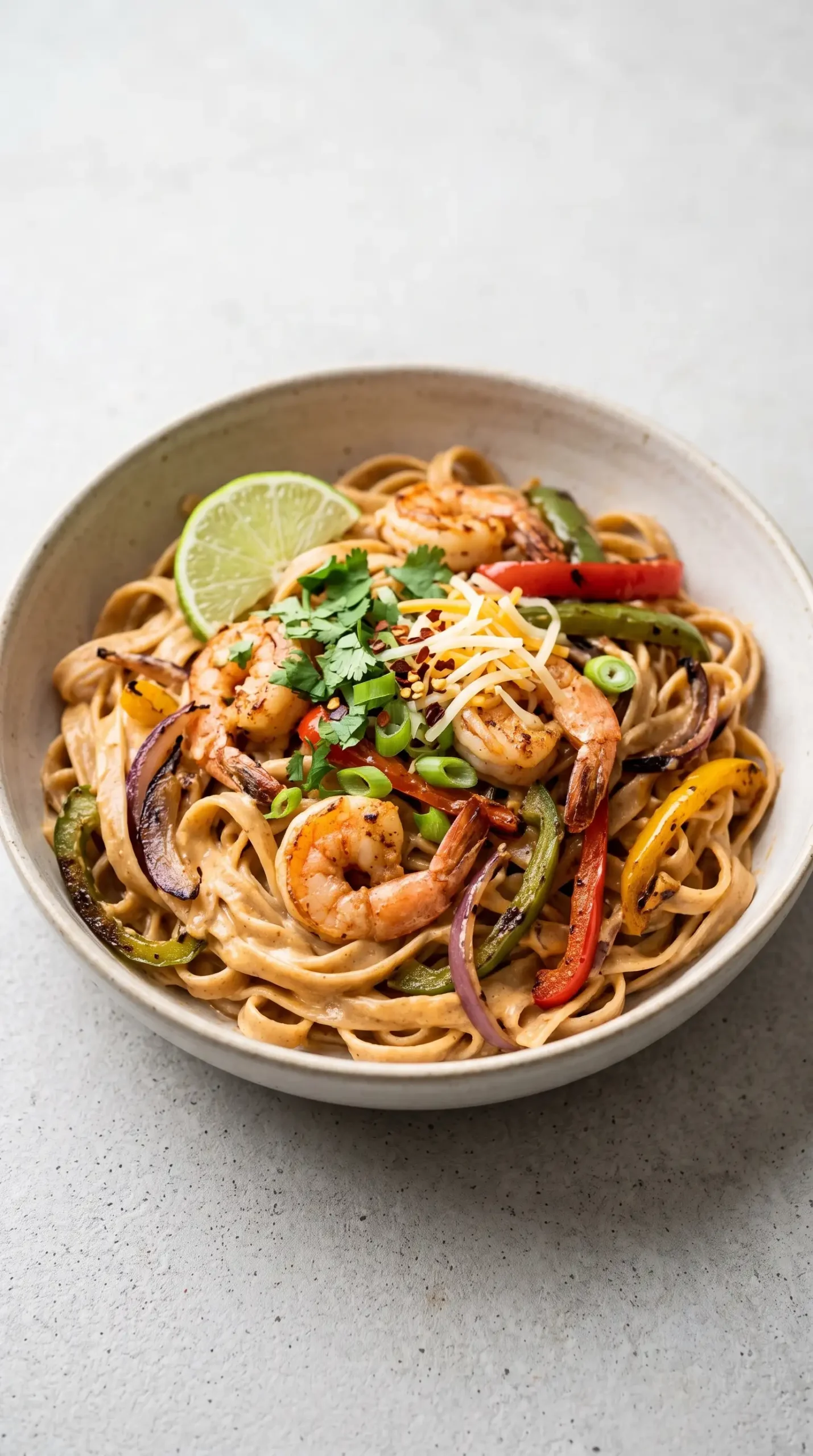
Hot servings of skinny fajita shrimp pasta are best finished with simple toppings that brighten the creamy sauce. A squeeze of fresh lime, chopped cilantro, sliced green onions, shredded cheese, or crushed red pepper flakes can add contrast without hiding the main flavors.
Leftover Handling for Easy Shrimp Pasta Dinner
Proper storage helps maintain the quality of leftovers. Once cooled, the pasta should be placed in an airtight container and refrigerated within two hours so it remains ready for another meal.
Freezing is possible when needed, although creamy sauces may experience texture changes after thawing. A freezer-safe container protects the dish, and thawing overnight in the refrigerator prepares it for reheating.
Reheating works best over low heat with a splash of water or additional enchilada sauce to bring back moisture. Covered reheating helps prevent the shrimp and pasta from drying out.
| Storage option | Best use | Texture consideration |
|---|---|---|
| Refrigerator | Short-term lunches or dinners | Creamy sauce can be restored with added moisture |
| Freezer | Longer storage when needed | Cream sauce may change slightly after thawing |
| Stovetop reheating | Restoring skillet texture | Low heat helps protect shrimp and sauce |
Adjustments for Different Fajita Shrimp Pasta Styles
The dish can shift in flavor while keeping its main structure. Mild enchilada sauce creates a gentler version, while chipotle in adobo or extra crushed red pepper flakes can add more heat.
A Quick Comparison of Pasta Options
Choosing the pasta base changes the final experience. Each option offers a different texture or dietary approach while keeping the shrimp, vegetables, and sauce combination at the center.
| Pasta choice | Texture result | Best fit |
|---|---|---|
| Whole wheat pasta | Firmer bite and hearty texture | A lighter everyday version |
| Regular pasta | More traditional pasta texture | A familiar comfort-style dinner |
| Zucchini noodles | Vegetable-based texture | A lower-carb variation |
Prep Choices Before Cooking Fajita Shrimp Pasta
Organizing ingredients before heating the skillet makes the cooking process smoother. Having sliced peppers and onions ready, shrimp prepared, and pasta drained prevents unnecessary delays once the pan reaches cooking temperature.
Seasoning adjustments are easier when they happen gradually. Tasting near the end allows the Mexican seasoning to be increased if needed without making the dish overly salty.
Fajita shrimp pasta also adapts well to partial preparation. Peppers and pasta can be cooked and refrigerated separately ahead of time, then combined with freshly cooked shrimp when serving.
Seasoning and Spice Adjustments for Fajita Shrimp Pasta
Mexican seasoning establishes the core flavor, but the balance can be personalized. Taco seasoning or a homemade blend can replace it, with attention paid to salt levels so the enchilada sauce and seasoning remain balanced.
Fajita Shrimp Pasta Keeps Its Creamy Skillet Character
Browned peppers, seasoned shrimp, and a smooth enchilada cream sauce allow fajita shrimp pasta to keep the spirit of a fajita dinner while fitting into an easy pasta format. The most important cooking decisions come from protecting browning, controlling heat, and finishing the sauce gently.
When those elements are handled carefully, the skillet delivers tender shrimp, distinct vegetables, and a creamy coating that makes this easy shrimp pasta dinner feel complete without relying on complicated preparation.
Fajita Shrimp Pasta Texture Questions and Answers
Can frozen shrimp work without making the sauce watery?
Frozen shrimp can be used when fully thawed and patted dry before cooking. Removing excess moisture helps the shrimp sear properly and prevents extra liquid from affecting the sauce consistency.
How can the sauce stay creamy after reheating?
Reheat the pasta slowly on the stove with a small splash of water or additional enchilada sauce. Gentle heat helps bring the sauce back together while protecting the shrimp texture.
What can replace the light cream cheese?
The cream cheese can be omitted and replaced with additional enchilada sauce, though the finished pasta will have a less creamy coating. The change mainly affects the sauce texture.
Why are my peppers not browning in the skillet?
Peppers may fail to brown when the pan is overcrowded. Giving the vegetables enough space and cooking them until they develop color helps create the deeper fajita flavor expected from the dish.
Can extra vegetables be added to this pasta?
Black beans or corn can be added for a southwestern variation and more bulk. These additions change the balance of the dish but still fit with the fajita-inspired flavors.
Fajita Shrimp Pasta with Creamy Enchilada Sauce
Fajita Shrimp Pasta with Creamy Enchilada Sauce is a hearty, creamy pasta dish with tender shrimp, colorful vegetables, and bold enchilada flavor. It is an easy, comforting meal that works well for a flavorful weeknight dinner.
Ingredients
Method
Preparation
- Cook the whole wheat pasta according to the package directions, then drain it and set aside.
- Cook the sliced bell peppers and onion in a heavy-duty skillet over medium-high heat until browned, stirring occasionally.
Cooking
- Melt the butter in a large saucepan over high heat.
- Add the minced garlic and shrimp to the saucepan.
- Season the shrimp with Mexican seasoning, salt, and pepper, then cook for 4 to 6 minutes until the shrimp are opaque and fully cooked.
- Mix the enchilada sauce into the shrimp mixture.
- Add the cooked pasta and browned peppers and onions to the shrimp and sauce, then stir until combined.
- Lower the heat and add the light cream cheese.
- Stir until the cream cheese is melted and the sauce is smooth, adding additional enchilada sauce or cream cheese if needed to adjust the thickness.
- Add more Mexican seasoning if desired, adjust the seasoning, and serve hot.
Notes
Use low heat when incorporating the cream cheese into the sauce to help maintain a smooth texture.