
From morning breakfasts to evening dinners, Tasteza Recipes offers quick and easy recipe ideas, featuring everything from wholesome meals to delicious desserts for every moment and every occasion.


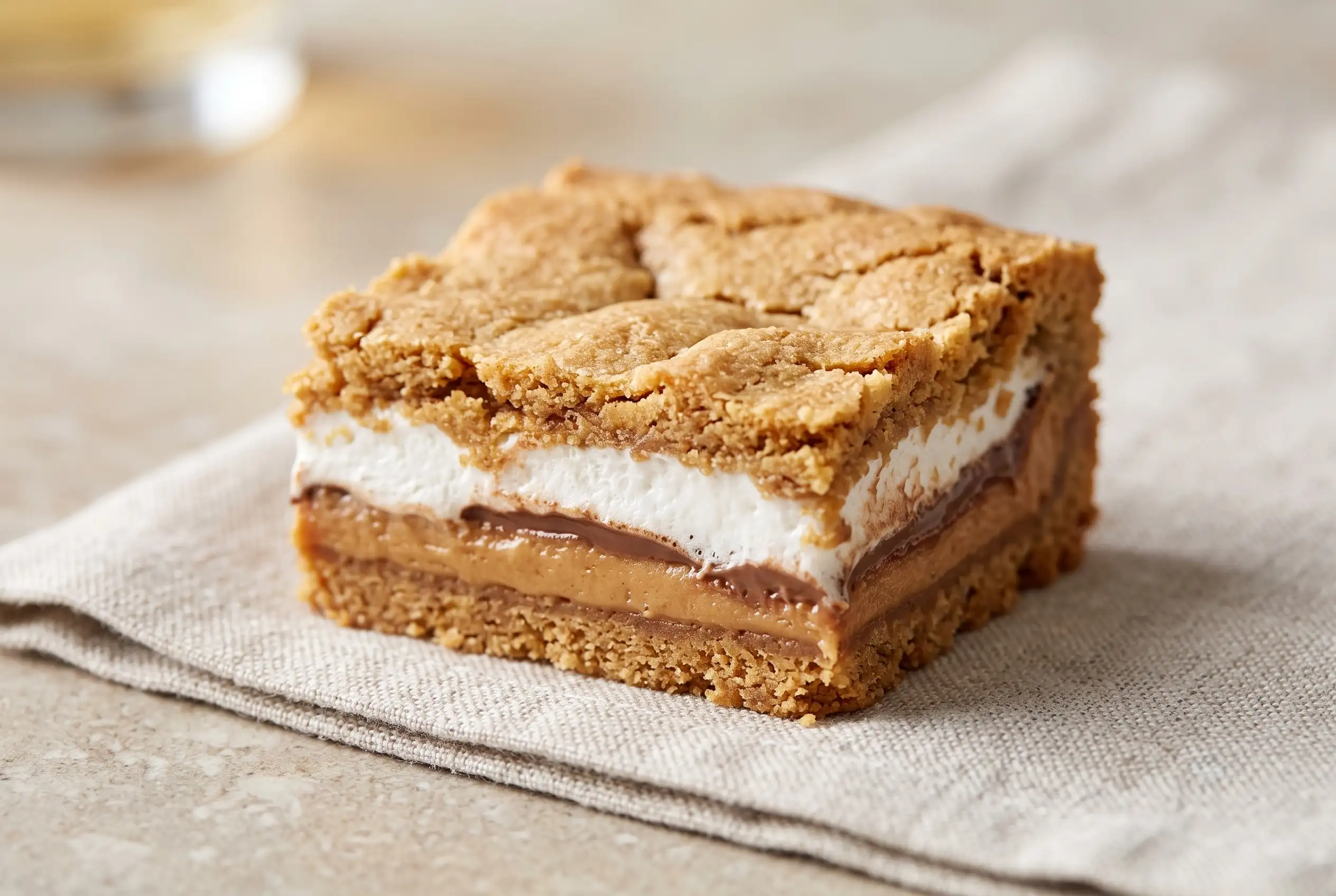
Peanut butter s mores bars turn the familiar campfire combination into a neat, sliceable dessert with graham cracker dough, milk chocolate, marshmallow cream, and a warm peanut butter layer. The bars bake in one square pan, so they suit summer gatherings, bake sales, and everyday dessert cravings without requiring a fire or individual assembly.
Each square offers several textures at once: a sturdy cookie-like base, melted chocolate, a soft marshmallow center, and a golden top crust. Because the ingredients are familiar pantry staples, easy peanut butter s mores bars feel approachable even when you need a dessert that looks layered and generous.
Why Peanut Butter S’mores Bars Work So Well
Classic s’mores can be messy to build and difficult to serve to a group. A baked pan solves that problem by holding the graham, chocolate, marshmallow, and peanut butter together in one portable portion. Once cooled, the dessert can be cut ahead of time and arranged on a platter without losing its recognizable s’mores character.
Beyond convenience, the format creates a more substantial bite than a sandwich-style s’more. The graham cracker crumbs are mixed directly into the dough, so their flavor and crunch run through both the bottom crust and the rustic top layer.
The Layered Texture Behind Every Square
A firm lower crust gives the filling something dependable to rest on. Pressing most of the dough evenly into the lined pan keeps the chocolate bars level and reduces weak spots where marshmallow cream could escape.
Inside the baked peanut butter s mores bars, the chocolate softens beneath the marshmallow while the warmed peanut butter spreads across the layer instead of sitting in thick patches. That combination produces a creamy center against the graham-speckled dough.
Across the surface, the reserved dough forms a loose lid. It does not need to look perfectly polished; an even covering is more important because the top should bake to a golden finish and help contain the softer filling below.
Ingredient Choices That Improve the Bars
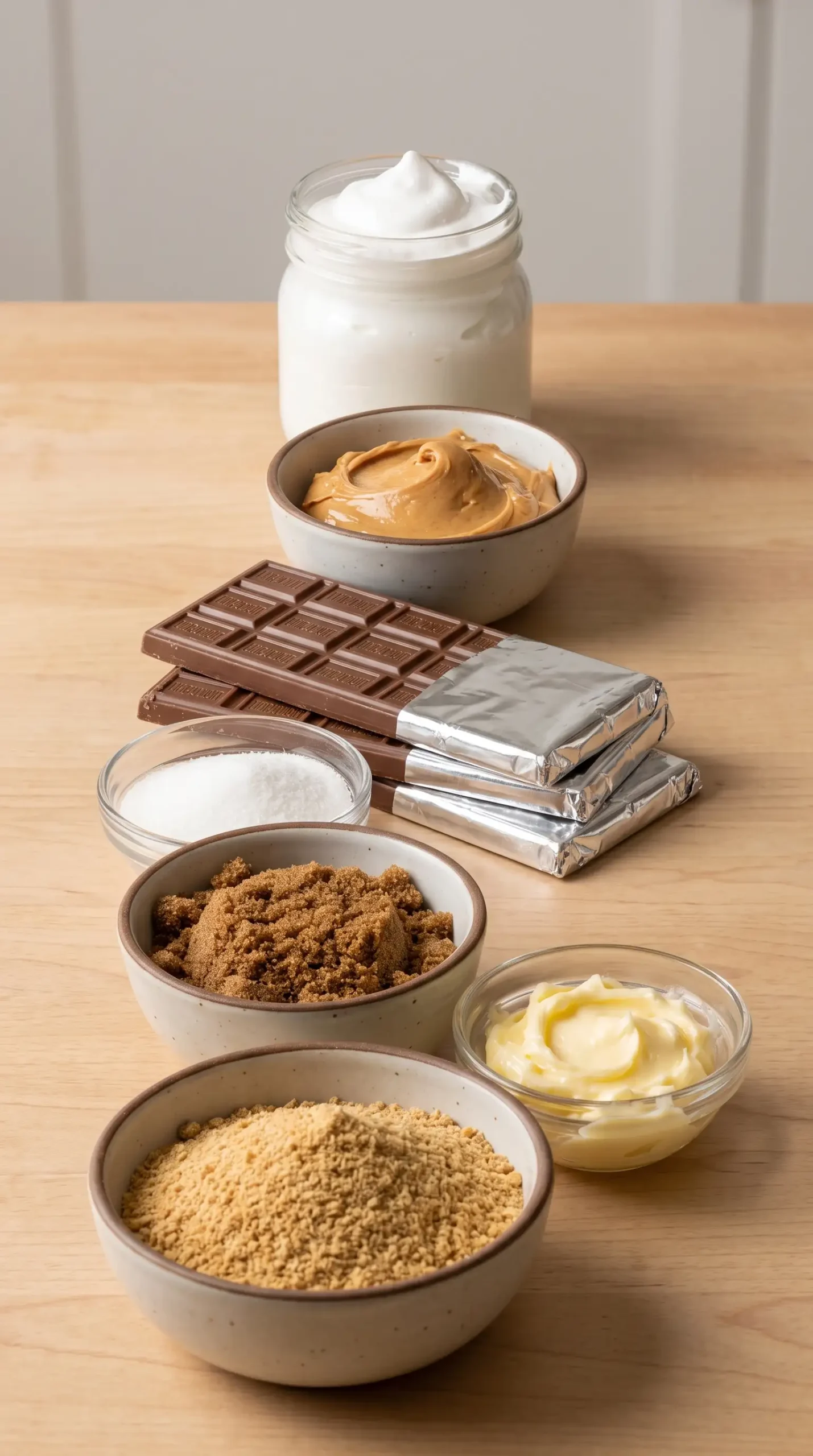
Softened butter matters because it can be beaten with brown sugar and granulated sugar until fluffy, creating a softer cookie base. Fine graham cracker crumbs blend more evenly into that dough than coarse pieces, which helps the crust press smoothly into the pan.
Large milk chocolate bars create broad, even coverage over the base, while marshmallow cream spreads into a softer layer than whole marshmallows. Smooth peanut butter is especially easy to warm and drizzle, though natural peanut butter can also work after thorough stirring.
| Ingredient decision | Best handling | Why it matters |
|---|---|---|
| Graham crackers | Crush into fine crumbs | Creates an even crumb texture in the dough |
| Butter | Use softened butter | Helps the sugars cream into a fluffy mixture |
| Peanut butter | Warm briefly and stir | Makes a smooth drizzle without oily separation |
| Chocolate | Lay bars flat over the base | Gives the center consistent chocolate coverage |
A Square Pan Needs a Parchment Lining
Parchment paper makes the finished slab easier to lift and protects the soft center from sticking to the baking dish. Smooth the paper into the corners before adding dough so the base stays square and the baked edges are easier to trim or slice cleanly.
Dough Control Creates a Strong Graham Base
After the butter and sugars are fluffy, the egg and vanilla should be mixed in before the dry ingredients. Flour, baking powder, salt, and graham crumbs then form a dough sturdy enough to support the heavy filling without becoming a plain cracker crust.
Dividing the dough correctly is one of the most important decisions in peanut butter s mores bars. About two-thirds belongs on the bottom, where it should be pressed firmly and evenly; the remaining third must be saved for the top.
- Keep the base even: press dough into the corners and check for thin patches before adding chocolate.
- Protect the top portion: set aside the reserved dough early so none is accidentally used on the bottom.
- Roll on a nonstick surface: flatten the top dough separately, then peel it up and place it over the marshmallow.
- Aim for coverage: close small gaps gently without compressing the marshmallow layer.
Firm pressure is useful on the lower crust but not on the assembled filling. Once the marshmallow cream is in place, aggressive pressing can push it toward the edges and make the layers uneven.
Layering Keeps Chocolate and Marshmallow Distinct
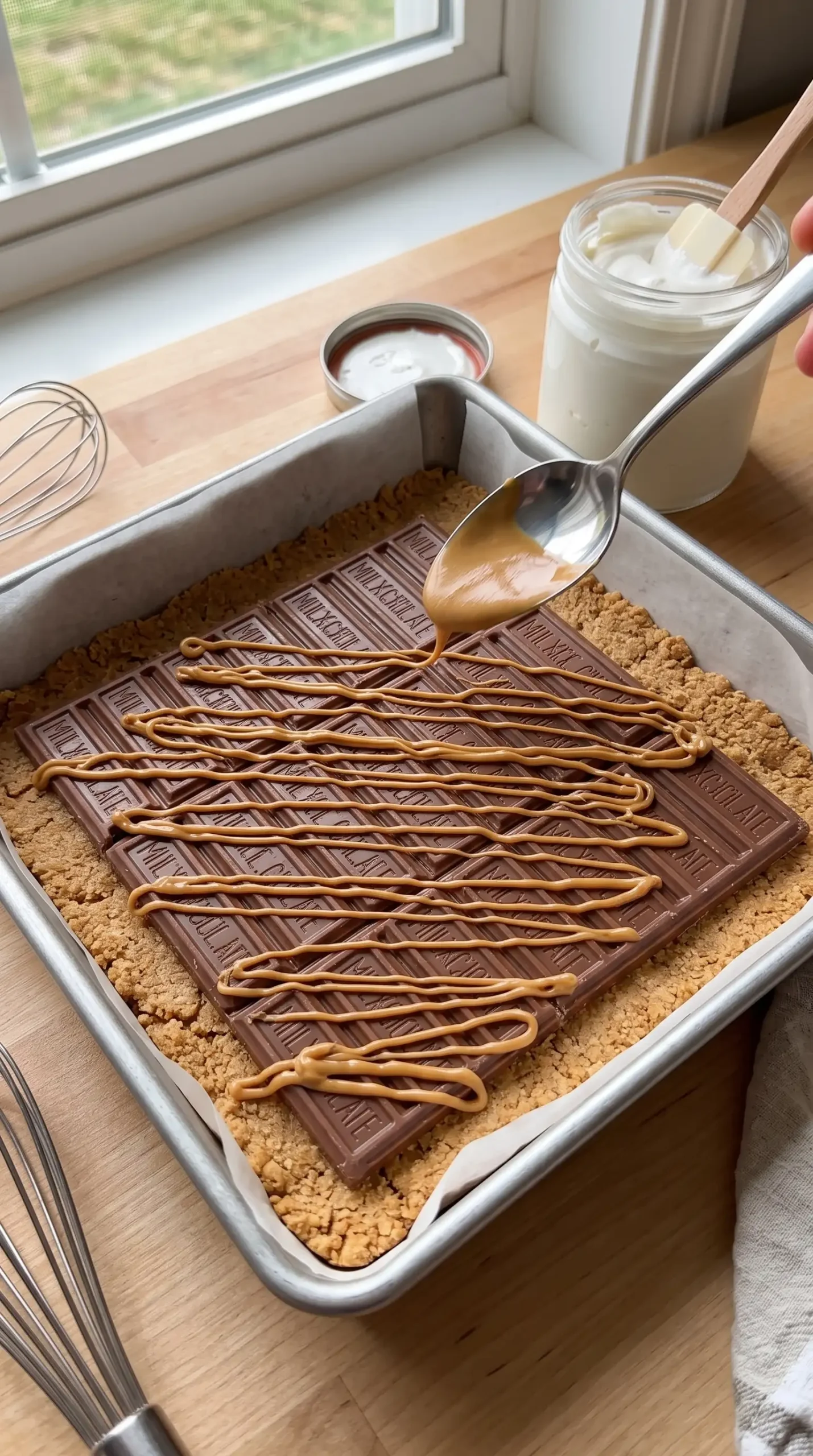
Place the chocolate bars directly on the raw base before adding anything softer. Their flat shape forms a stable platform, helping the peanut butter drizzle and marshmallow cream remain spread across the center instead of sinking into the dough.
Brief warming makes the peanut butter fluid enough to move in thin ribbons over the chocolate. Spread the marshmallow cream after that drizzle, using an offset spatula when available so the layer stays thin, level, and easier to cover with the remaining dough.
Golden Color Signals Proper Baking
The oven should be fully heated to 350°F before the pan goes in. Bake the assembled bars for about 30 minutes, watching the top dough for an even golden-brown finish that shows the crust has set around the soft filling.
Underbaked peanut butter marshmallow bars may remain too loose in the center after cooling. Color on the upper crust is a more useful visual cue than trying to judge the melted chocolate or marshmallow hidden beneath it.
Cooling Turns Gooey Layers Into Clean Bars
Freshly baked peanut butter s mores bars need time to settle before slicing. Complete cooling allows the chocolate, peanut butter, and marshmallow cream to firm enough for defined squares; a brief chill can help when especially tidy edges are needed.
Serving Choices for Soft or Firm Centers
Room-temperature bars provide the most balanced contrast between the sturdy graham dough and tender filling. For a gooier center, warm individual portions in the oven for about five minutes, just until the chocolate and marshmallow soften.
Cold milk, coffee, or almond milk can offset the sweetness, while fresh berries or sliced apples add a simple fresh element. A parchment-lined platter is practical for gatherings, and a clear label is important because the bars contain peanut butter.
| Serving style | Texture | Best use |
|---|---|---|
| Room temperature | Set layers with a tender center | Platter service and bake sales |
| Briefly warmed | Softer chocolate and gooier marshmallow | Fresh dessert at home |
| Lightly chilled | Firmer layers and sharper edges | Neat slicing before serving |
Storage That Protects the Marshmallow Center
At room temperature, the cut bars keep in an airtight container for up to three days. Wrap portions individually or separate stacked layers with parchment to reduce airflow and prevent the squares from sticking together.
Warmer kitchens can soften the chocolate, so refrigeration is the better choice in those conditions. Chilled bars keep for up to five days and should sit at room temperature for 20 to 30 minutes before serving so the marshmallow layer becomes more tender.
Longer storage is possible in the freezer. Freeze the cut squares in a single layer until firm, then transfer them to a freezer-safe container with parchment between layers; they can remain frozen for up to two months and thaw in the refrigerator or at room temperature.
Make-Ahead Timing Suits Parties and Sales
Preparing baked peanut butter s mores bars in advance gives the filling enough time to set and removes last-minute slicing from the event schedule. For larger bake sales, pairing the batch with Golden Grahams s’mores bars keeps portioning and packaging consistent because both desserts can be cut and wrapped as compact squares.
Mistakes That Can Ruin Peanut Butter S’mores Bars
Thin bottom dough is the most serious structural error because the filling can leak or the bars can collapse. Preserve the two-thirds portion for the base, press it to a consistent thickness, and avoid leaving bare corners beneath the chocolate.
- Overheating peanut butter: microwave in short bursts and stir so it stays smooth instead of separating.
- Spreading uneven marshmallow: level it gently to prevent thick pockets that remain excessively soft.
- Skipping full cooling: slicing too soon drags the warm filling through the crust and blurs the layers.
- Removing the pan too early: wait for a golden top so the upper dough can hold its shape.
Another avoidable problem is pressing the top dough too forcefully. Lay the rolled piece over the marshmallow and adjust it with light touches, since heavy pressure can displace the filling and expose the chocolate near the edges.
Variations That Preserve the Layered Format
For a nut-free version, sunflower seed butter can replace peanut butter, and dairy-free chocolate can be used when needed for dietary accommodation. The substitute spread should still be warmed only until fluid enough to drizzle.
Extra crunch can come from chopped toasted peanuts sprinkled over the marshmallow before the top dough is added. Chopped chocolate pieces or chocolate chips may replace the large bars, though they should be distributed evenly so every square has a similar amount of chocolate.
A Firm Crust Makes the Soft Center Work
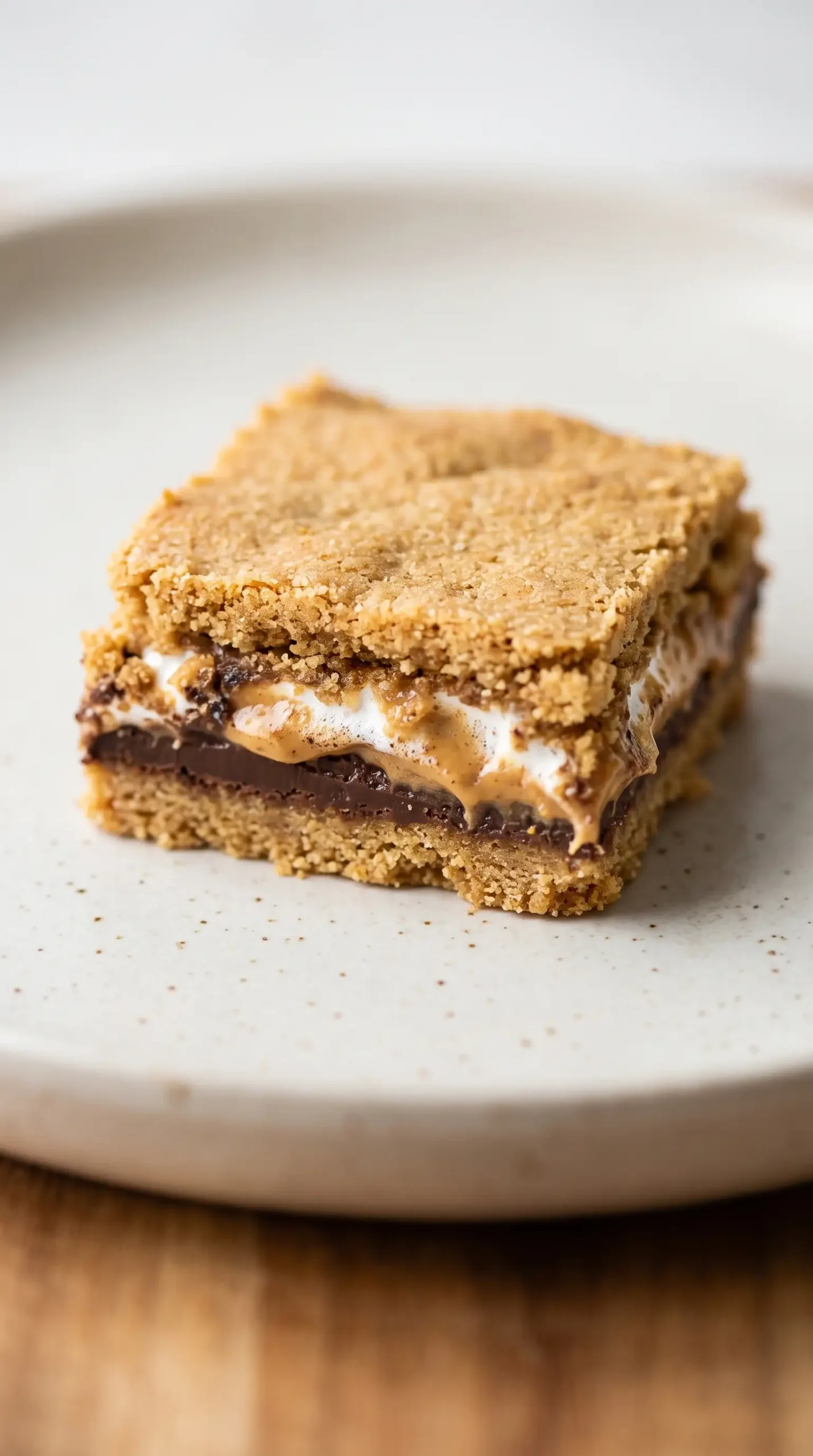
Evenly pressed graham dough is what allows the melted layers to stay generous without becoming difficult to serve. When the base is thick enough, the top is golden, and the pan cools fully, peanut butter s mores bars hold together while keeping the chocolate and marshmallow center soft.
That balance is the defining cooking judgment: build enough structure around the filling, then stop handling the bars until the layers have settled. The result is a portable dessert that still delivers the warm, creamy character associated with s’mores.
Peanut Butter S’mores Bar Questions About Freezing and Substitutions
Can homemade graham cracker crumbs be used?
Whole graham crackers can be sealed in a zip-top bag and crushed with a rolling pin until they become fine graham cracker crumbs that mix evenly through the dough.
Can the bars be baked in a larger pan?
A larger pan can be used, but the dough and filling will spread into thinner layers. Begin checking earlier because thinner peanut butter s mores bars may bake faster than those in a square dish.
Is marshmallow cream interchangeable with whole marshmallows?
Marshmallow cream is not the same as whole marshmallows. Its spreadable texture creates a smooth, soft layer, while whole marshmallows would behave differently and are not part of the supplied preparation.
What should I do if the chocolate stays firm?
Return cooled bars to a warm 300°F oven for a few minutes to soften the center. Use only brief heating so the crust does not become dry.
Does natural peanut butter need special handling?
Natural peanut butter may separate in the jar, so stir it thoroughly before warming. Heat gently and mix again if needed to produce an even drizzle without excess oil.
Peanut Butter S’Mores Bars with Graham Cracker Dough
Peanut Butter S’Mores Bars with Graham Cracker Dough are chewy, creamy dessert bars with layers of chocolate, marshmallow, and peanut butter flavor. They are a fun and comforting treat for gatherings or whenever you want an easy homemade dessert.
Ingredients
Method
Preparation
- Heat the oven to 350°F / 175°C. Prepare a square baking dish by lining it with parchment paper.
- Beat the softened butter with the brown sugar and sugar until the mixture becomes light and fluffy.
- Add the egg and vanilla extract, then mix until fully incorporated.
- Combine the flour, baking powder, and salt with the wet mixture until a dough forms.
- Fold the crushed graham cracker crumbs into the dough.
- Press two-thirds of the dough evenly into the bottom of the prepared baking dish.
Assembly
- Arrange the milk chocolate bars over the dough layer.
- Warm the peanut butter in the microwave for about 30 seconds to make it easier to drizzle, then spread it over the chocolate.
- Distribute the marshmallow cream evenly over the peanut butter and chocolate layer.
- Roll out the remaining one-third of the dough on a nonstick surface and place it over the marshmallow cream layer.
Baking
- Bake the bars for about 30 minutes, until the top is golden brown.
- Allow the bars to cool completely before slicing into bars.
Notes
For cleaner slices, cool the bars completely before cutting and chill briefly if needed.