
From morning breakfasts to evening dinners, Tasteza Recipes offers quick and easy recipe ideas, featuring everything from wholesome meals to delicious desserts for every moment and every occasion.


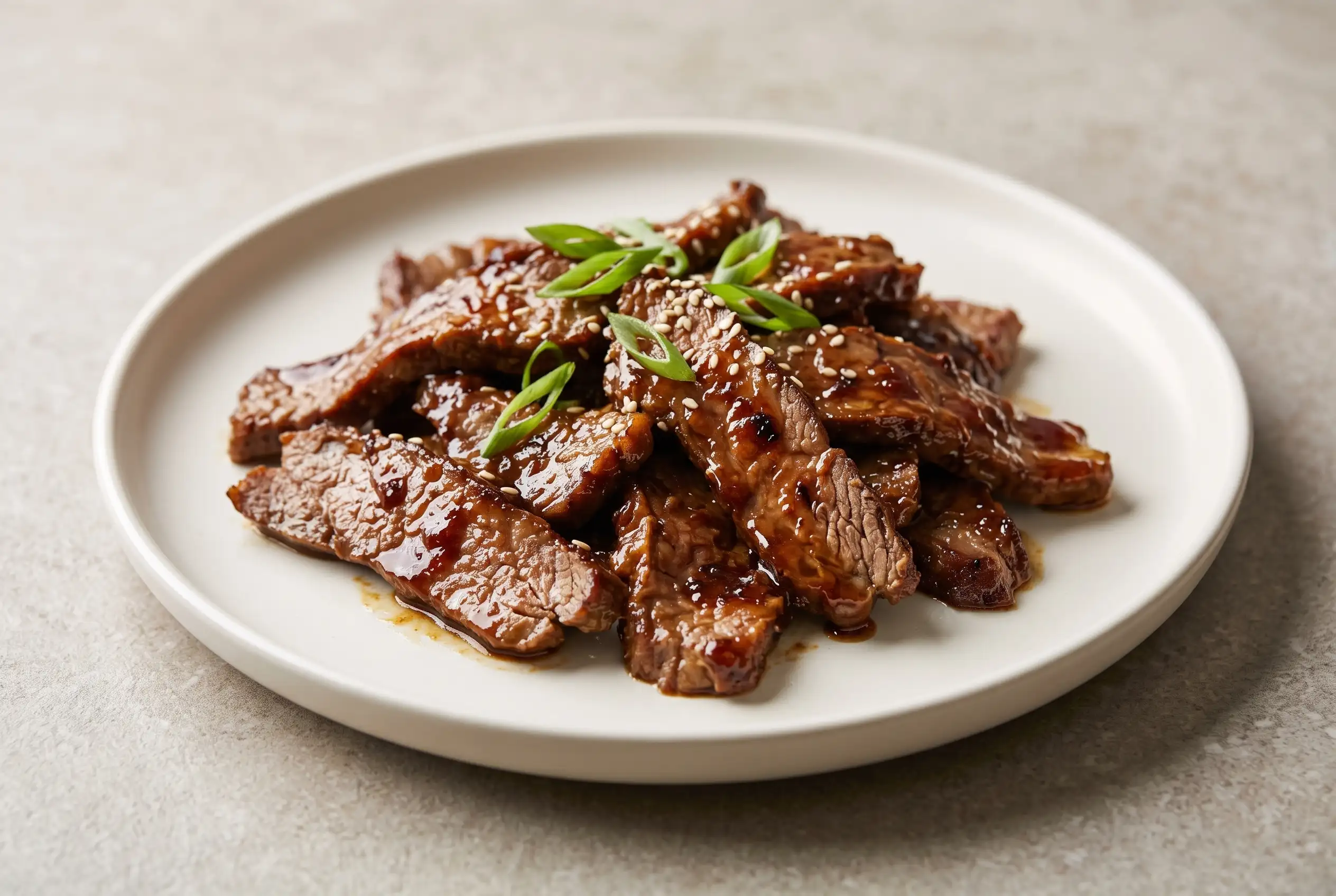
Mongolian beef recipe fans often look for a dinner that combines crisp beef, a glossy sauce, and restaurant-style flavor without a long cooking process. Thin slices of flank steak coated with cornstarch develop crisp edges, while soy sauce, brown sugar, hoisin sauce, and oyster sauce create a sweet-savory coating that clings to every piece.
The appeal of this dish comes from the contrast between textures. The beef stays tender when cooked quickly over high heat, and the sauce adds richness without requiring a complicated preparation. An easy mongolian beef recipe approach fits busy evenings because the cooking style relies on simple pantry ingredients and focused skillet or wok work.
Why Mongolian Beef Works for Quick Dinners
Restaurant style mongolian beef is built around a few clear techniques that make a noticeable difference at home. A light coating gives the steak a crisp surface, while cooking in batches protects the seared texture. The process keeps the dish practical for weeknight meals or casual gatherings.
Home cooks appreciate this combination because the flavors are familiar and the ingredients are accessible. The sauce uses a small group of bold seasonings that come together quickly, creating a meal that pairs naturally with rice or noodles.
Beyond convenience, the mongolian beef recipe format helps cooks focus on timing. The beef does not need extended simmering, so attention goes toward coating, heat management, and finishing the sauce at the right moment.
Crispy Texture Starts With Flank Steak Handling
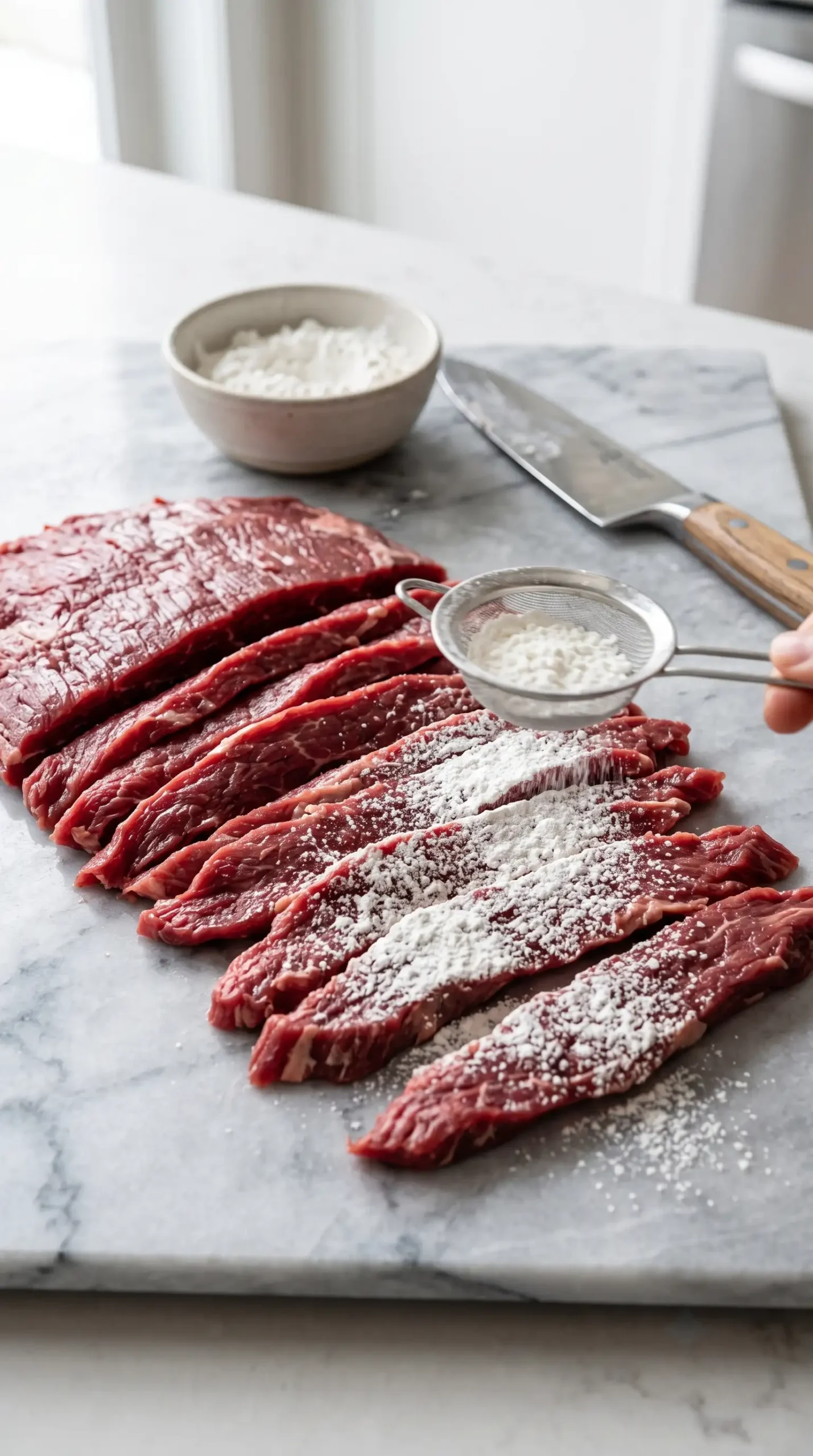
Flank steak is the key choice for this dish because it can be sliced thinly and cooked quickly while remaining tender. Cutting against the grain shortens the muscle fibers and helps each bite feel easier to chew. A dry surface also helps the cornstarch coating attach evenly before frying.
The coating should stay light across the beef pieces. Too much cornstarch can create a thick crust, while a balanced layer supports the crisp texture expected from a crispy mongolian beef recipe.
Small preparation choices before the pan gets hot have a direct effect on the finished plate. Even slices, a brief coating rest, and removing excess starch help the beef cook more evenly.
Sauce Balance Shapes Restaurant Style Mongolian Beef
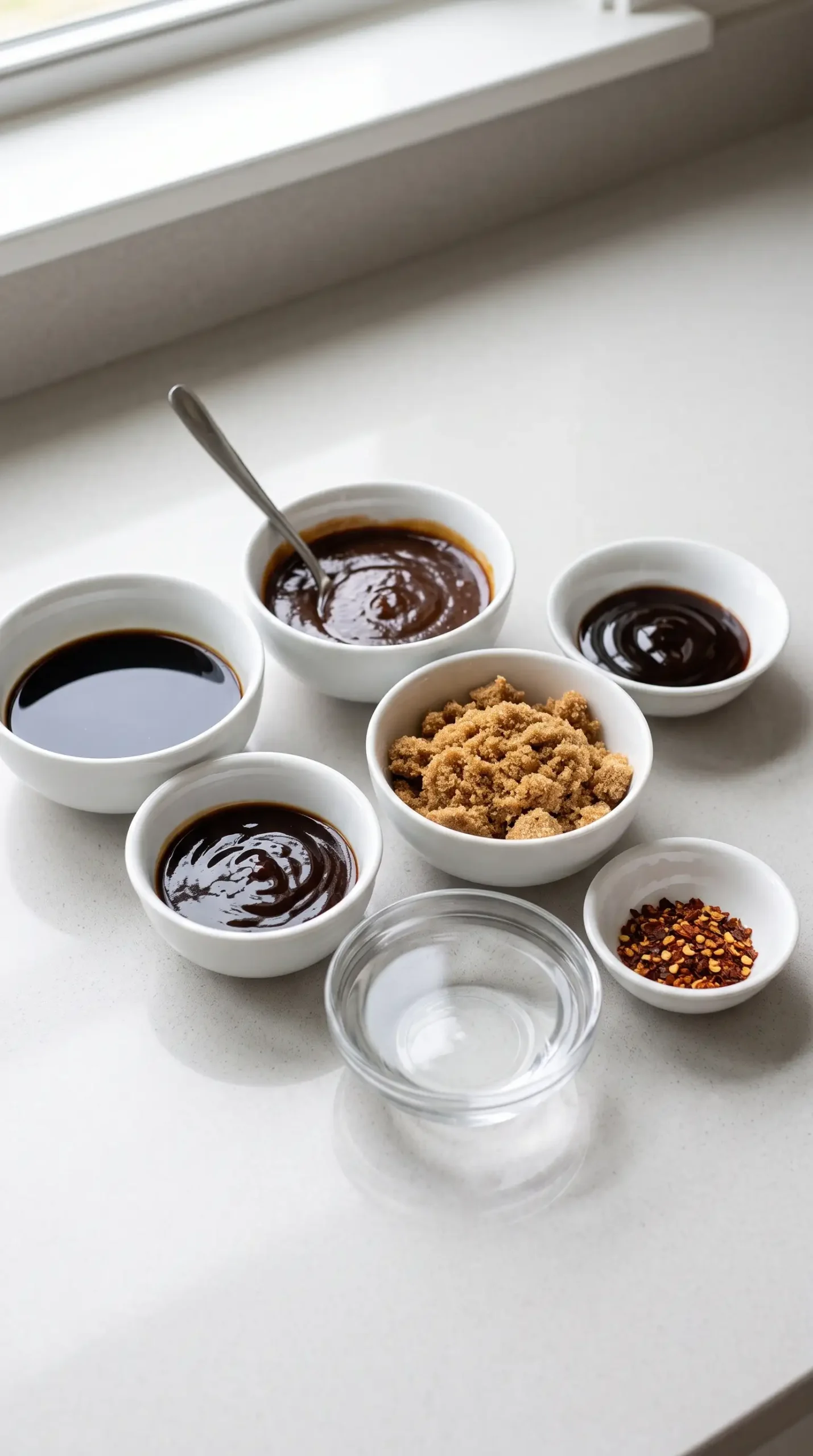
The sauce combines soy sauce, hoisin sauce, oyster sauce, brown sugar, water, and chili flakes into a glossy finish. The salty, sweet, and savory elements work together so the sauce coats the crisp beef without overwhelming the texture.
| Sauce element | Cooking role | Result in the dish |
|---|---|---|
| Soy sauce | Provides savory depth | Balances the sweetness |
| Hoisin sauce | Adds richness | Supports a glossy coating |
| Brown sugar | Brings sweetness | Creates a smooth flavor contrast |
| Chili flakes | Adjusts heat | Adds optional spice |
High Heat Control Keeps Beef Crisp
Proper heat management separates crisp beef from a soft, steamed texture. The wok or skillet needs to be hot before the coated steak enters the pan, allowing the outside to brown quickly.
Cooking the beef in batches is one of the most important controls in a mongolian beef recipe. Crowding lowers the pan temperature and prevents the edges from developing the desired crispness. Smaller batches give each piece room to contact the hot surface.
After the sauce ingredients enter the pan, the focus changes from browning to coating. The cooked beef returns briefly so it can absorb the sauce while keeping the texture created during frying.
Batch Cooking Prevents Soggy Mongolian Beef
Overcrowding is the main texture problem to avoid during frying. Separating the beef into smaller groups allows the oil and heat to work effectively, helping the coating stay crisp before the sauce is added.
Serving Pairings for Mongolian Beef Meals
Steamed jasmine rice makes a natural base because it catches the glossy sauce and balances the savory beef. Preparing basic jasmine rice with properly measured water and gentle stovetop cooking creates a fluffy side that complements the rich sauce from the beef. Stir-fried noodles offer another option when a heartier plate is preferred.
Vegetable sides can lighten the richness of the meal. Steamed broccoli or bok choy add contrast and fit the same style of quick Asian-inspired dinner preparation.
Green onions provide a fresh finishing touch, and sesame seeds can add extra garnish when desired. Extra red chili flakes at the table allow diners to adjust the spice level individually.
- Rice pairing: Use steamed rice to soak up the sauce from the beef.
- Noodle option: Choose stir-fried noodles for a different base texture.
- Vegetable side: Add broccoli or bok choy for balance.
Storage Steps Protect Leftover Texture
Leftover mongolian beef should cool to room temperature within two hours before being placed in an airtight container. Refrigerated portions keep for up to three days, while freezer-safe containers can hold portions for up to three months.
Mistakes That Ruin Crispy Mongolian Beef
Several avoidable issues can change the final texture and flavor of the dish. Paying attention to the coating, pan space, and sauce consistency keeps the results closer to the intended restaurant-style finish.
- Overcrowded pan: Too many beef pieces at once can cause steaming instead of searing. Cook smaller batches to maintain crisp edges.
- Heavy coating: Excess cornstarch can create a gummy crust. Shake off extra coating before frying.
- Over-reduced sauce: A sauce that thickens too much can be loosened with a little extra water.
Another common issue comes from skipping the short coating rest. Allowing the cornstarch to adhere helps create the exterior texture that defines the dish. A thin, even layer is more useful than a heavy covering.
Careful correction is possible even after cooking begins. If the sauce becomes too sweet, reducing the brown sugar next time or adding a small amount of rice vinegar can improve the balance.
Adjustments for Sweetness and Spice
The flavor profile can be adjusted while keeping the same cooking approach. Brown sugar can be reduced for a less sweet sauce, and chili flakes can be increased or decreased according to personal preference.
Kitchen Tools That Fit the Cooking Style
A wok or large skillet works well because the beef needs enough surface area for quick high-heat cooking. A wok design for stir-frying uses sloped sides and a broad cooking area to support rapid movement and browning during this style of preparation.
Mongolian Beef for Different Dietary Needs
The same sauce concept can be adapted for different preferences. Thinly sliced chicken breast or thigh can replace beef, although the cooking time may change depending on the cut used.
Gluten-free adjustments require attention to the sauces. Gluten-free soy sauce should be selected, and hoisin and oyster sauce alternatives should also be checked for compatibility.
These changes keep the overall character of the dish while allowing more cooks to enjoy a version suited to their needs. The cooking principles of coating, high heat, and sauce finishing remain useful across variations.
Green Onion Garnish Finishes Mongolian Beef Plates
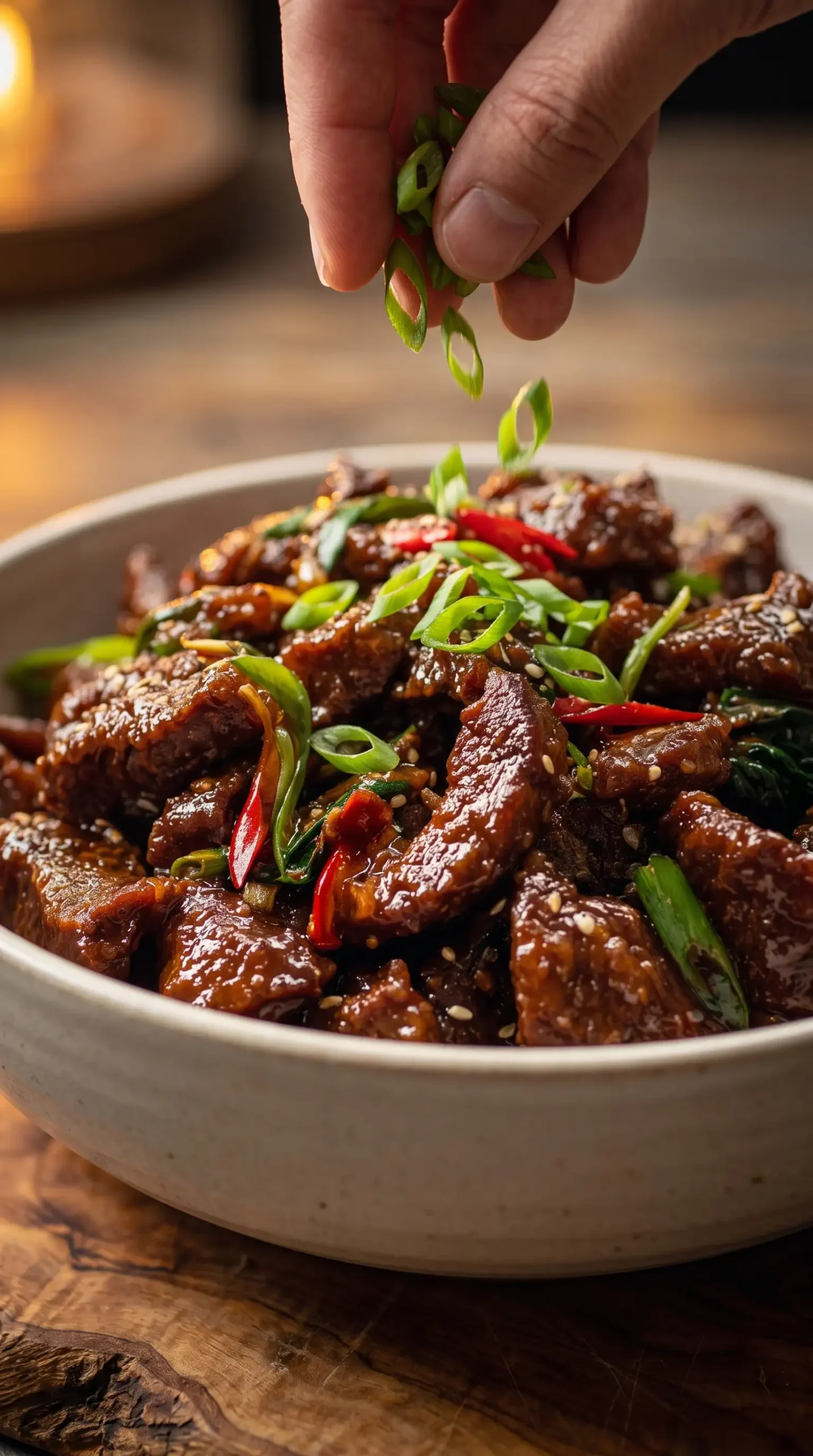
Sliced green onions complete the presentation by adding a fresh contrast to the rich sauce. The garnish works alongside the glossy beef and helps create the familiar finished appearance associated with restaurant servings.
Mongolian Beef Recipe Delivers Crisp Sauce Balance
Crisp beef pieces and a well-balanced sauce define the success of a mongolian beef recipe. The most important cooking judgment comes from protecting the texture before adding the glossy coating, since the contrast between the fried exterior and savory sauce creates the dish’s appeal.
Flank steak, controlled heat, and careful batch cooking create a dependable result. When those elements stay in focus, the meal delivers the satisfying combination of tender beef and rich sauce that makes it a popular homemade alternative to takeout.
Questions About Sweetness, Storage, and Texture
How can the beef stay crispy after adding sauce?
The beef keeps more texture when it is fried until crisp first and only tossed briefly with the sauce at the end. Cooking in batches also helps preserve the exterior before coating.
What happens if the Mongolian beef sauce tastes too sweet?
The sweetness can be adjusted by lowering the brown sugar amount in future batches or adding a small splash of rice vinegar to create more balance.
Can leftovers be reheated without drying out?
Leftovers reheat best in a skillet over medium heat with a splash of water. This helps loosen the sauce and prevents the beef from becoming dry.
Why is cornstarch used on the steak?
Cornstarch creates the light coating that helps the beef develop crisp edges during high-heat cooking. Letting the coating sit briefly helps it adhere.
Can another protein be used for this dish?
Thinly sliced chicken breast or thigh can be used with the same sauce style, though the cooking time may differ from the flank steak version.
Mongolian Beef Recipe with Crispy Beef and Hoisin Sauce
This Mongolian beef recipe features crispy slices of flank steak coated in a sweet and savory hoisin sauce. It is a quick, flavorful dinner option when you want a restaurant-style meal at home.
Ingredients
Method
Preparation
- Coat the sliced flank steak evenly with cornstarch and allow it to rest for 15-30 minutes so the coating can adhere.
- Heat the vegetable oil in a wok or large skillet over high heat.
Cooking
- Cook the coated flank steak in batches for 2-3 minutes per batch until crisp, then transfer the cooked beef out of the pan.
- Cook the minced garlic in the same pan for about 30 seconds until fragrant.
- Stir in the soy sauce, hoisin sauce, oyster sauce, brown sugar, water, and red chili flakes until the sauce ingredients are combined.
- Add the crispy beef back to the pan and toss until the pieces are evenly covered with sauce.
Serving
- Serve the Mongolian beef hot over steamed jasmine rice or noodles and finish with sliced green onions.
Notes
Cook the beef in batches to avoid steaming and help maintain the crisp coating.