
From morning breakfasts to evening dinners, Tasteza Recipes offers quick and easy recipe ideas, featuring everything from wholesome meals to delicious desserts for every moment and every occasion.


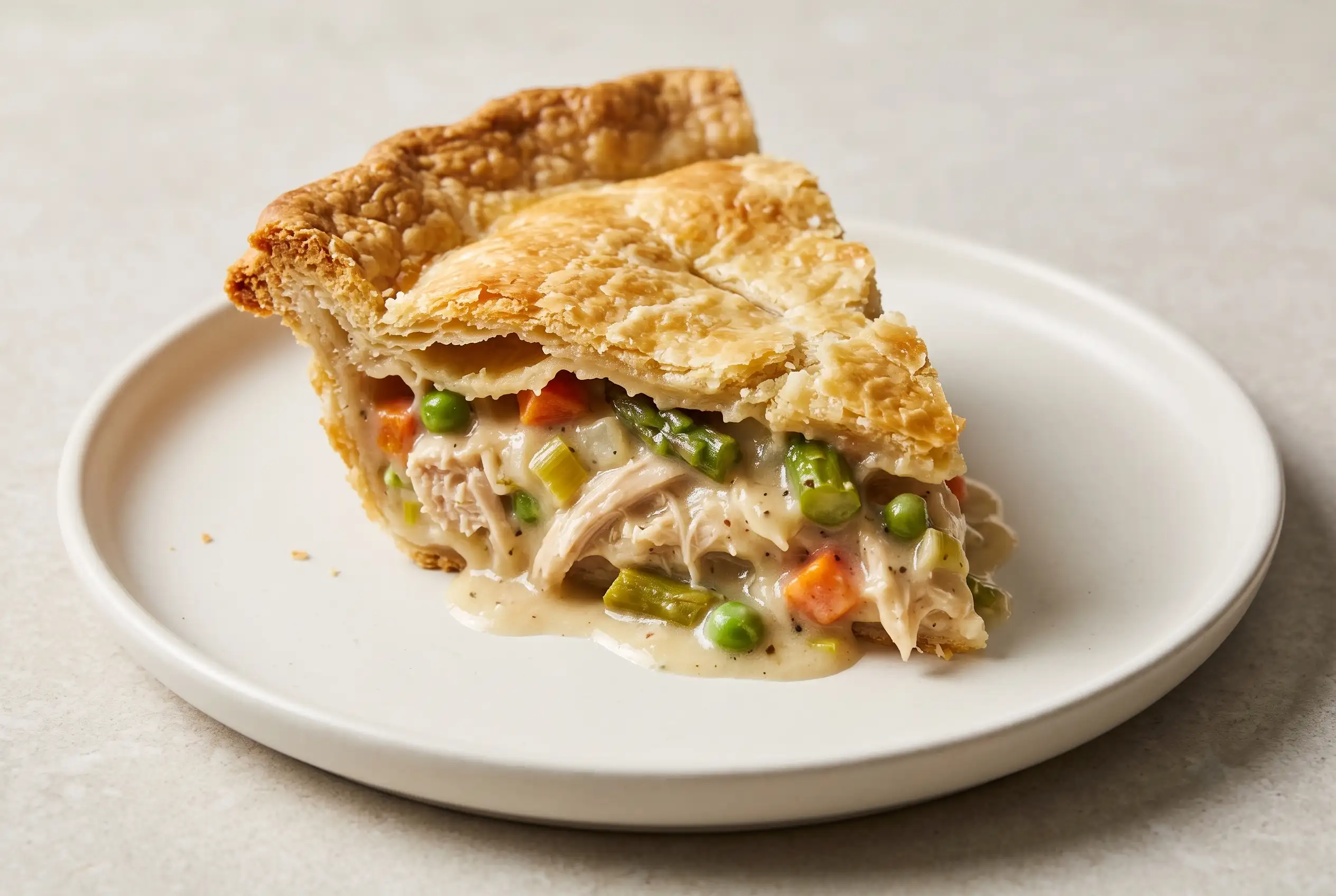
Garlic chicken pot pie turns shredded chicken, crisp vegetables, and a creamy garlic gravy into a practical one-dish dinner. The filling is rich without being complicated, and the crust gives the meal enough structure for family suppers, relaxed weekends, or casual guests. Using cooked chicken keeps the active work focused on the vegetables and sauce, while the oven handles the golden finish.
Accessible ingredients make the dish especially useful when the refrigerator holds a cooked bird and a few everyday vegetables. Butter, flour, chicken stock, peas, carrots, asparagus, leek, and a ready-to-use crust create a complete meal without specialized equipment or lengthy preparation.
Why Garlic Chicken Pot Pie Fits a Busy Evening
Most of the hands-on cooking happens in two short stovetop jobs: softening the vegetables and thickening the garlic gravy. Once those parts are combined with the chicken, the assembled pie only needs enough oven time for the filling to heat through and the top to brown.
Pre-cooked chicken removes one of the longest tasks from the schedule. A garlic rotisserie chicken brings seasoning as well as moisture, so the filling can taste developed even when dinner starts with leftovers. That shortcut also leaves enough time to manage the gravy carefully, which is more important to the finished texture than adding extra preparation steps.
Flexible bakeware also makes garlic chicken pot pie easy to adapt. A pie pan suits a classic presentation, a 9×13-inch dish serves a larger group, and individual pans create neat personal portions.
Rotisserie Chicken Keeps the Filling Practical
Well-seasoned shredded chicken is the fastest route to a flavorful center. A batch of Instant Pot shredded chicken can be prepared ahead, chilled, and portioned for quick assembly. Shred the meat into bite-size pieces and mix it with the vegetables only after the sauté is finished so the already-cooked chicken stays moist.
Vegetable Timing Protects Color and Texture
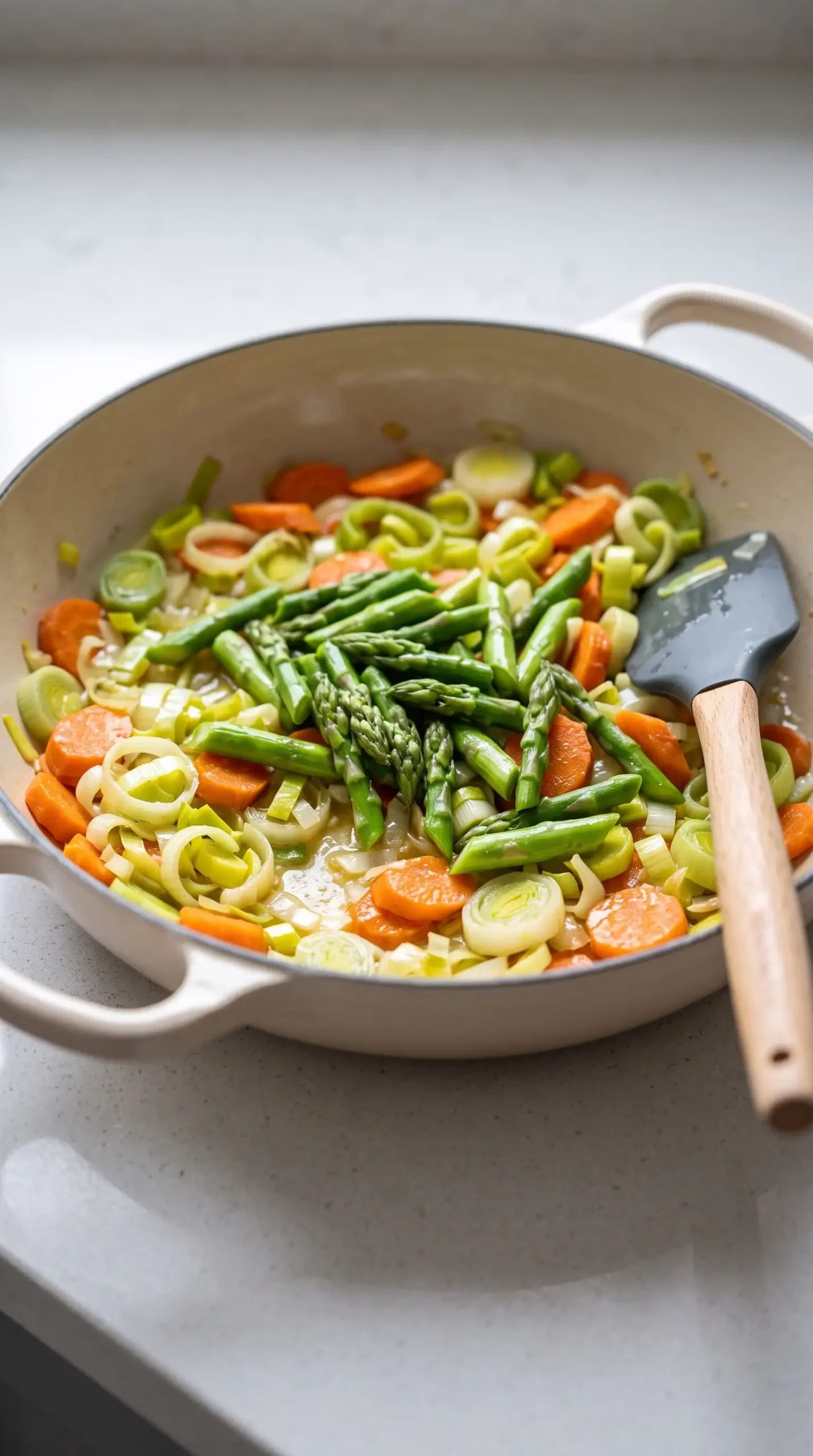
Leeks and carrots need the earliest start because they take longer to soften. A brief sauté gives the leek time to mellow while the carrots begin cooking without becoming limp.
Asparagus belongs in the pot later. Cooking it only until tender-crisp leaves enough structure for the oven stage, when the hot gravy and covered bake continue softening every piece.
Frozen peas work best stirred in after the pan comes off the heat. Their small size allows them to warm during baking, while skipping the sauté helps them keep brighter color and a fresher bite in the finished pie.
A Garlic Gravy Should Coat Without Flooding
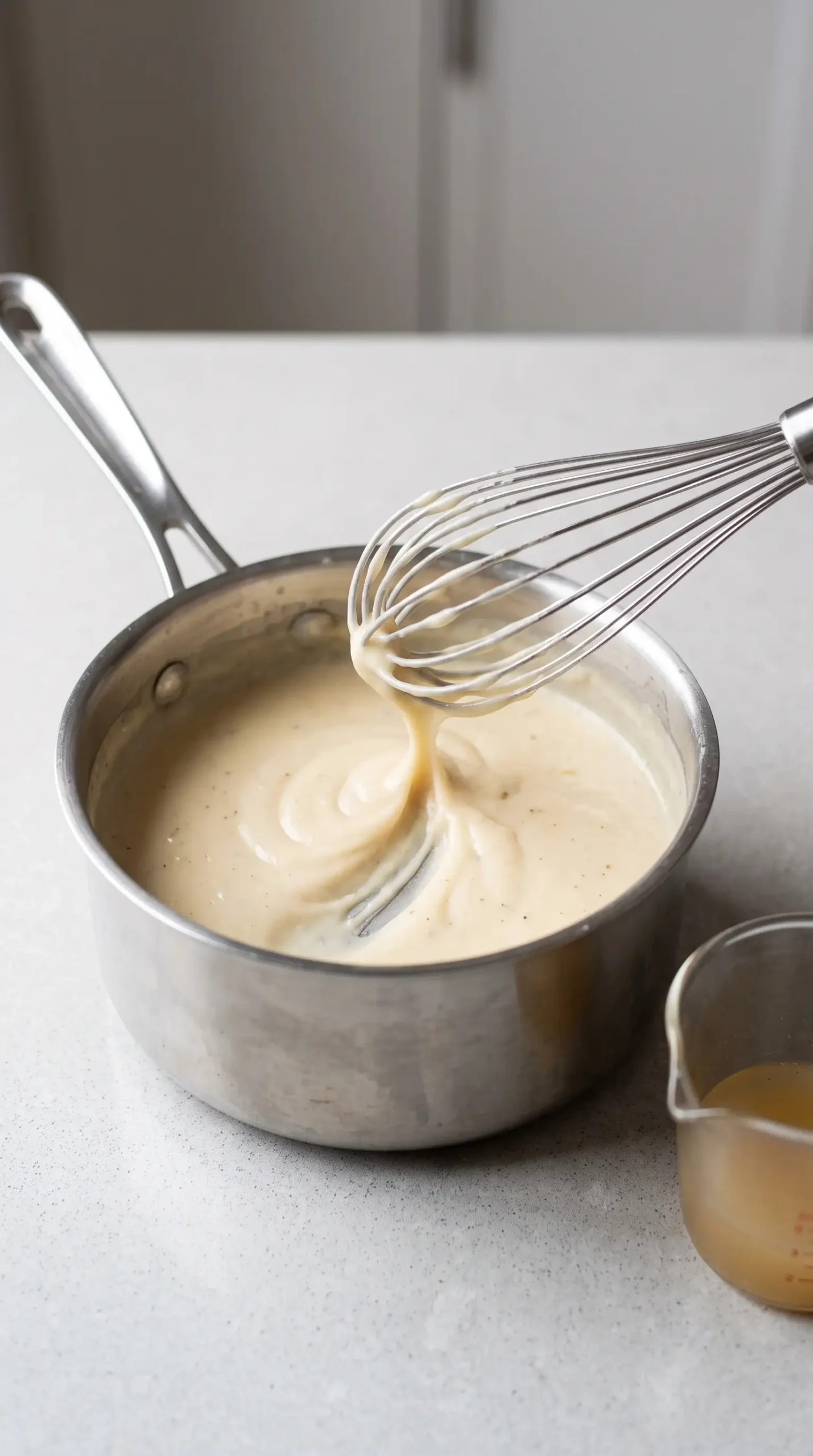
Butter and flour form the foundation of the sauce, but the flour needs a brief stir in the melted butter before any stock is added. That short contact with heat removes the raw flour taste and coats the flour with fat so it disperses more evenly when the stock is added. Keep the heat moderate around the garlic, since the supplied method calls for a gentle one-minute sauté before the flour enters the pan.
Gradual pouring is the main control point. Add chicken stock in stages and whisk after each addition so the paste loosens smoothly instead of breaking into lumps or becoming thin before the flour can absorb the liquid.
Visible thickness matters more than speed. The gravy should cling to the whisk and hold the chicken and vegetables together, because a loose sauce can collect beneath the crust and make slices collapse.
Generous seasoning with salt and pepper completes the sauce. Since the chicken may already be seasoned, taste the thickened gravy before combining everything and adjust with the full filling in mind.
Crust Choice Changes the Finished Bite
Pie crust, puff pastry, and croissant dough can all cover an easy garlic chicken pot pie, but each one produces a different top and needs slightly different attention near the end of baking.
| Crust option | Finished texture | Best handling decision |
|---|---|---|
| Pie crust | Firm, sliceable top | Roll or stretch it to extend slightly over the dish edge |
| Puff pastry | Light, flaky layers | Keep the filling thick so steam does not soften the pastry |
| Croissant dough | Tender, quick-browning top | Watch closely because it may color faster than pie crust |
Pan Shape Sets the Serving Style
A pie pan gives the meal a familiar round shape, while a 9×13-inch baking dish makes broader portions for a crowd. Smaller pie pans are useful when each person needs an individual serving with more crust around the edges. Whichever vessel is chosen, grease it before adding the filling and allow the top crust to hang slightly beyond the rim.
Tender-Crisp Vegetables Survive the Oven Better
Stopping the stovetop cooking while the vegetables are still slightly firm prevents an overcooked filling. Carrots and asparagus continue to soften as the hot gravy bubbles beneath the crust.
Residual heat also matters before assembly. Once the peas and chicken are added, the warm vegetables begin transferring heat through the mixture, so there is no advantage in cooking every component until fully tender in advance.
Balanced texture gives garlic chicken pot pie more definition. Soft chicken and creamy gravy feel more satisfying when the vegetables still have enough shape to be recognized in each spoonful.
Garlic Chicken Pot Pie Mistakes That Ruin the Filling
A few errors have an immediate effect on the sauce, vegetables, or crust. Each one can be avoided by watching the mixture instead of relying only on the clock.
- Pouring stock too quickly: Add it in stages and whisk thoroughly so the flour paste dissolves smoothly.
- Overcooking the vegetables: Stop the sauté at tender-crisp because the oven provides additional cooking.
- Using a loose gravy: Keep thickening until the sauce coats the filling and does not pool at the bottom.
- Ignoring the crust edge: Leave a slight overhang and seal it lightly to reduce leakage.
- Cutting immediately: Rest the baked pie for 5 to 10 minutes so the filling can settle into cleaner portions.
Overbaking creates a separate problem, especially with croissant dough. Check for a golden surface during the stated baking window and remove the dish once the crust has browned and the filling is hot.
Skipping the butter finish changes the top as well. Brushing melted butter over the warm crust adds gloss and encourages a softer, more tender surface.
Make-Ahead Filling Simplifies Assembly
The chicken, vegetables, and gravy can be combined a day ahead and refrigerated. If the chilled filling becomes unusually thick, loosen it with a small amount of chicken stock while reheating before adding the crust.
Storage and Reheating Need Different Plans
Cooling the baked pie completely before covering it limits condensation inside the container. Moisture trapped against the crust can soften the surface even when the filling remains flavorful.
| Storage situation | How to handle it | Texture-focused next step |
|---|---|---|
| Same-day serving | Rest briefly after baking | Serve while the crust is freshly browned |
| Refrigerated leftovers | Use an airtight container for up to 3 days | Warm in a 350°F oven to help re-crisp the top |
| Frozen portions | Use freezer-safe containers for up to 2 months | Thaw overnight in the refrigerator before reheating |
Room-temperature holding should stay brief. Refrigerate leftovers within two hours so the chicken and gravy are not left in conditions that encourage bacterial growth.
Oven reheating is the strongest choice for garlic chicken pot pie because dry heat restores some crispness to the crust while warming the creamy center more evenly.
Frozen Portions Turn Leftovers Into Quick Meals
Individual servings freeze more conveniently than a large remaining slab. Pack cooled portions separately so one meal can thaw without exposing the rest of the pie to repeated temperature changes.
Fresh Sides Balance the Creamy Garlic Gravy
A simple green salad adds brightness beside the buttery crust and rich filling. Light acidic dressing or a squeeze of lemon works especially well because the sharpness contrasts with the garlic-forward sauce.
- For a casual drink: Choose a pale ale.
- For a wine pairing: Serve a medium-bodied white wine.
- For a family table: Add roasted apples or fruit compote for a fresh contrast.
- For a simple garnish: Scatter chopped parsley or chives over each serving.
Serving the pie hot keeps the gravy creamy and the crust at its best. A modest side is enough, since the chicken, vegetables, sauce, and pastry already make the main dish substantial.
Color from herbs can make rotisserie chicken pot pie look fresher without changing its central flavor. Parsley contributes a clean finish, while chives add a mild onion note that does not overpower the garlic.
Flexible Swaps Keep the Dish Familiar
Green beans can replace asparagus when they are more convenient, and mushrooms can be added for a deeper, earthier character. Keep the same texture principle in place by avoiding an overcooked vegetable mixture before baking. These changes should remain secondary to the combination of seasoned chicken, thick garlic gravy, and a browned pastry top.
A gluten-free flour blend can stand in for wheat flour in the gravy, paired with a gluten-free pie crust. Puff pastry remains the lightest topping option among the supplied crust choices, while standard pie crust gives the easy garlic chicken pot pie a firmer slice.
Thick Gravy and a Brief Rest Create Clean Slices
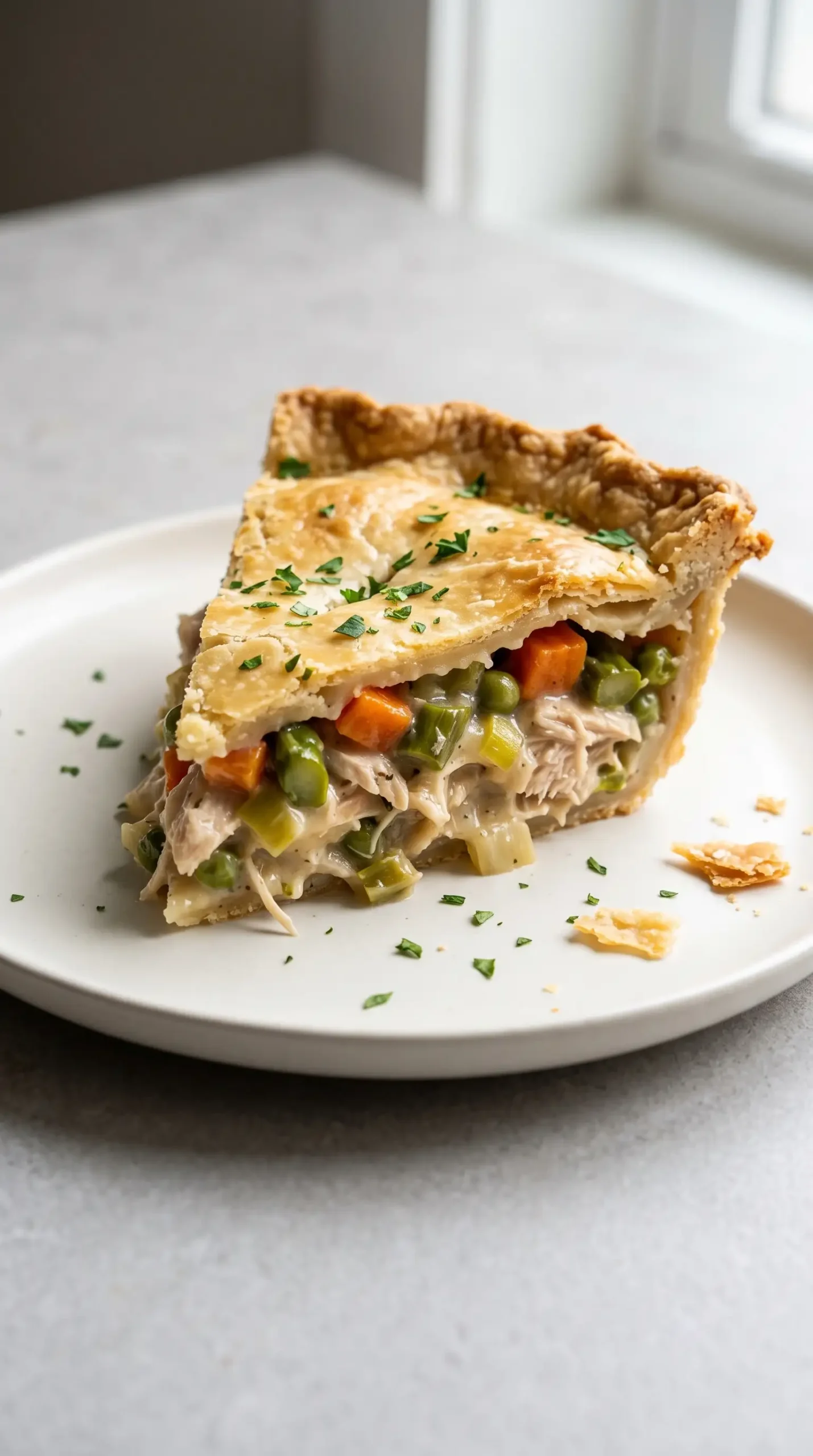
A sauce that clings to the chicken and vegetables gives the pie its structure before it ever reaches the oven. Careful stock additions, slightly firm vegetables, and a properly browned crust work together so the filling stays creamy without turning soupy.
Resting the baked pie for several minutes completes that control. The pause lets the hot gravy settle, protects the crust from a rushed cut, and produces portions that hold together more cleanly on the plate.
Garlic Chicken Pot Pie Questions About Crust, Freezing, and Soggy Filling
Can leftover chicken replace a garlic rotisserie chicken?
Leftover cooked chicken works well when it is already seasoned with garlic. Shred about 2 cups and fold it into the filling after the vegetables have finished sautéing.
Can the unbaked pie go directly into the freezer?
Assemble the pie and freeze it before baking. It can be baked from frozen, but the oven time must be extended until the center is heated through and the crust is golden.
How can a soggy bottom crust be prevented?
Use a properly thickened filling and avoid excess liquid during assembly. When making a double-crust version, slightly prebaking the bottom crust can provide extra protection.
Which topping gives the flakiest surface?
Puff pastry produces the flakiest top of the listed options. Standard pie crust creates a firmer layer, while croissant dough gives a tender finish that may brown sooner.
Is garlic chicken pot pie suitable for meal prep?
Portioning and freezing individual servings makes the dish convenient for later meals. Thaw a serving in the refrigerator, then reheat it in the oven to restore more crust texture.
Garlic Chicken Pot Pie with Creamy Garlic Gravy
Garlic Chicken Pot Pie is a comforting dish with a creamy garlic gravy filling and a crisp, flaky crust. It is a hearty choice for cozy family meals or easy gatherings.
Ingredients
Method
Preparation
- Melt 1 tablespoon of butter in a large pot over medium-high heat.
- Cook the sliced leek and carrots in the butter for 5 minutes.
- Add the asparagus and continue cooking for 5 minutes until the vegetables are tender-crisp.
- Take the vegetables off the heat, mix in the frozen peas, and set the mixture aside.
- Shred the chicken and combine it with the vegetable mixture.
Cooking
- Melt 6 tablespoons of butter in a large saucepan.
- Cook the minced garlic in the butter over medium heat for about 1 minute.
- Stir the flour into the garlic butter until a thick paste develops.
- Slowly whisk in the chicken stock, adding 1 cup at a time, until the sauce becomes thick.
- Season the garlic gravy with salt and black pepper.
- Mix the gravy with the chicken and vegetables.
Assembly
- Place the filling in a greased pie pan or 9x13-inch baking dish.
- Top the filling with pie crust, puff pastry, or croissant dough, leaving a slight overhang around the edge.
Baking
- Bake at 375°F / 190°C for 20 to 30 minutes until the crust is golden brown.
- Brush the baked crust with the remaining 1 tablespoon of melted butter.
- Allow the pot pie to rest for 5 to 10 minutes before serving.
Notes
Use frozen peas directly from the bag and keep the sautéed vegetables slightly firm so they continue cooking in the oven.