
From morning breakfasts to evening dinners, Tasteza Recipes offers quick and easy recipe ideas, featuring everything from wholesome meals to delicious desserts for every moment and every occasion.


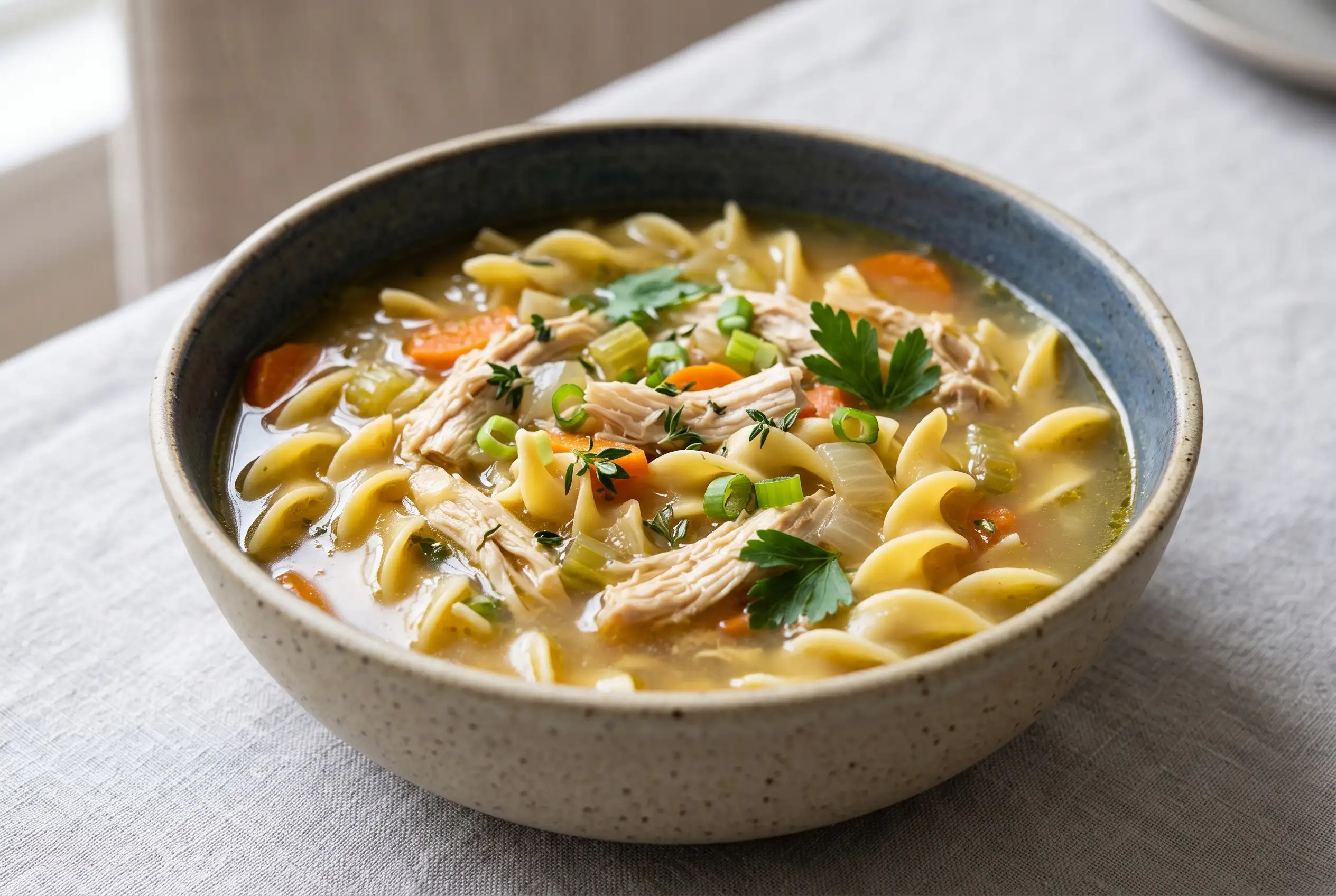
Chicken soup noodles bring tender egg noodles, savory broth, vegetables, and shredded chicken together in a comforting bowl designed for busy evenings. This easy chicken noodle soup recipe uses familiar ingredients and a simple thickening step to create a satisfying meal without a heavy sauce.
Many weeknight meals need to balance speed, comfort, and reliable flavor. Chicken soup noodles answer that need by combining cooked chicken with a broth-based soup that can be prepared from pantry staples and finished with fresh herbs and green onions.
Why Chicken Soup Noodles Work for Weeknights
Quick preparation makes chicken soup noodles a practical choice when you want a warm dinner without complicated techniques. The vegetables soften while the broth develops flavor, allowing most of the cooking time to happen with little active attention.
Classic ingredients keep the bowl familiar. Carrots, celery, onion, chicken broth, egg noodles, and shredded chicken create the foundation, while butter, thyme, parsley, and green onions provide a fresh finish.
The soup also fits several serving situations. It can be enjoyed as a light dinner, packed as a lunch, or served with simple sides like crackers, bread, or a green salad.
The Vegetable and Broth Choices That Shape the Bowl
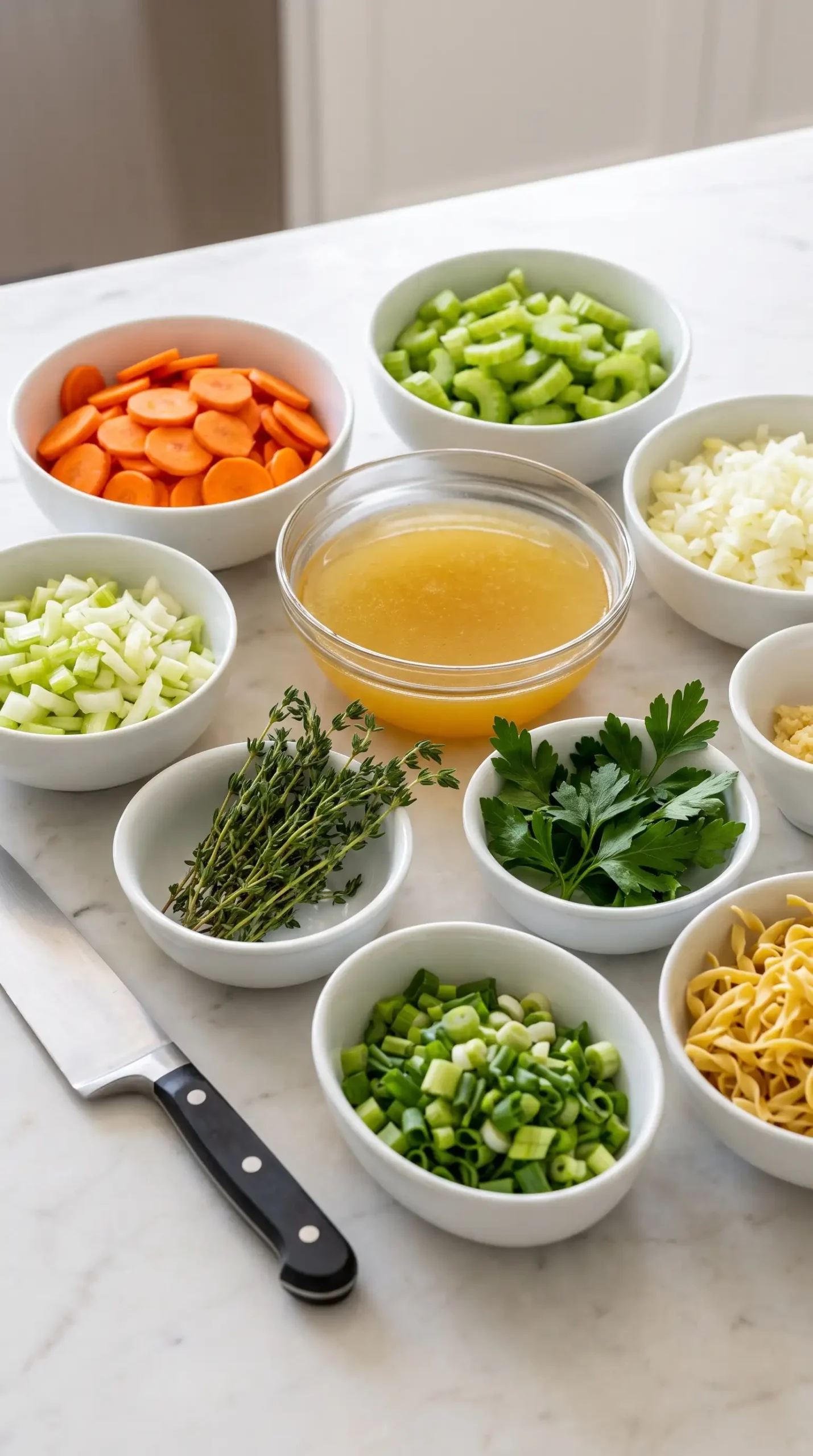
Thinly sliced carrots and celery help the soup cook evenly while maintaining a pleasant texture. Briefly sautéing these vegetables before adding broth allows their flavors to develop while keeping their color and bite.
| Component | Preparation choice | Effect in the soup |
|---|---|---|
| Carrots | Peeled and thinly sliced | Add sweetness and tender texture |
| Celery | Sliced thin | Provides fresh vegetable flavor |
| Onion | Chopped before sautéing | Builds the savory base |
| Chicken broth | Simmered with vegetables | Creates the flavorful soup liquid |
Chicken broth carries the flavors from the vegetables and herbs through the entire bowl. A gentle simmer helps the liquid become more rounded while preserving a clear appearance.
Building Flavor Before Egg Noodles Enter
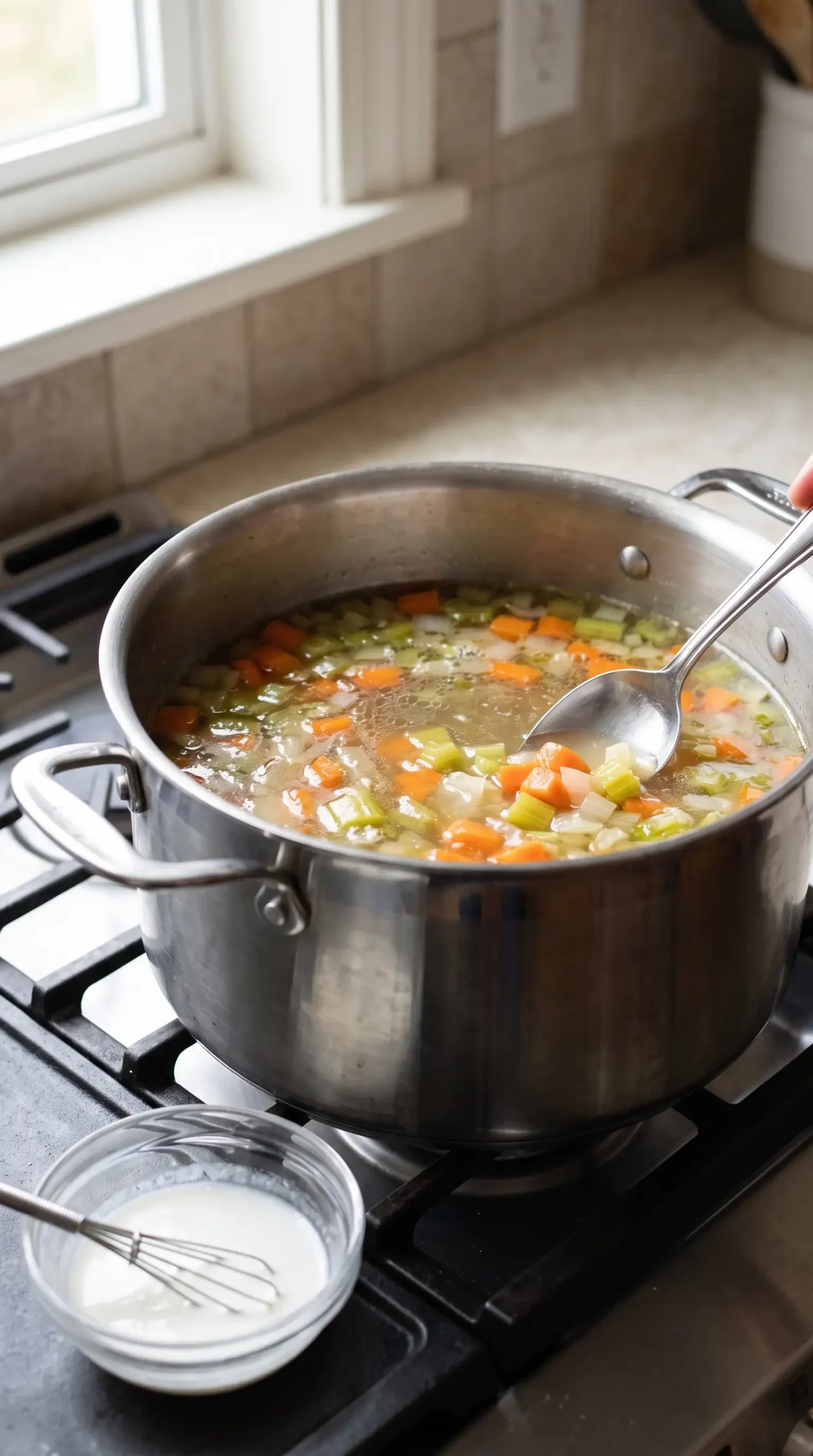
Early preparation decisions determine how balanced the finished soup feels. The vegetables need enough time to soften, while the broth needs a gentle simmer to combine the flavors before noodles and chicken are added.
A cornstarch slurry gives the broth a slightly fuller texture. Mixing the cornstarch with cold water first helps it blend smoothly into the hot liquid and prevents uneven thickening.
- Vegetable texture: Keep slices thin so they soften evenly without losing structure.
- Broth clarity: Maintain a gentle simmer instead of aggressive boiling.
- Noodle timing: Add egg noodles near the end so they finish with the right bite.
The finishing stage changes the character of the soup. Butter melts into the broth, herbs add brightness, and shredded chicken warms through without needing a long cooking period.
Cooking Controls for Clear Chicken Soup Noodles
Cooking control matters most when managing noodles and broth texture. The egg noodles absorb liquid as they cook, so timing their addition helps keep the bowl hearty instead of overly soft.
Adding the shredded chicken after the noodles are nearly finished keeps the meat tender. Since the chicken is already cooked, it only needs enough heat to warm throughout the soup.
| Cooking decision | Helpful action | Reason |
|---|---|---|
| Adding thickener | Whisk in dissolved cornstarch | Creates even body in the broth |
| Cooking noodles | Check before they become fully soft | Protects their texture |
| Finishing herbs | Stir in near the end | Keeps their fresh flavor noticeable |
Serving Ideas for Warm Soup Bowls
Deep bowls help keep the broth and noodles together while serving. A simple side can turn chicken soup noodles into a more complete meal without competing with the soup’s gentle flavors.
Extra green onions, parsley, or a small pat of butter can be added at the table. A squeeze of lemon also brings a brighter finish when you want a lighter flavor.
Storage Steps That Protect Noodle Texture
Proper storage keeps the soup useful for future meals. Cool the soup and keep leftovers refrigerated within 2 hours, then place them in a covered container so the flavors remain fresh.
Freezing works best when the egg noodles are stored separately. The noodles can soften after sitting in frozen and reheated broth, so adding freshly cooked noodles later helps preserve the intended texture.
- Refrigerated soup: Keep covered and use within 3–4 days.
- Frozen portions: Store in airtight containers for up to 3 months.
- Reheating: Warm gently and loosen with broth or water if needed.
Adjustments for Different Chicken Soup Noodles Bowls
Chicken soup noodles can be adapted while keeping the same comforting structure. Thin rice noodles can replace egg noodles for a lighter variation, with less cooking time needed.
Extra herbs can change the flavor direction. Dried rosemary or a bay leaf may be added during the simmering stage and removed before serving.
Leftover roasted vegetables can also create a heartier bowl. These additions work best when they complement the existing broth instead of overwhelming the delicate soup base.
Mistakes That Affect Chicken Soup Noodles Texture
Overcooked noodles are one of the most common problems with chicken soup noodles. When egg noodles remain in hot broth too long, they absorb excess liquid and lose their pleasant texture.
Another mistake happens when cornstarch is added without proper mixing. A cold-water slurry creates a smoother addition and helps the broth thicken evenly.
A final issue is boiling the broth too aggressively. Gentle simmering supports a clearer soup while allowing the flavors from the vegetables and stock to combine.
Making the Most of Leftover Chicken
Cooked shredded chicken makes this soup especially convenient. Preparing shredded chicken ahead of time can shorten the final cooking process, since the chicken only needs to warm through before serving while keeping each bowl tender.
The chicken should be cut or shredded into manageable pieces so each spoonful includes a balanced amount of meat, noodles, vegetables, and broth.
Choosing Egg Noodles for the Right Bowl
Egg noodles are a defining part of chicken soup noodles because they provide a soft, comforting texture while absorbing the savory broth. Wide and medium varieties both work depending on the bite you prefer.
Fresh egg noodles cook faster than dried options, so the cooking time should match the type selected. Keeping the noodles from sitting too long in hot liquid helps maintain their structure.
Simple Ways to Finish Each Bowl
Fresh finishing touches make the soup feel complete. Green onions add color and texture, while parsley and thyme reinforce the herbal notes already present in the broth.
Serving additions should stay simple. Crackers, crusty bread, or a light salad provide contrast without taking attention away from the warm soup.
What Makes This an Easy Chicken Noodle Soup Recipe
The appeal of this quick chicken noodle soup comes from its straightforward process and familiar ingredients. A short vegetable sauté, a simmered broth, and a final addition of chicken create a meal that feels homemade without requiring complicated preparation.
Chicken soup noodles also provide flexibility for busy schedules. Cooked chicken can be ready ahead of time, and the soup structure allows small adjustments while maintaining its comforting character.
Chicken Soup Noodles Bring Comfort Through Balanced Cooking
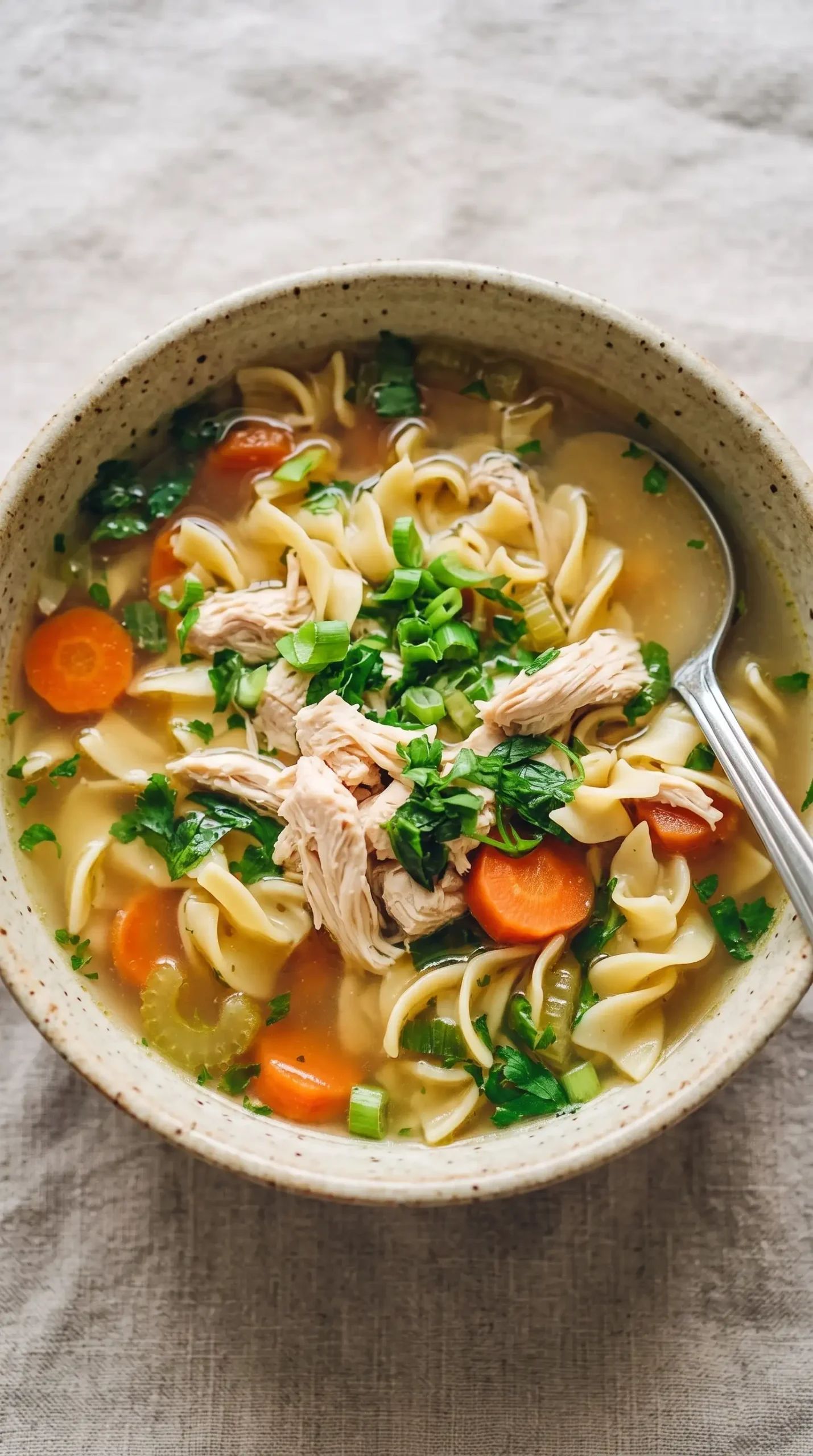
Chicken soup noodles succeed when the broth, vegetables, noodles, and chicken are handled with attention to timing. The gentle simmer develops flavor, the cornstarch slurry adds body, and the late addition of noodles protects the texture that makes the bowl satisfying.
A warm bowl built from simple ingredients can deliver dependable comfort through careful choices. The combination of clear broth, tender chicken, and properly cooked egg noodles creates a meal suited for both quick dinners and relaxed lunches.
Common Questions About Broth Texture and Chicken Soup Noodles
How do I keep chicken soup noodles from becoming mushy?
Add the egg noodles toward the end of cooking and check them before they become completely soft. Storing noodles separately is also helpful when reheating leftovers.
Can I use leftover chicken in chicken soup noodles?
Yes, cooked shredded chicken works well because it only needs to warm through. Adding it near the end helps maintain a tender texture.
Why does my broth become cloudy?
A cloudy broth can result from aggressive boiling. Keeping the soup at a gentle simmer helps maintain a clearer appearance while the flavors develop.
Can I make chicken soup noodles with gluten-free ingredients?
Yes, gluten-free noodles and a suitable gluten-free thickener can be used when needed. Adjust cooking times based on the replacement noodles selected.
Can cream be added to chicken soup noodles?
Cream can be stirred in at the end if a richer soup is preferred. The original style focuses on a lighter broth with vegetables, herbs, and noodles.
Chicken Soup Noodles with Shredded Chicken and Vegetables
Chicken soup noodles are a comforting bowl of tender egg noodles, shredded chicken, and vegetables in a savory, lightly thickened broth. This hearty recipe is perfect when you want an easy, cozy meal with homemade flavor.
Ingredients
Method
Preparation
- Heat the olive oil in a large soup pot over medium-high heat.
- Add the carrots, celery, and onion, then cook for 3 to 5 minutes until the vegetables are tender-crisp.
- Pour in the chicken broth and allow the soup to simmer gently for about 20 minutes.
- Mix the cornstarch and cold water together until smooth to make a slurry.
Cooking
- Add the cornstarch mixture to the simmering broth, stir well, and bring the soup to a boil.
- Add the egg noodles and cook until they are almost tender.
- Stir in the butter, thyme, and parsley until the butter has melted.
- Add the shredded chicken and continue heating until warmed through.
- Adjust the seasoning with salt and pepper.
- Stir in the green onions just before serving.
Notes
Add the egg noodles toward the end of cooking to help prevent them from becoming too soft.