
From morning breakfasts to evening dinners, Tasteza Recipes offers quick and easy recipe ideas, featuring everything from wholesome meals to delicious desserts for every moment and every occasion.


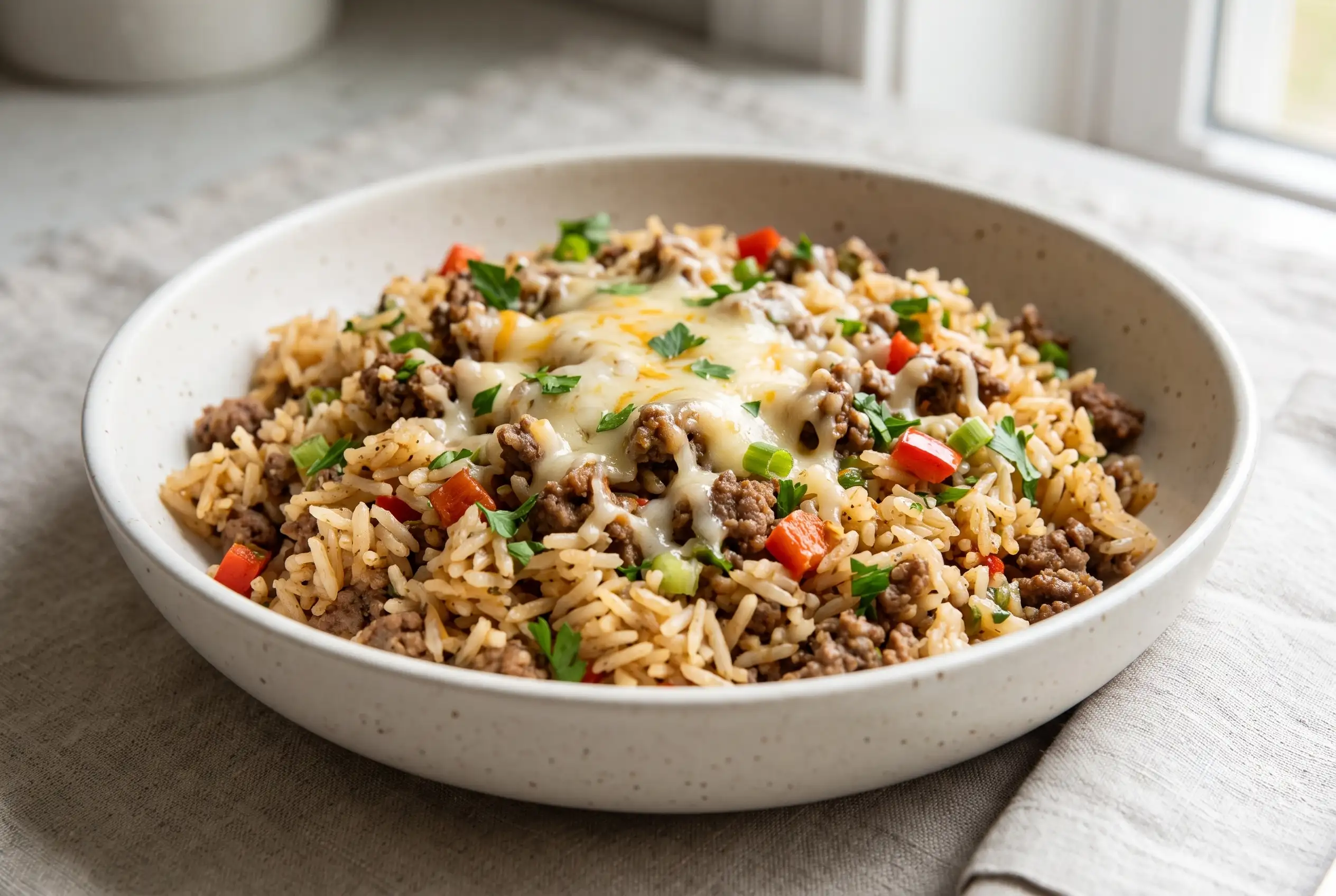
Ground beef and rice is a practical skillet meal built around savory browned beef, tender grains, and simple pantry ingredients. The combination creates a filling dinner with the convenience of cooking everything in one pan, making it a useful choice for busy evenings when you want fewer dishes and dependable results.
An easy ground beef rice skillet works because the ingredients cook together and develop a connected flavor. The beef adds a hearty base, while the rice absorbs the seasoned broth as it becomes tender. With optional vegetables, herbs, and cheese, the meal can shift depending on what you have available.
Why One-Pan Ground Beef and Rice Dinner Works
The appeal of a one pan ground beef and rice dinner comes from its straightforward cooking process. Browning the meat first creates a savory foundation, then the rice cooks in the same skillet with broth and seasonings. Each part contributes to the finished texture without requiring multiple pots or complicated preparation.
Ground beef and rice also fits a range of dinner situations. It can be served directly from the skillet for a family meal, portioned for later, or adjusted with different vegetables and toppings. The flexible ingredient list keeps the dish approachable while still allowing room for personal preferences.
The single-pan format is especially useful in smaller kitchens or on nights when cleanup matters. Since the rice cooks alongside the beef mixture, the flavors have time to combine while the covered simmer creates a tender final texture.
Choosing Rice and Beef for Ground Beef and Rice
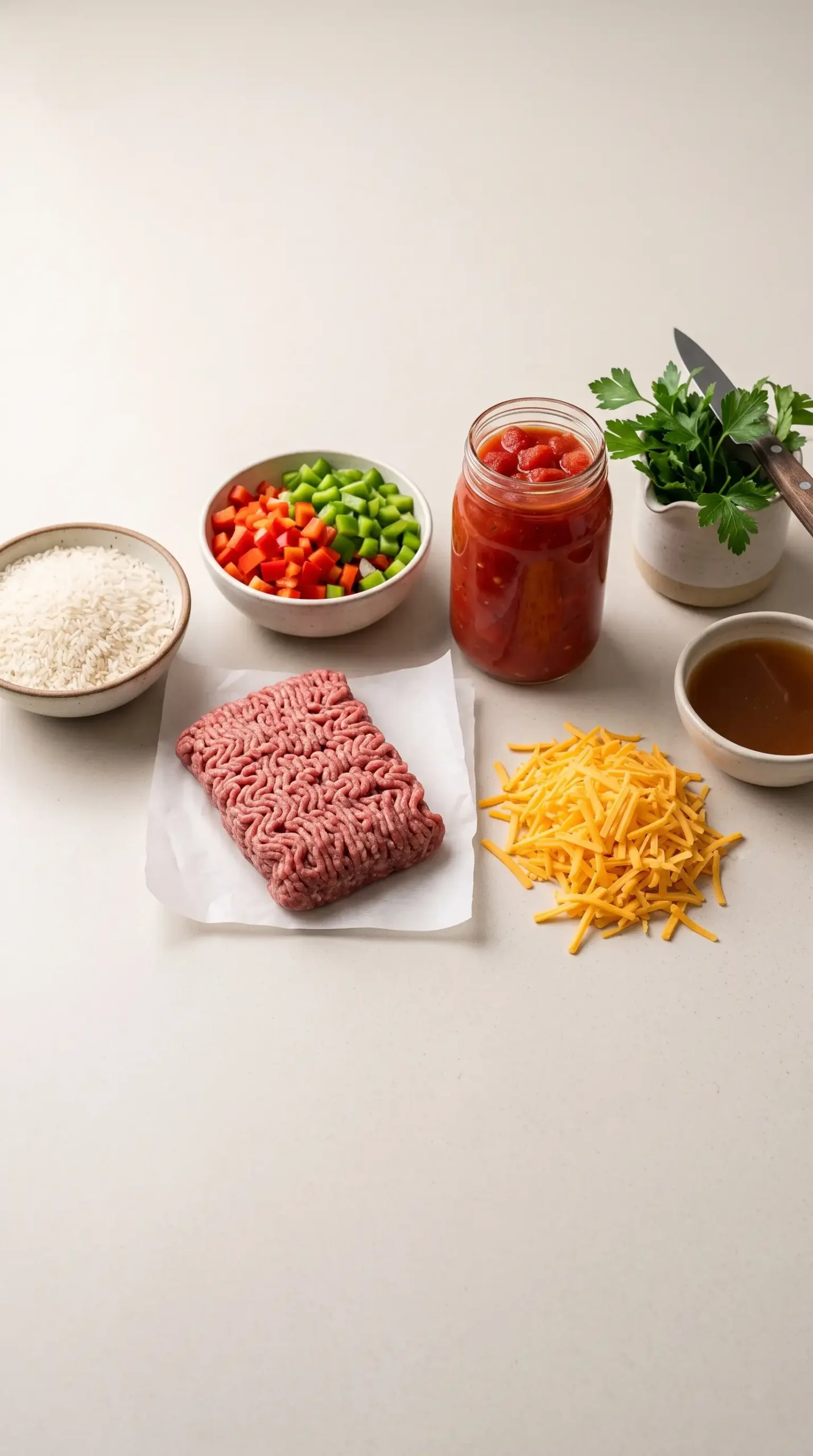
The choice of rice affects how the skillet finishes. Long-grain white rice provides separate, tender grains, while long-grain brown rice creates a firmer texture and requires additional liquid and cooking time. Measuring the broth carefully helps either option cook properly.
| Ingredient choice | Result in the skillet | Cooking consideration |
|---|---|---|
| Lean ground beef | Less excess grease | May need less draining after browning |
| Long-grain white rice | Tender, lighter grains | Use the listed broth balance for best texture |
| Brown rice | Heartier grain texture | Needs more liquid and longer simmering |
The beef does not need to be complicated to create a satisfying ground beef rice recipe. Lean ground beef keeps the dish balanced, while draining some released fat can prevent the finished skillet from becoming overly rich.
Browning Builds Flavor Before the Rice Cooks
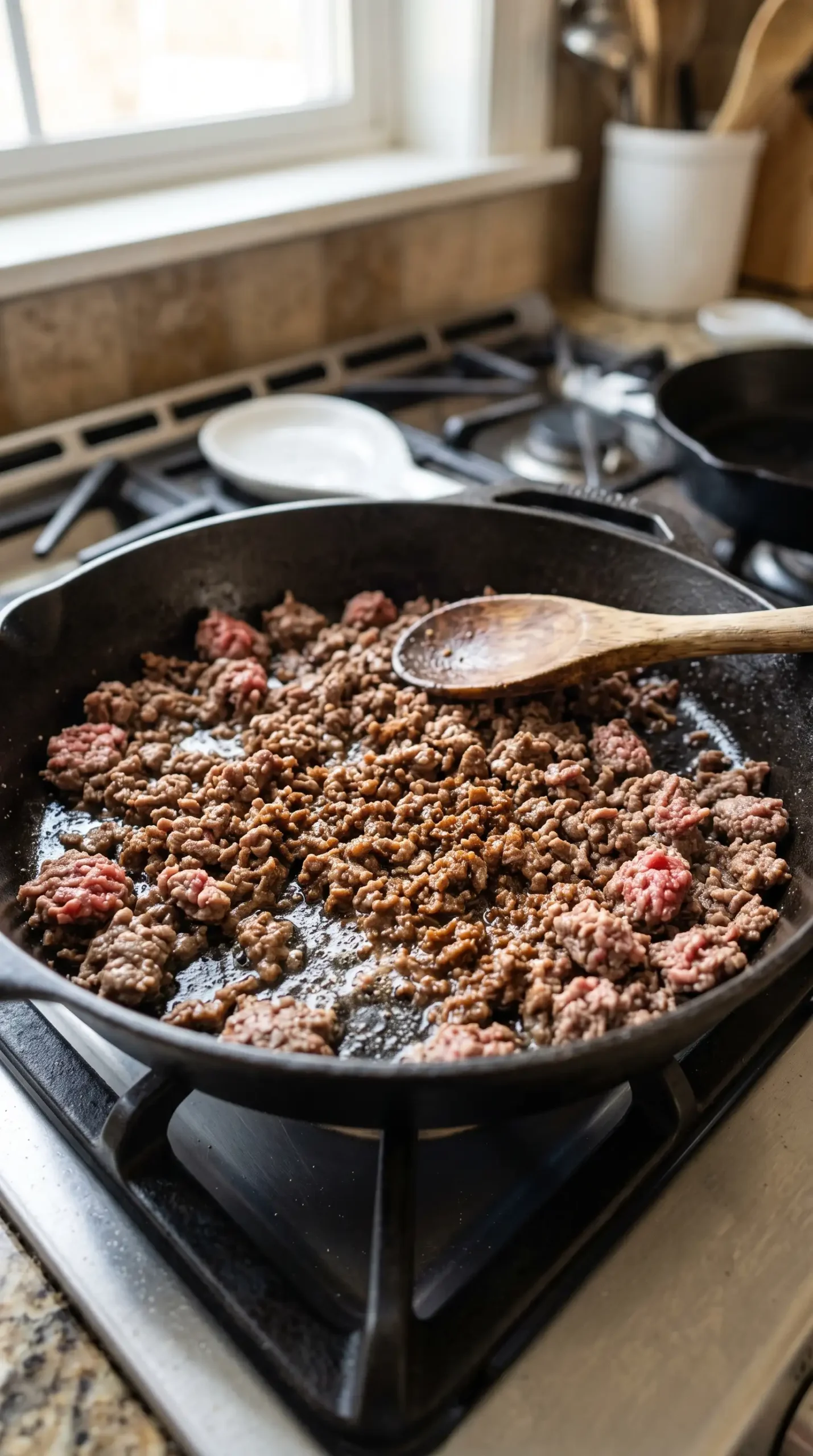
Ground beef develops its deepest savory character when it is browned well before the rice and broth are added. Cooking until the meat changes color and develops browned bits gives the skillet a stronger base that carries through the rest of the meal.
After browning the beef, make sure the meat reaches a 160°F internal temperature before serving to confirm it is cooked safely.
Skillet Control for Tender Rice Texture
The cooking controls matter most after the broth and rice enter the pan. Keeping the skillet covered during the simmer traps steam, allowing the rice to absorb liquid evenly. Frequent lid lifting releases that steam and can interfere with consistent cooking.
A reliable ground beef and rice approach depends on the relationship between rice and broth. Too much liquid can create a soft, overly wet texture, while too little can leave the grains firm. Accurate measuring and steady heat help the rice finish tender.
The covered resting period after cooking is another important part of the texture. Allowing the skillet to sit before fluffing gives remaining steam time to finish the grains and helps distribute moisture throughout the dish.
- Steam control: Keep the lid in place during simmering so the rice cooks evenly.
- Heat management: Reduce the temperature after boiling to maintain a gentle cook.
- Texture check: Let the rice finish absorbing liquid before deciding if it needs adjustment.
Vegetables and Toppings for Ground Beef and Rice
Diced tomatoes and bell peppers can be added with the rice so they soften while the skillet cooks. Fresh herbs, shredded cheese, salsa, sour cream, or hot sauce can be added at serving time to create different finishes without changing the main cooking process.
Serving Options for an Easy Ground Beef Rice Skillet

Serve the skillet hot directly from the pan or spoon it onto individual plates. Fresh parsley or cilantro adds a bright contrast, while melted shredded cheese brings a richer finish to the warm rice.
A simple green salad or steamed vegetables can provide freshness alongside the hearty skillet. Drinks with lighter or brighter flavors, such as iced tea or citrus-based beverages, pair well with the savory beef and rice combination.
For extra flavor at the table, toppings can be customized by preference. Salsa, hot sauce, or crushed red pepper can add heat, while creamy toppings can soften the overall flavor.
Storing and Reheating Ground Beef and Rice
Leftover ground beef and rice can be stored after cooling and placed in an airtight container. Keeping portions properly sealed helps maintain the texture when the meal is reheated later.
Refrigerated leftovers can be reheated gently with a small splash of water or broth. The added moisture helps refresh the rice and prevents the grains from drying during warming.
For longer storage, freeze portions in freezer-safe containers. Thaw frozen servings in the refrigerator before reheating so the skillet warms more evenly.
| Storage method | Container choice | Reheating approach |
|---|---|---|
| Refrigerator | Airtight container | Warm with a splash of water or broth |
| Freezer | Freezer-safe container | Thaw overnight before reheating |
| Meal portions | Individual containers | Heat in short intervals and stir |
Meal Prep with Ground Beef and Rice Recipe
This ground beef and rice recipe works well for planned meals because the cooked portions can be divided and refreshed with a little liquid when reheated. The simple ingredients also make it easy to prepare enough for more than one serving occasion.
Variations That Fit Ground Beef and Rice
The skillet can be adjusted with other ingredients while keeping the same general structure. Ground turkey or chicken can replace the beef for a lighter variation, and a mixture of white and wild rice can create a nuttier grain texture. A Cheesy Taco Rice Skillet Dinner adds a tomato and cheese finish for cooks who want to shift the toppings and seasonings while keeping the meal centered on beef and rice.
Additional vegetables can change the character of the meal. Corn and black beans create a Southwestern-inspired direction, while frozen peas add color and sweetness when stirred in near the end.
Spice levels can also be adapted. Jalapeño cooked with the onion adds heat from the beginning, while hot sauce or crushed red pepper added at serving allows each person to customize their portion.
Common Mistakes in One-Pan Ground Beef and Rice Dinner
Skipping the covered rest after simmering can leave the rice texture uneven. The remaining steam continues working after the heat is turned off, so allowing that pause helps the grains finish properly.
Using an incorrect rice-to-liquid balance is another common problem. Excess broth can make the skillet soggy, while insufficient broth can prevent the rice from becoming tender. Careful measuring is the simplest way to avoid these results.
Lifting the lid repeatedly during cooking can also affect the outcome. Keeping the pan covered preserves the steam needed for the rice, helping the skillet cook more consistently.
Adjusting the Skillet for Different Kitchens
The one-pan ground beef and rice dinner format adapts easily to different cooking spaces and serving needs. A large skillet provides room for the ingredients to cook evenly, while the same approach can be scaled for smaller or larger meals.
Making Ground Beef and Rice Work on Busy Nights
Ground beef and rice delivers a useful balance of convenience and comfort because the main ingredients come together in one cooking vessel. The process focuses on a few important choices: browning the beef, measuring the liquid, and protecting the steam that cooks the rice.
Simple additions can keep the meal from feeling repetitive. Fresh herbs, vegetables, and table toppings allow the same skillet foundation to take on different flavors while preserving the easy preparation that makes it appealing.
The combination of tender rice, seasoned beef, and optional mix-ins creates a dependable dinner option when time and cleanup are priorities. The method rewards attention to texture without requiring advanced techniques.
Ground Beef and Rice Creates Reliable Skillet Results
The covered skillet transforms browned beef, rice, and broth into a complete meal where texture depends on controlled simmering and proper resting. Paying attention to liquid levels and steam keeps the grains tender while preserving the savory character of the dish.
A well-managed ground beef and rice skillet shows how simple ingredients can create a satisfying dinner. The finished pan offers flexibility through vegetables, herbs, and toppings while keeping the core cooking approach consistent.
Mushy Rice Questions for One-Pan Ground Beef and Rice Dinner
How do I prevent mushy rice?
Prevent mushy rice by measuring the broth carefully, using the correct rice type, and keeping the skillet covered only during the intended cooking period. Allowing the rice to rest after cooking also helps control moisture.
Can I use brown rice instead of white rice?
Yes, brown rice can be used, but it requires more liquid and a longer cooking time. Adjusting those factors helps the grains become tender without staying firm.
Do I need to drain the ground beef?
Drain some fat if the beef releases a large amount during browning. Keeping a small amount can maintain flavor while preventing the finished skillet from becoming greasy.
Can I prepare this skillet meal ahead of time?
Yes, the cooked meal can be cooled, portioned, and stored for later use. Reheating with a splash of broth or water helps bring back a softer rice texture.
What vegetables can I add to ground beef and rice?
Carrots, zucchini, mushrooms, corn, or peas can be added depending on the texture you prefer. Cooking time may need adjustment so each vegetable reaches the right tenderness.
Ground Beef and Rice One-Pan Skillet Dinner with Cheese
Ground beef and rice is a hearty one-pan skillet dinner with tender rice, savory seasoned beef, and optional cheesy toppings. It is an easy, comforting meal choice for busy weeknights.
Ingredients
Method
Preparation
- Heat a large skillet over medium-high heat. Add the ground beef, crumble it with a spoon, and cook for 5-7 minutes until browned. Drain excess fat if needed.
- Add the diced onion and minced garlic to the skillet and cook until the onion is translucent.
Cooking
- Mix in the rice, chicken broth, salt, pepper, and dried herbs. Add the diced tomatoes and bell peppers if using.
- Bring the mixture to a boil, then cover the skillet, lower the heat, and simmer for 18-20 minutes until the rice is tender and the liquid has been absorbed.
- Remove the skillet from the heat, keep it covered, and rest for 5 minutes before fluffing the rice with a fork.
Serving
- Finish the ground beef and rice with fresh parsley or cilantro and shredded cheese if desired before serving.
Notes
Use a tight-fitting lid and keep the skillet covered during simmering to help the rice cook evenly.