
From morning breakfasts to evening dinners, Tasteza Recipes offers quick and easy recipe ideas, featuring everything from wholesome meals to delicious desserts for every moment and every occasion.


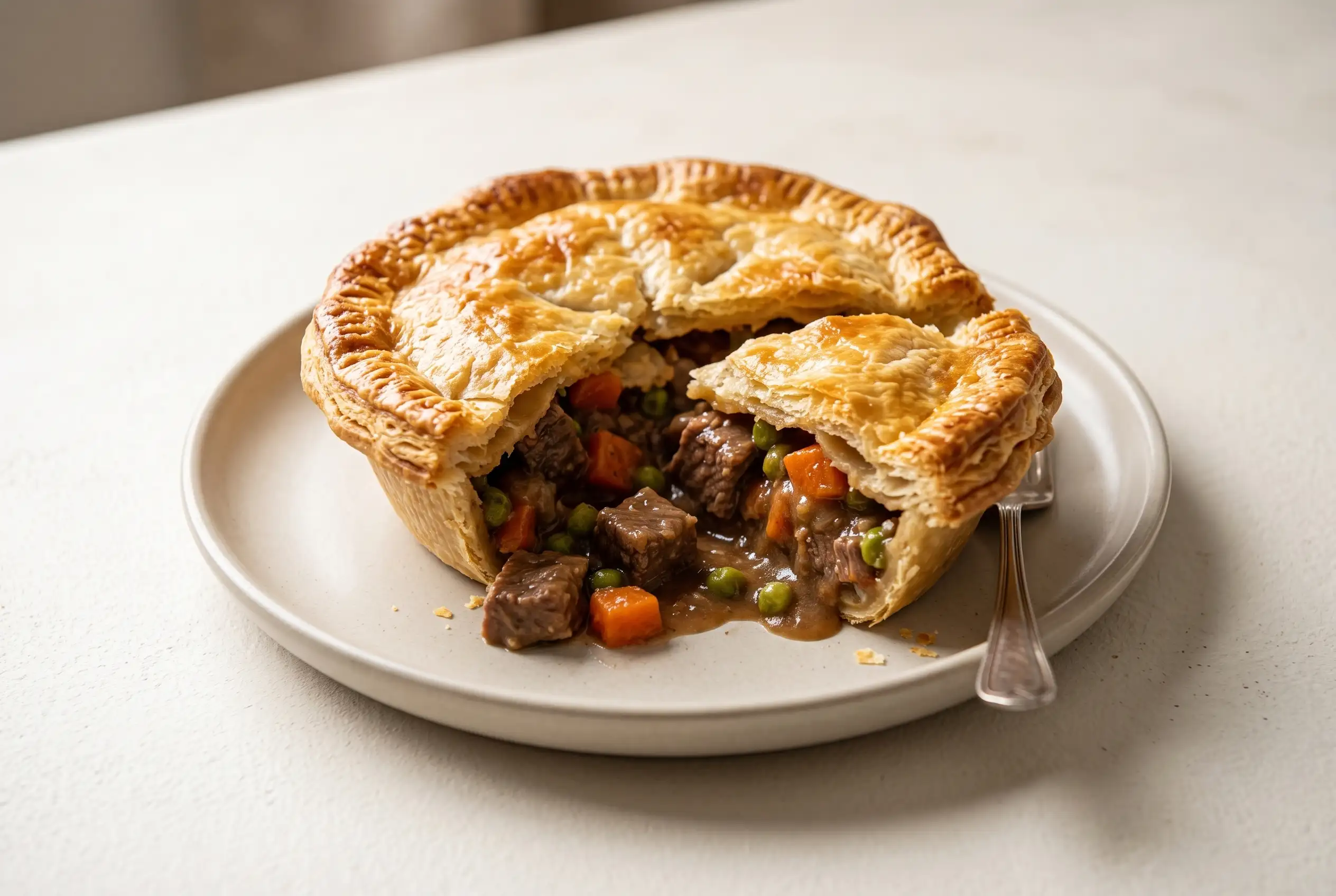
Beef pot pie brings together tender beef, vegetables, rich gravy, and a flaky crust for a comforting meal built around slow-cooked flavor. This classic dish turns simple ingredients into a complete dinner that fits both relaxed family meals and weekend gatherings.
A classic beef pot pie recipe works because each part has a clear purpose. The beef becomes tender through simmering, the vegetables soften into the filling, and the crust creates a crisp contrast against the savory interior. The result is a homemade beef pot pie that feels hearty without requiring complicated techniques.
Why Beef Pot Pie Belongs on Comfort Food Menus
Comfort comes from the combination of textures in beef pot pie. A spoonful brings together soft vegetables, fork-tender beef, and thick gravy beneath a browned crust. The filling is substantial enough to serve as a full meal while still leaving room for simple sides.
Many cooks choose this style of meal because it transforms everyday ingredients into something special. The preparation allows flavors to develop gradually as the beef simmers and the gravy forms around the vegetables.
Chuck Roast and Gravy Choices Shape the Filling
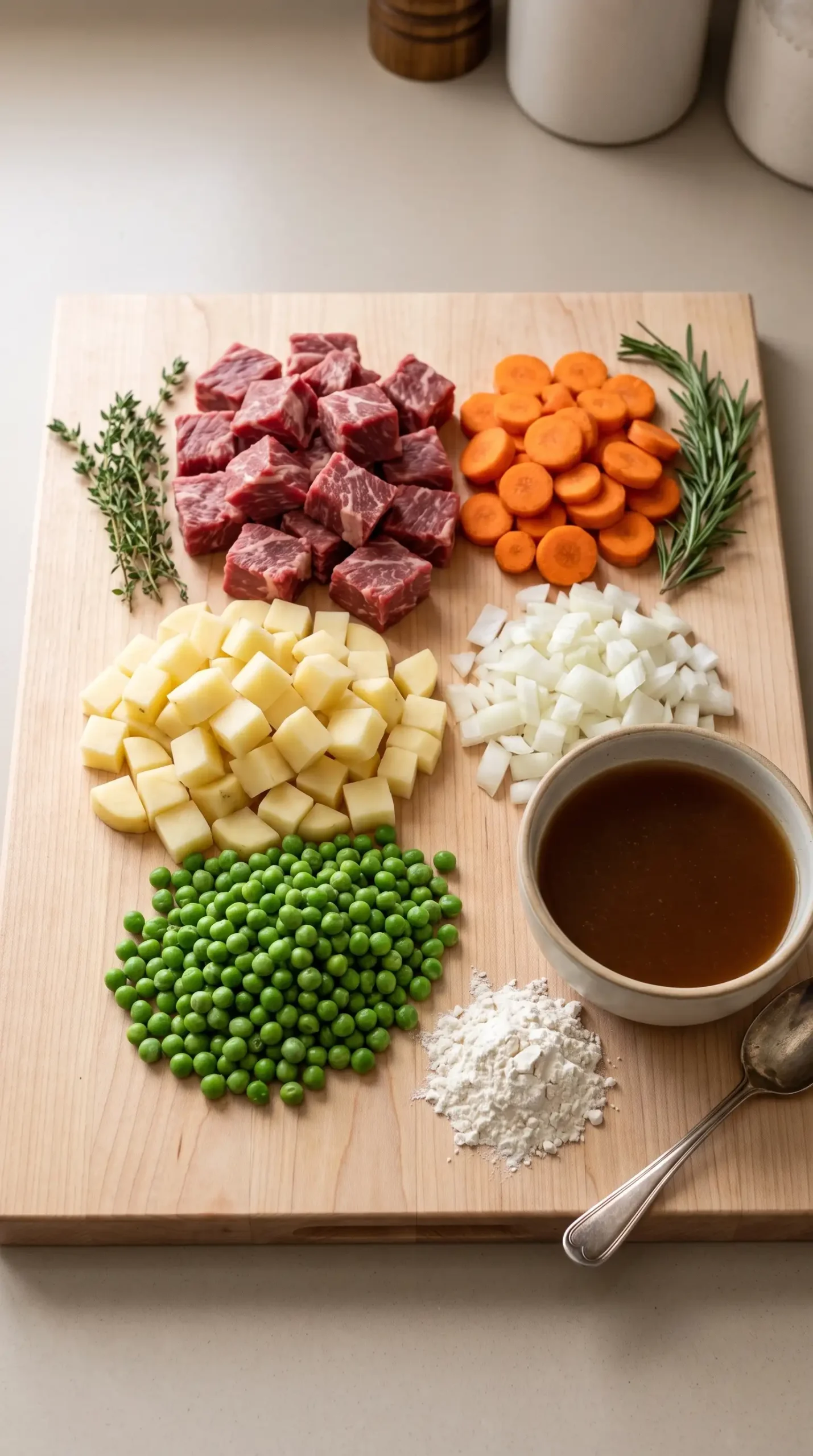
Chuck roast or stew meat provides the foundation for a flavorful filling because these cuts are suited to slow cooking. Cutting the beef into cubes creates pieces that can absorb the savory cooking liquid while becoming tender. A preparation such as slow cooker beef bites uses gentle cooking to develop rich beef texture, which is the key quality needed for a satisfying pot pie filling.
The gravy in a beef pot pie with gravy depends on a balanced combination of cooking liquid and roux. Flour mixed with some of the liquid creates a smooth thickener that turns the broth into a coating sauce instead of a thin soup.
Fresh herbs such as thyme or rosemary can season the filling while salt and black pepper help sharpen the overall flavor. These choices keep the beef and vegetables at the center of the dish without adding unnecessary complexity.
| Filling Element | Preparation Choice | Purpose in the Pie |
|---|---|---|
| Chuck roast | Cut into cubes and browned | Creates tender, savory beef pieces |
| Beef broth | Simmered with the filling | Builds the base for the gravy |
| Roux | Mixed with cooking liquid | Thickens the sauce around the ingredients |
Building Layers of Flavor Before the Crust
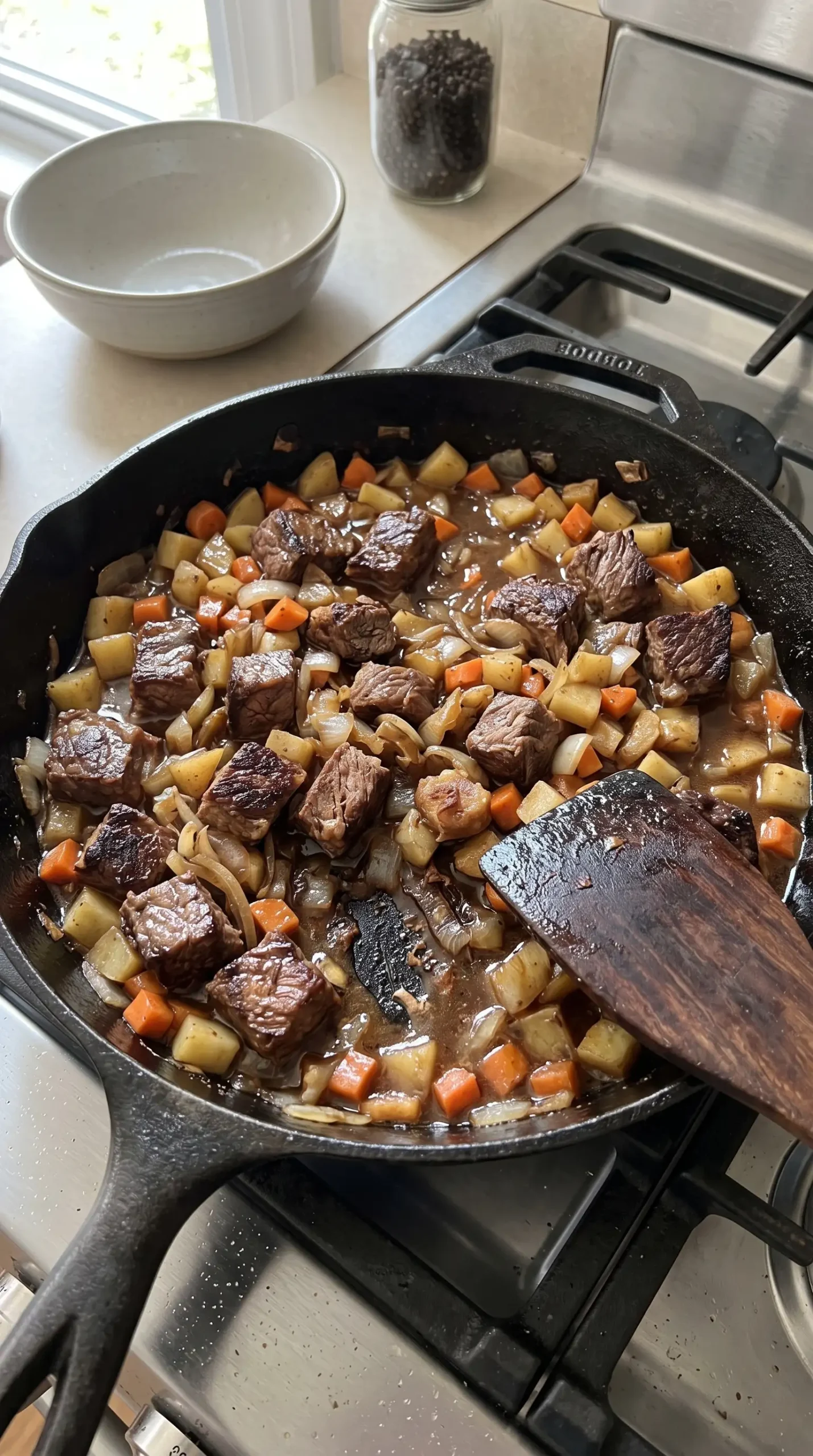
Browning the beef creates a deeper flavor base before the simmering stage begins. The browned pieces leave behind flavorful bits in the skillet, which become part of the finished filling when the broth is added.
The same skillet can be used for the vegetables and beef, helping the flavors stay connected throughout cooking. Onions, carrots, and potatoes soften as they cook with the beef, creating the familiar texture expected from a homemade beef pot pie.
Simmering is where the dish changes from separate ingredients into a unified filling. The beef needs enough time in the broth to become tender, while the cooking liquid develops into the rich center that supports the crust.
Vegetable Texture Keeps the Pie Balanced
Diced carrots and potatoes provide structure inside the filling, while green peas add a contrasting texture. Cutting the vegetables evenly helps them cook at a similar rate so each bite has a consistent balance.
Gravy Thickness Controls Every Slice
The consistency of the gravy determines how the pie serves once it is removed from the oven. A sauce that coats a spoon provides enough body to hold the beef and vegetables together without becoming dry.
Creating the roux carefully helps prevent lumps in the filling. Flour should combine smoothly with some of the cooking liquid before it is stirred back into the skillet mixture, allowing the gravy to thicken evenly.
The starch in roux thickens sauce by absorbing liquid during heating, helping create the body needed for the beef pot pie filling.
After baking, the filling continues to settle as the pie cools slightly. This brief resting period helps the gravy become easier to serve while keeping the interior moist and flavorful.
Crust Handling Creates the Golden Finish
The crust is the finishing layer that seals in the savory filling while providing a crisp top. A store-bought or homemade pie crust can be used over the deep-dish filling, making the dish adaptable to different kitchens.
Small slits in the crust allow steam to escape during baking. An egg wash brushed over the surface can help create a golden appearance that matches the rich filling underneath.
Beef Pot Pie Mistakes That Ruin the Filling
Under-browning the beef can leave the filling with less depth because the early searing stage builds important flavor. Taking time to brown the cubes until golden helps create a stronger base before the broth is added.
Rushing the simmering stage can also affect the texture. Beef needs enough time to become fork-tender, and a shorter cooking period may leave the meat firm instead of soft.
- Loose gravy: Use the roux with cooking liquid until the sauce reaches a coating consistency.
- Soggy crust: Cut steam vents into the top crust before baking.
- Lumpy sauce: Whisk flour with liquid gradually before returning it to the filling.
- Uneven vegetables: Dice carrots and potatoes into similar sizes for consistent cooking.
Serving Homemade Beef Pot Pie for Gatherings
Serve slices warm from the oven with a simple salad or steamed greens to balance the richness. Fresh herbs sprinkled on top add a bright finishing touch, while a medium-bodied red wine or malty beer can complement the savory flavors.
Storage and Reheating Preserve the Crust
Leftover beef pot pie can be stored in an airtight container to maintain the quality of the filling. Proper storage keeps the beef, vegetables, and gravy together for another satisfying serving.
Reheating in the oven helps restore the crust texture better than methods that soften the top. A moderate oven temperature warms the slice while allowing the crust to remain crisp.
Freezing is also an option for this dish. Cooled, unbaked pies or baked slices can be frozen, then thawed in the refrigerator before reheating to help reduce excess moisture.
| Storage Method | Best Use | Handling Approach |
|---|---|---|
| Refrigerated leftovers | Short-term meals | Warm slices in the oven to refresh the crust |
| Frozen unbaked pie | Future dinners | Thaw before reheating and baking as needed |
| Frozen baked slices | Individual portions | Defrost before warming for better texture |
Adaptations for Different Pot Pie Formats
The filling can be adjusted for different serving styles. Individual pot pies can be made by dividing the mixture into ramekins and covering each portion with a smaller circle of crust.
Make-Ahead Decisions for Easier Dinners
Preparing the filling ahead of time can simplify serving because the gravy has time to settle before the crust is added. This approach also makes the dish useful for gatherings where the cooking schedule needs flexibility.
A Golden Crust Completes the Beef Pot Pie Experience
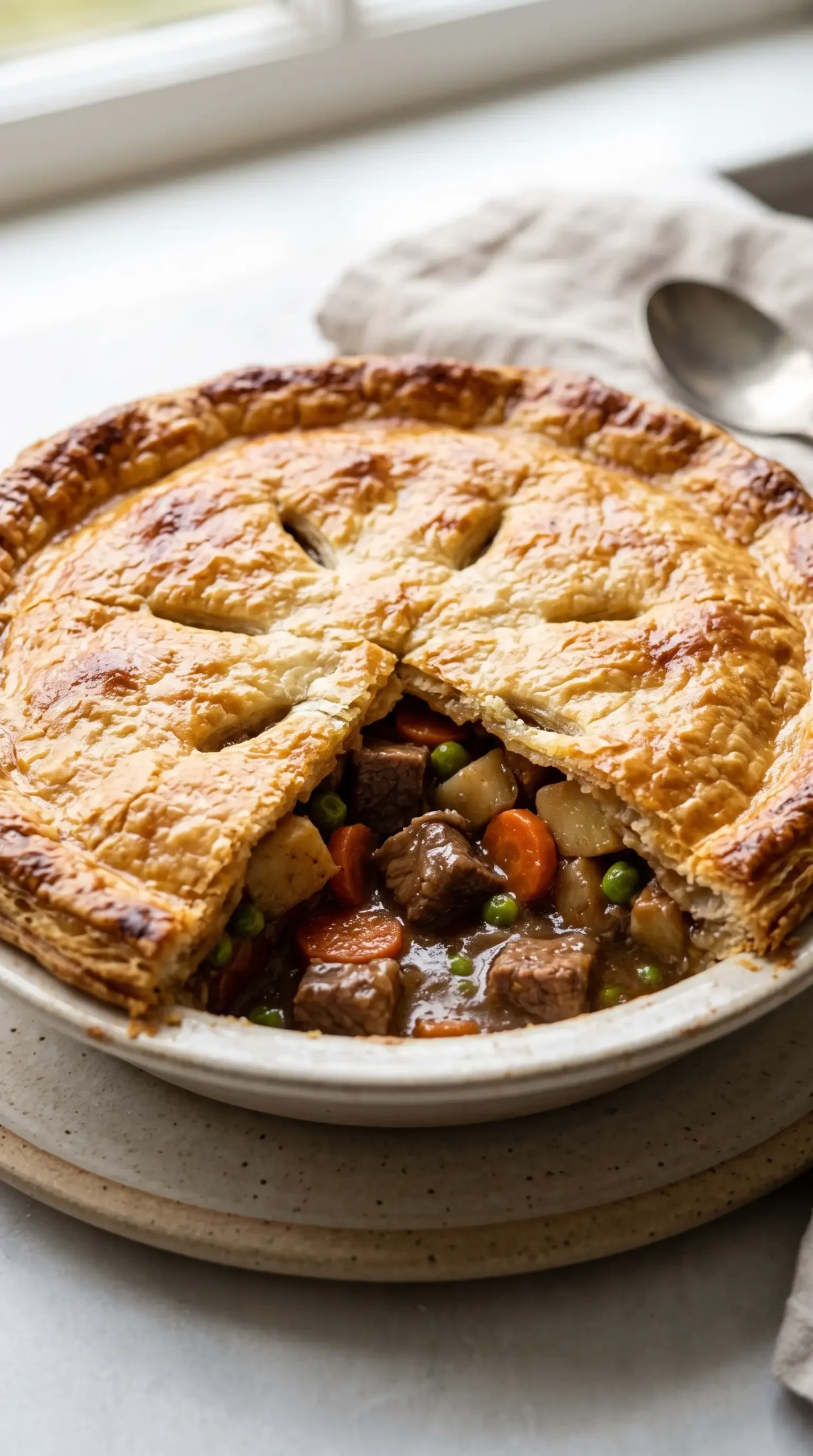
The golden crust on a beef pot pie protects the tender filling while creating the contrast that defines the finished dish. The most important cooking judgment comes from balancing the slow-simmered beef mixture with a gravy that is thick enough to support each slice.
A well-browned filling, evenly cooked vegetables, and carefully handled crust create a reliable result from simple ingredients. The combination of textures is what makes this comfort dish memorable from the first serving to the last leftover slice.
Beef Pot Pie Gravy and Crust Questions Answered
How thick should beef pot pie gravy be?
The gravy should be thick enough to coat a spoon while still remaining saucy. It will continue to thicken slightly as the baked pie rests before serving.
What beef cut works best for a tender filling?
Chuck roast or stew meat works well because these cuts become tender during simmering and develop a rich flavor that suits the gravy.
Can frozen vegetables be used in beef pot pie?
Frozen vegetables can be used, especially for the peas. Adding them near the end of cooking helps maintain their texture and prevents them from becoming overly soft.
Does the crust need to be baked before adding it?
The top crust does not need to be prebaked for this preparation. Baking the assembled pie allows the crust to brown while the filling heats underneath.
How can individual pot pies be prepared?
The filling can be divided among ramekins and topped with smaller crust pieces. Smaller portions may require less baking time, so the crust should be watched closely as it browns.
Can beef pot pie be frozen for later?
Yes, both unbaked pies and baked slices can be frozen for up to three months. Thawing in the refrigerator before reheating helps preserve the texture of the filling and crust.
Beef Pot Pie Classic Homemade Recipe with Rich Gravy
This classic Beef Pot Pie features tender beef, vegetables, and a rich homemade gravy beneath a flaky crust. It is a comforting, hearty recipe perfect for cozy family meals and gatherings.
Ingredients
Method
Preparation
- Preheat the oven to 375°F (190°C).
- Melt butter in a heavy-bottomed skillet over medium-high heat. Season the beef cubes with salt and black pepper, then brown them on all sides before transferring the beef out of the skillet.
- Cook the diced onion, carrots, and potatoes in the same skillet until they begin to soften.
Filling
- Place the browned beef back into the skillet, add the beef broth, and simmer for 45-60 minutes until the meat is fork-tender.
- In a separate bowl, whisk flour with some of the cooking liquid until smooth, then stir the mixture into the skillet to thicken the gravy.
- Mix in the green peas and fresh herbs, then adjust the seasoning as needed.
Assembly and Baking
- Move the beef filling into a deep-dish pie plate, cover with the pie crust, and cut slits in the crust for steam to escape.
- Bake the beef pot pie at 375°F (190°C) for 30-35 minutes until the crust is golden brown.
- Allow the pot pie to cool slightly before slicing and serving.
Notes
Chill the filling briefly before adding the crust if the gravy is too loose.